• Skip to secondary menu
  • Skip to main content
logo-removebg-preview.png

COLLEGE OF MICRONESIA

LAND GRANT PROGRAM
Contact us: (691) 3202462/2728
P.O Box 1179 Kolonia,Pohnpei FM 96941
  • COLLEGE OF MICRONESIA LAND GRANT PROGRAM
  • COLLEGE OF MICRONESIA LAND GRANT PROGRAM
  • COLLEGE OF MICRONESIA LAND GRANT PROGRAM
  • COLLEGE OF MICRONESIA LAND GRANT PROGRAM
  • COLLEGE OF MICRONESIA LAND GRANT PROGRAM
  • Home
  • About Us
    • Org. Chart
      • COMLG CENTRAL – ORG. CHART
    • Who is NIFA, COM Land Grant, and what do we do
    • COM Land Grant Administration
    • COM Land Grant Board of Regents
    • College of the Marshall Islands Cooperative Research and Extension Program
    • College of the Micronesia – FSM & Land Grant Program
    • Palau Community College Land Grant Program
    • College of Micronesia Land Grant locations map
    • Frequently asked questions
    • Contact Us
  • Land Grant people
    • All College of Micronesia Land Grant People
    • College of Micronesia Land Grant Program Administration
    • College of Micronesia-FSM Land Grant Administration
    • COM-FSM Chuuk Campus People
    • COM-FSM Kosrae Campus People
    • COM-FSM Pohnpei Campus People
    • COM-FSM Yap Campus People
    • College of Marshall Islands People
    • Palau Community College people
  • Research
    • Marshall Islands Agricultural Research Station
    • College of Micronesia – FSM – Research
      • Chuuk Agricultural Experiment Station
      • Kosrae Agricultural Experiment Station
      • Pohnpei Agricultural Experiment Station
      • Yap Agricultural Experiment Station
    • Palau Agricultural Experiment Station
    • Special Research Projects
  • Extension
    • College of the Marshall Islands – Extension
    • College of Micronesia – FSM – Extension
      • Chuuk Cooperative Extension Service
      • Kosrae Cooperative Extension Service
      • Pohnpei Cooperative Extension Service
      • Yap Cooperative Extension Service
    • Palau Community College – Extension
  • Instruction
    • College of the Marshall Islands – Resident Instruction
    • College of Micronesia – FSM – Resident Instruction
    • Palau Community College – Resident Instruction
  • Publications
  • Links
    • College of the Marshall Islands
    • College of Micronesia – FSM
    • Palau Community College
    • Agriculture Development in the American Pacific (ADAP)
    • Center for Tropical and Subtropical Aquaculture (CTSA)
    • USDA NIFA
    • USDA NIFA Reporting Portal
    • Association of Public Land-Grant Universities – APLU
    • Western Sustainable Agriculture Research and Education
  • Jobs
  • Program Impacts & Success Stories
  • Calendar
  • RFP
  • Policies
  • Information & updates
You are here: Home / Extension / College of Micronesia – FSM – Extension / Kosrae Cooperative Extension Service

Kosrae Cooperative Extension Service

World Soil Day 2017 – Educating youth about soils and stewardship beneath food “footprints”

December 11, 2017

YAP, FSM. Dr. Murukesan Krishnapillai, Researcher/Extension Specialist, Cooperative Research and Extension.

The central theme “Caring for the Planet starts from the Ground,” echoed on December 5, as Yap CRE celebrated World Soil Day 2017 with activities to communicate the messages on the importance of soil quality for food security, healthy ecosystems and human well-being.

Soils not only produce 95% of the foods we consume, they also have a huge potential for taking carbon from the atmosphere and offsetting the greenhouse gas emissions. Keeping the soil healthy can bring a multitude of gains, from food security to sustainable livelihoods and climate benefits. For all these reasons, it’s high time we celebrate World Soil Day to impart knowledge about soil and the opportunities under our feet.

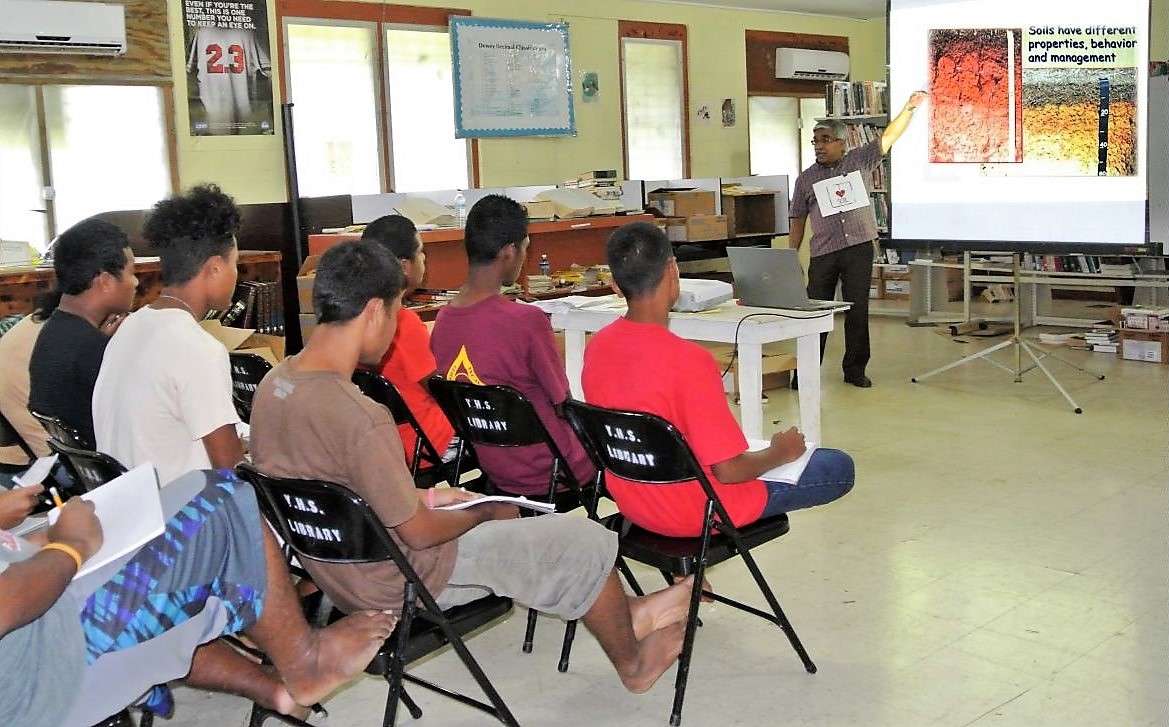
Lecture on Yap soil properties.

To mark the World Soil Day 2017, Yap CRE conducted soil awareness and training program for about 76 youth from Yap High School. The purpose of involving young people this year was twofold. Firstly, increasing the participation of youth in agriculture is an important means of improving food security, youth livelihoods and employment. Secondly, high rates of migration, high levels of youth unemployment and increasing dependence of imported food prompts to encourage youth participation in agriculture activities as emphasized in Pacific youth in agriculture strategy. Educating youth about soil and its role in supporting life on this planet Earth is crucial.

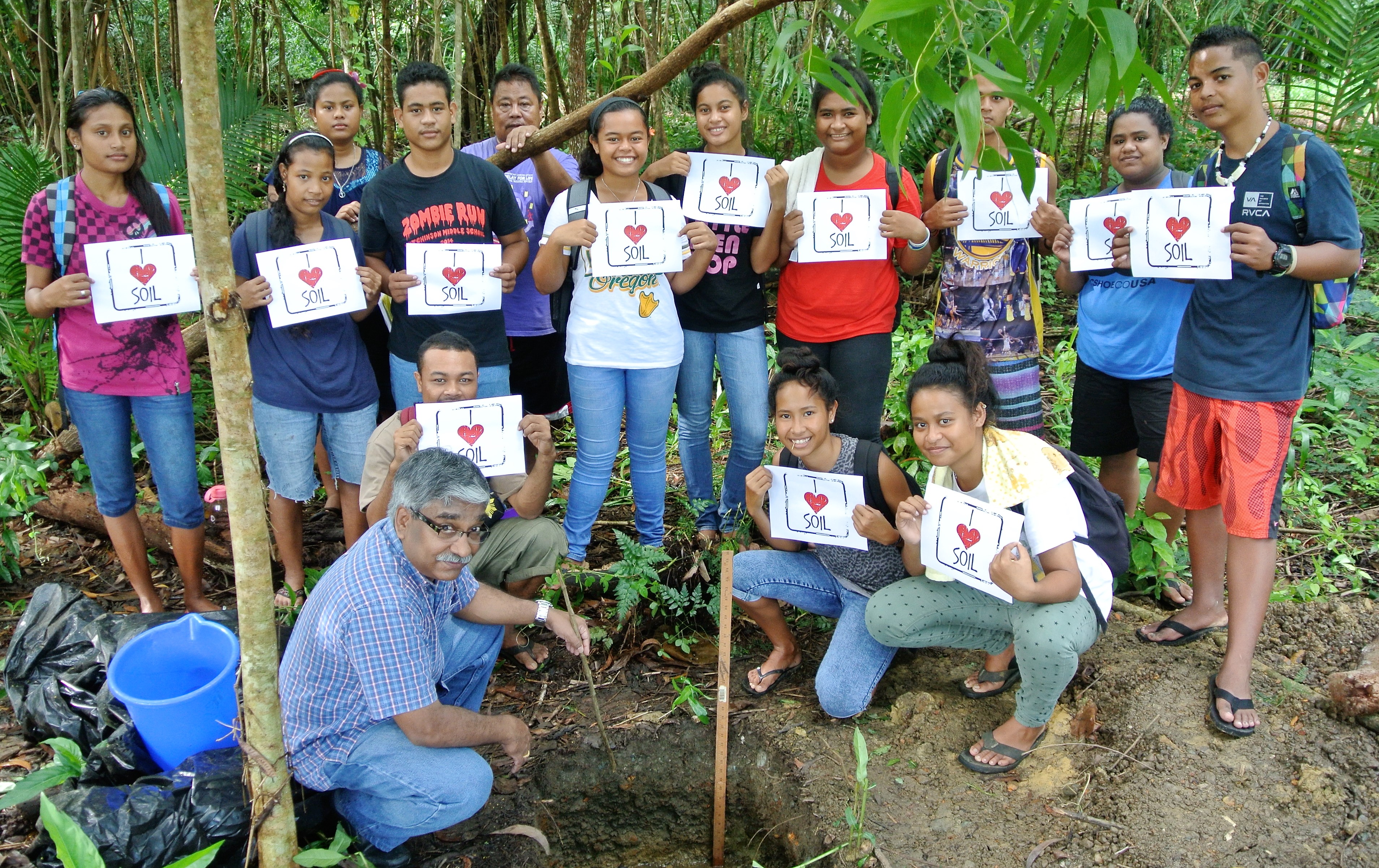
About 76 young people participated in 3-days training program that involved lectures on soil properties, soil profile, soil organic matter, soil classification and soil management strategies for sustainable agriculture. Field activities involved studies about soil profile and soil organic matter and types and properties of soils prevalent in the region. In addition, World Soil Day 2017 message was also spread to youth and others.

Youth pose for photo after studying soil profile.

Filed Under: News from land grants, Yap Extension, Yap Research Tagged With: soil, Yap

In vitro mass-scale, disease-free pineapple seedling production: Research and multiple demonstrations on sustainable, climate-smart and organic commercial cultivation

March 29, 2017

KOSRAE, FSM. Dr. Virendra M. Verma, Researcher and Extension Specialist, Kosrae Agricultural Experiment Station.

The pineapple (Ananas comosus L. Merrill), a tropical plant with edible multiple fruit consisting of coalesced berries, is the most economically significant plant in the Bromeliaceae family.

Pineapples are delicious tropical fruit that have been celebrated for centuries for their distinct and unique taste and miraculous health benefits. The health and medicinal benefits of pineapple include the ability to improve respiratory, digestive and immune systems. Pineapple consumption cures coughs and colds, strengthens bones, improves oral health, boosts eye health, increases heart health and blood circulation, reduces inflammation, fights off infections and parasites, prevents cancer, and also helps in losing weight (Szalay, 2014).

‘Pineapple micropropagation and commercial cultivation to enhance productivity in Micronesia’, is an integrated research, outreach and education project approved by the United States Department of Agriculture, National Institute of Food and Agriculture (USDA-NIFA) for the Micronesian region. According to Dr. Virendra M. Verma, the project director of this project, enhancing pineapple production in the Federated States of Micronesia (FSM) and the Republic of the Marshall Islands (RMI) will help in overcoming the regional agricultural challenges primarily, the non-availability of disease-free and uniform seedlings, shortage of trained agricultural professionals, and limited acquaintance of farmers with sustainable, commercial cultivation practices. By providing a means of sustainable, climate-smart and organic commercial cultivation of pineapple, this project will create opportunities of income generation for local farmers, and will ultimately result in improved food self-sufficiency, and nutritional security in the region.

This project with multiple sites across the Micronesian region is first of its kind not only in the Micronesian region but also in the Pacific region because it is integrating and employing multiple latest tools and technologies such as plant biotechnology, horticulture, microbiology, plant physiology and plant pathology for sustainable, climate-smart and organic commercial cultivation of pineapple. The project is of great significance as it is specifically designed to optimize in vitro multiplication protocol and nursery management systems to produce elite and disease-free pineapple seedlings in bulk quantities in the Micronesian region. The project is utilizing plant biotechnological techniques of in vitro mass-scale cloning for uniform pineapple plantlet production, greenhouse acclimatization of cloned pineapple plantlets for mass-scale, disease-free seedling production, and organic fertilizers to provide essential nutrients and maintain beneficial soil microorganisms along with appropriate site-specific and climate-smart horticultural, plant physiological and integrated pest management practices. The project activities also include educating local farmers in site-specific sustainable agricultural practices, and providing appropriate recommendations and training for sustainable, climate-smart and organic commercial pineapple production in the region.

Successful implementation of this project has resulted in the development of a high efficiency and reliable, in vitro cloning method for mass multiplication and production of elite, uniform and diseases-free pineapple plantlets, and acclimatization of thousands of cloned plantlets into uniform and diseases-free seedlings of selected pineapple cultivars such as Ananas comosus cv. Kosraean and Ananas comosus cv. Hawaiian through appropriate nursery management systems. Preparation has been started for designing, implementing and conducting research trials for commercial pineapple cultivation at multiple sites as well as for collecting data for analysis, and the development and publication of a commercial pineapple cultivation guide to specifically suit the needs of local farmers. Recommendations for sustainable pineapple production are being provided through training workshops, hands-on trainings, farm visits, and field days. Three pilot sites in the Micronesian region, specifically in the Federated States of Micronesia (FSM) and Republic of Marshall Islands (RMI) are being developed as demonstration sites to carry out research, outreach and education activities of the project to encourage and promote sustainable commercial pineapple production among local farmers in the region.

This project is providing opportunities for income generation and profitable self-employment to the participating farmers. In addition, it is serving as an excellent example to encourage other farmers and rural communities in successfully adopting the sustainable, climate-smart and organic commercial pineapple production practices.

Szalay, J (2014) Pineapple: health benefits, risks & nutrition facts (Live science reference). Retrieved from http://www.livescience.com/45487-pineapple-nutrition.html

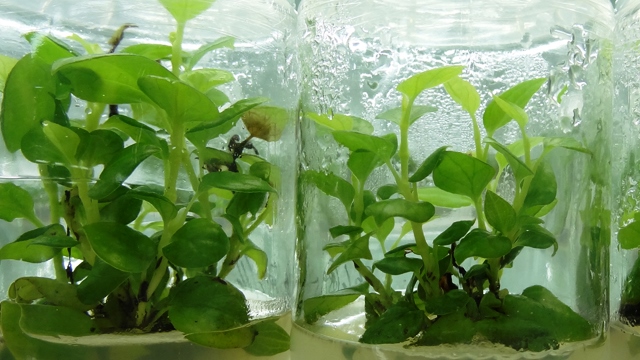
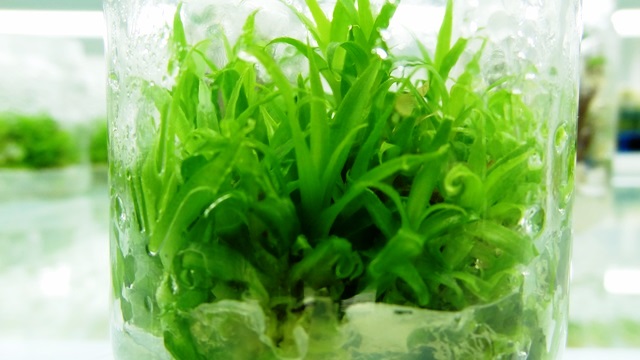
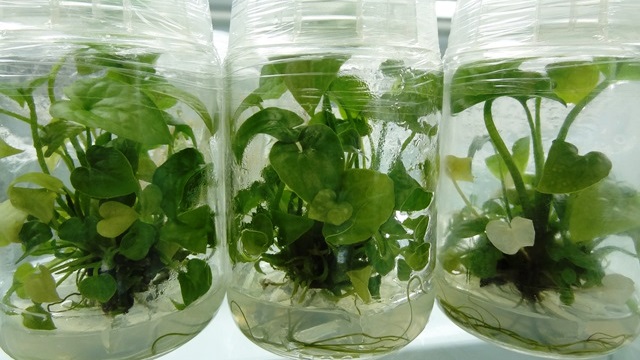
In vitro cultures of pineapple.


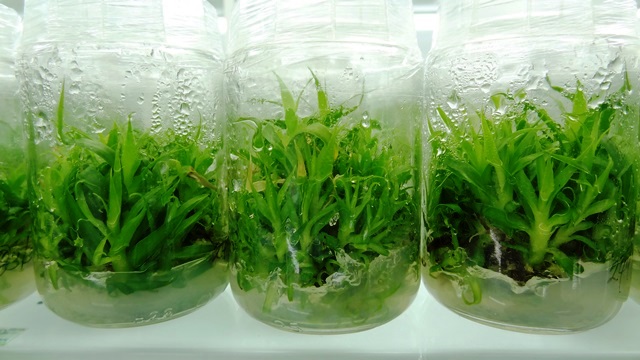
In vitro multiplication of pineapple.


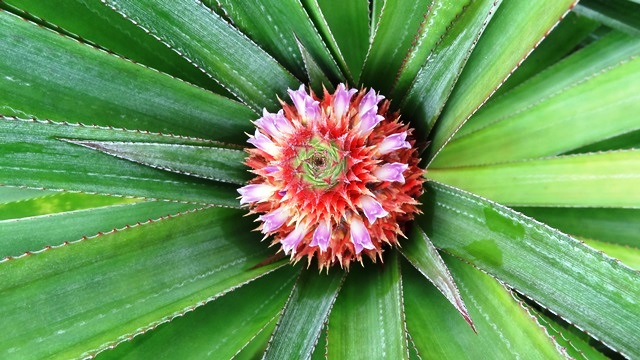
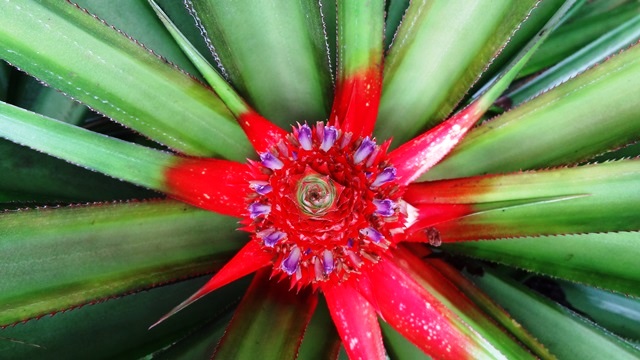
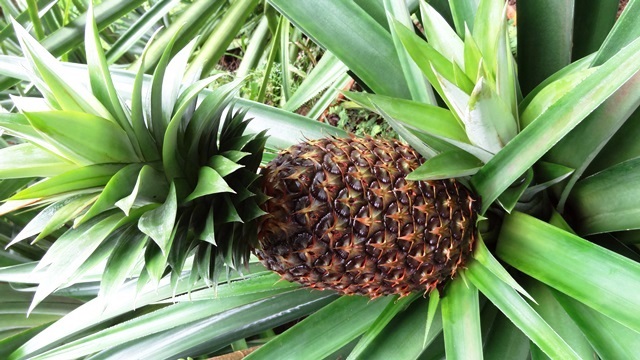
Pineapple flowering (Ananas comosus cv. Kosraean).


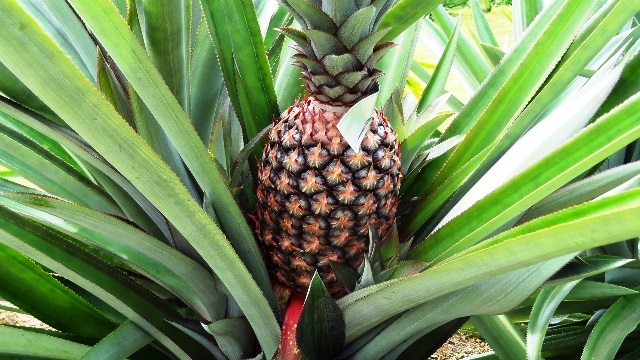
Pineapple cultivar (Ananas comosus cv. Kosraean).


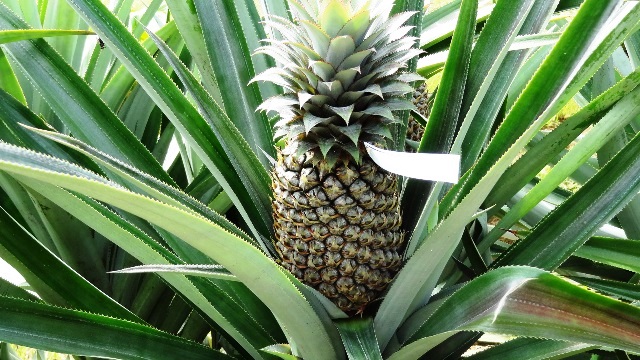
Pineapples (Ananas comosus cv. Kosraean).


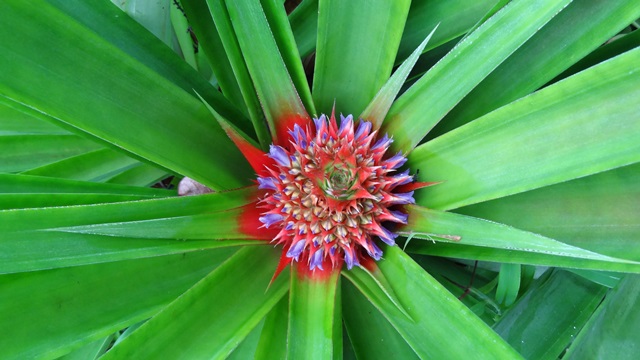
Pineapple flowering (Ananas comosus cv. Hawaiian).


Pineapple (Ananas comosus cv. Hawaiian).


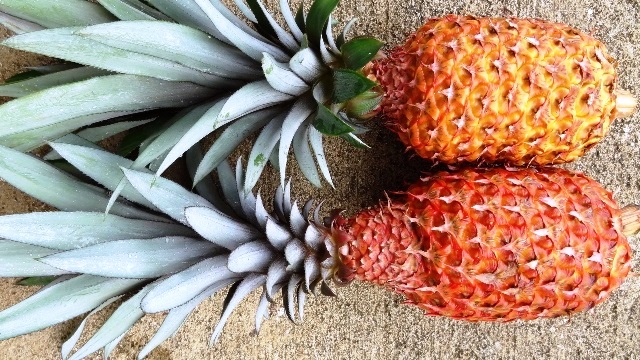
Pineapples (Ananas comosus cv. Hawaiian).


Pineapple flowering (Ananas comosus cv. Hawaiian thorn-less).


Pineapple (Ananas comosus cv. Hawaiian thorn-less).


Pineapple (Ananas comosus cv. Hawaiian thorn-less).


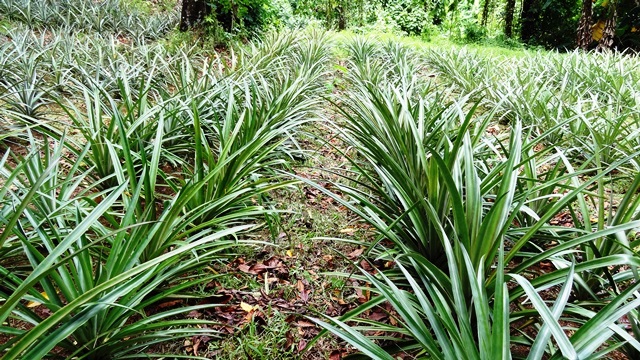
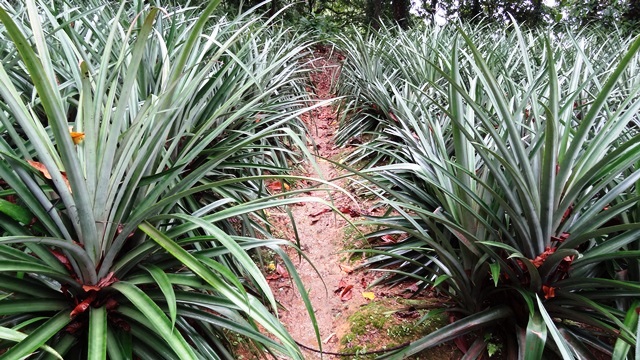
Pineapple demonstration plot.


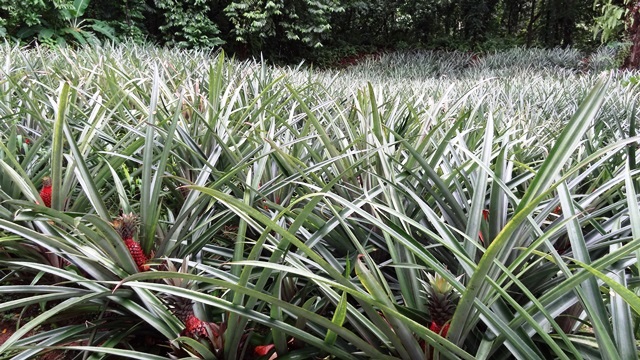
Pineapple research trials.


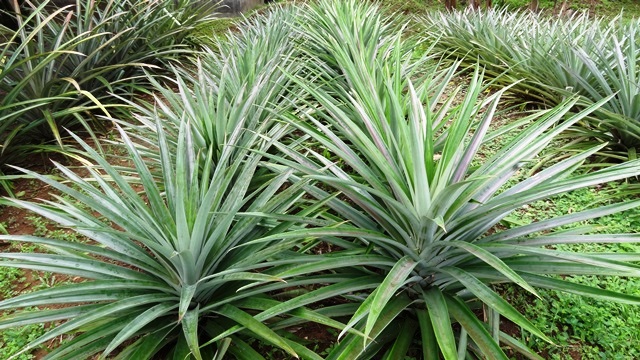
Pineapple cultivar Hawaiian thorn-less research trials.


Pineapple cultivar Hawaiian research trials.


Pineapple cultivar Kosraean research trials.

Filed Under: Kosrae Extension, Kosrae Research, News from land grants Tagged With: Kosrae, Pineapple

Yap CRE’s climate smart food production systems feature in 2017 annual Yap Day celebrations

March 11, 2017

YAP, FSM. Dr. Murukesan Krishnapillai, Researcher/Extension Specialist, Cooperative Research and Extension.

Yap celebrated its 49th Annual Yap Day from March 1-3, 2017. Yap Day is undoubtedly the most important celebration to acquaint everyone with the Yapese cultural milieu. It is a time of for endless enjoyments: learning about Yapese culture, history, society, and heritage on the ‘island of stone money,’ savoring local food, and acquiring traditional craft souvenirs. The most prevalent form of celebration during the Yap Day Festival is dance. This is also an occasion to highlight education activities and local development programs.

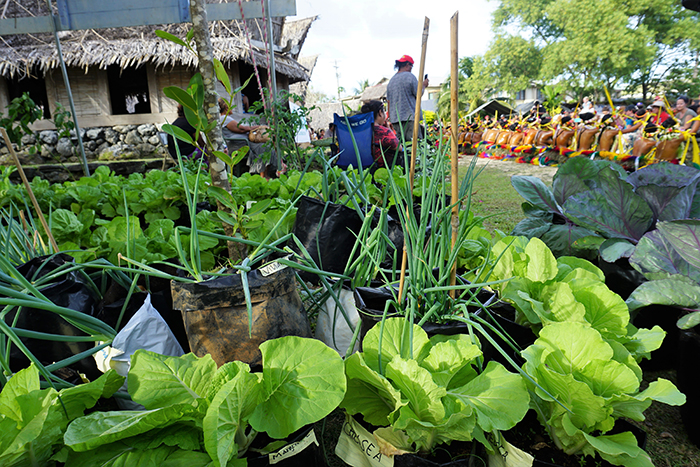
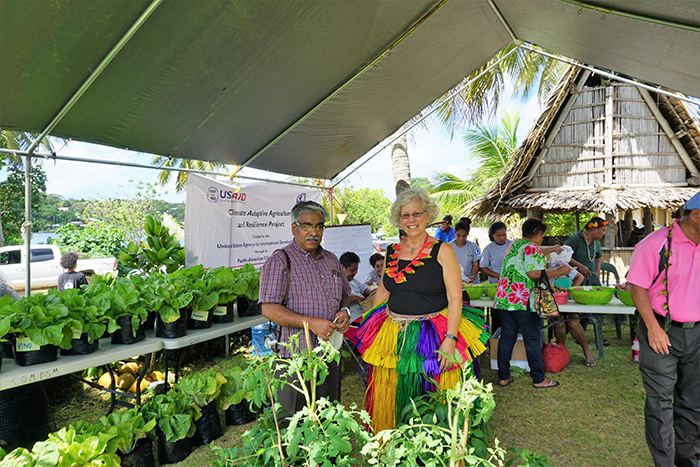
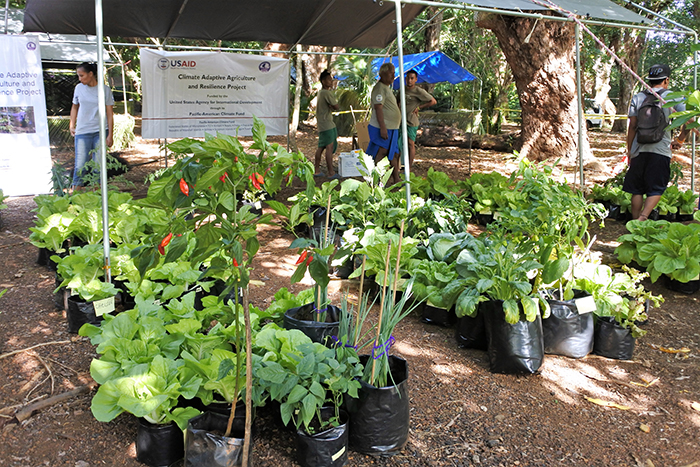
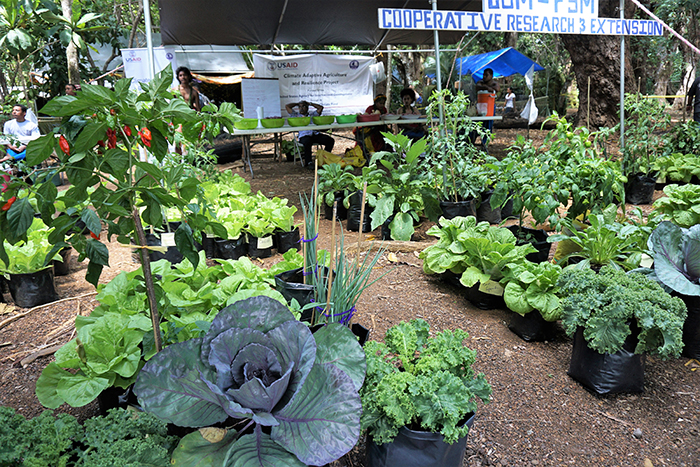
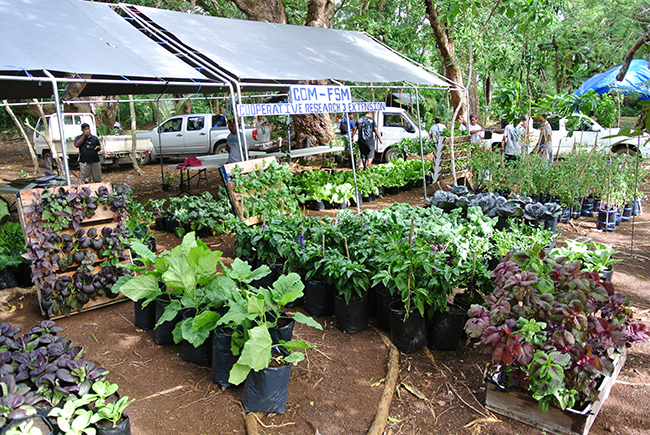
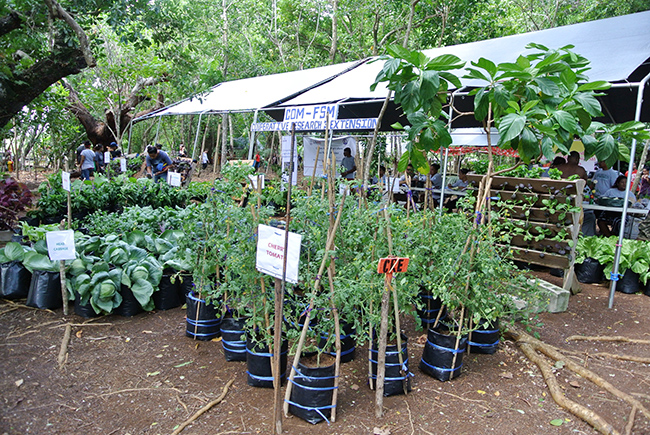
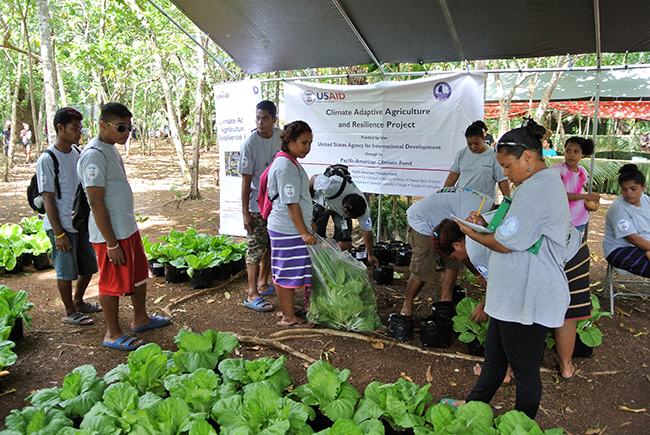
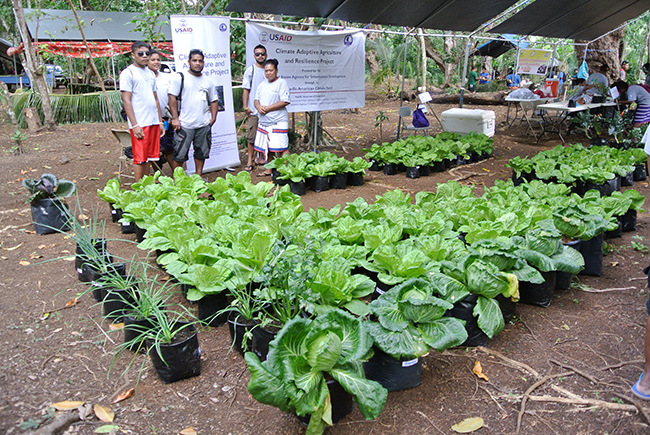
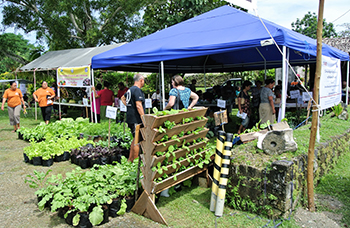
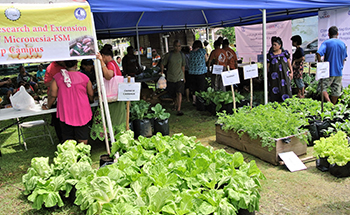
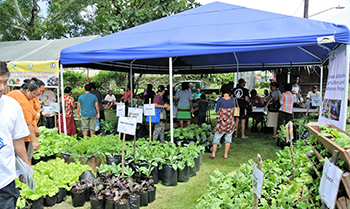
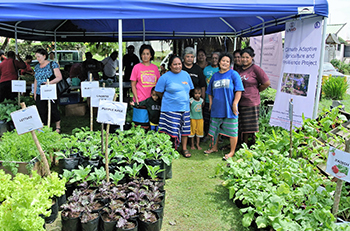
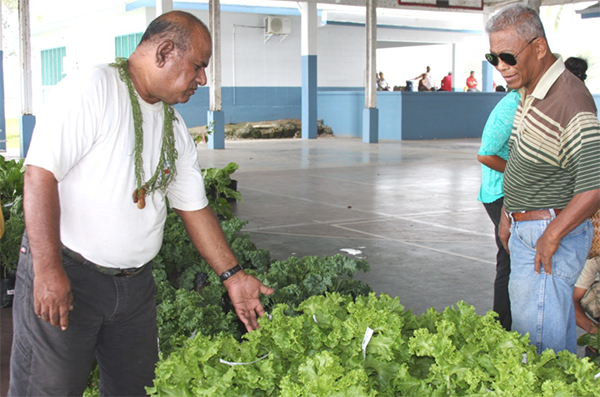
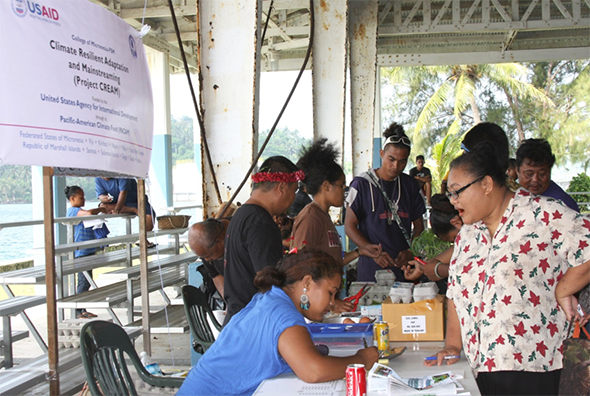
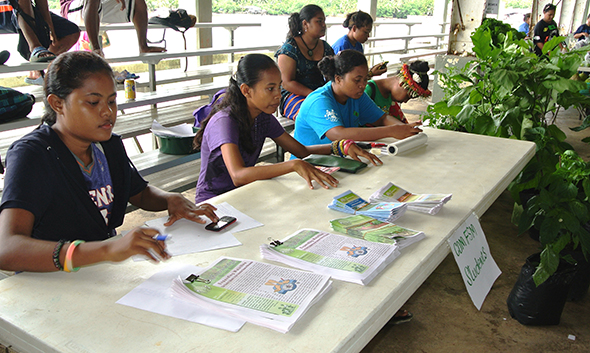
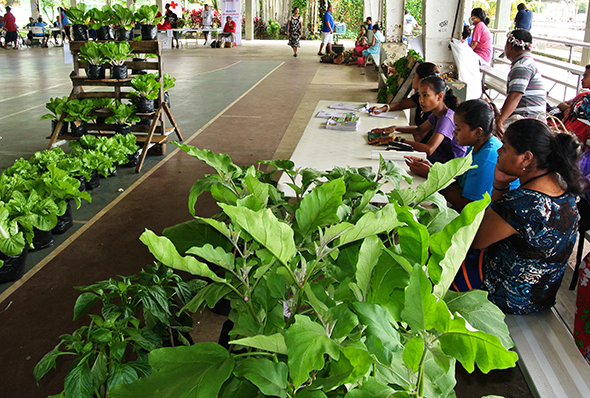
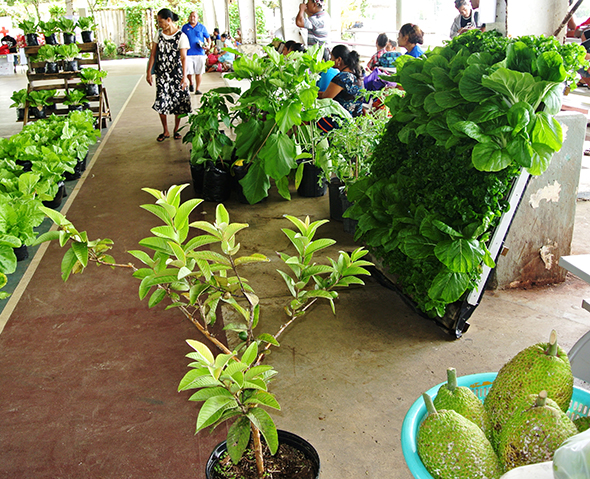
As part of its ongoing research, outreach and extension education, Yap CRE showcased various climate smart food production systems and low-cost urban garden models to impart knowledge about the importance of nutritious vegetables. This was a booth about food and nutrition security, explicitly addressing climate resilient development through adaptation efforts at the community level that reduce vulnerability by securing nutrition under a changing climate. A variety of nutritious fruit and leafy vegetables from CRE demonstration gardens and program clients, including USAID’s Pacific-American Climate Fund project on Climate Adaptive Agriculture and Resilience beneficiaries, were on display and sale. One of the vertical urban garden models – a salad wall – attracted special attention from visitors.

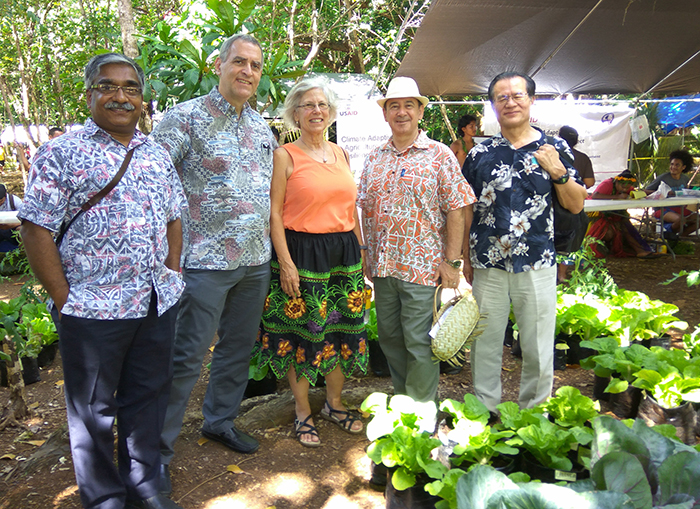
This collective effort of CRE staff, agriculture interns, work-study students, and CAAR project beneficiaries received wide acclaim from visiting dignitaries including the President of the Federated States of Micronesia, U.S. Ambassador, Japanese Ambassador, delegation from the Republic of Palau, and other officials, who were delighted to see a rich display of vegetables. Our booth on climate-smart food production systems was a novelty during this year’s Yap Day.

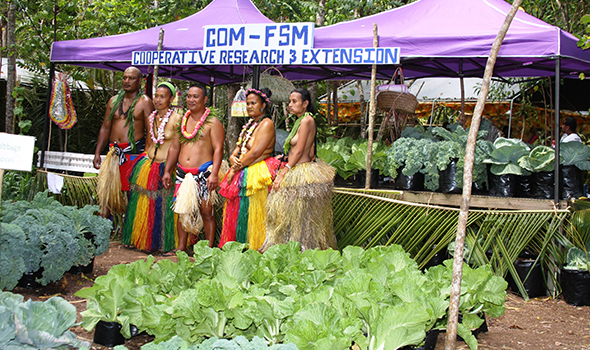
Views of Yap CRE booth displaying a spectrum of nutritious vegetables and various production methods.
Another view of booth.


Yap CRE staff and students taking a stock of vegetables and attending customers.


USAID-PACAM Climate Adaptive Agriculture Resilience Project’s beneficiaries displaying fresh home garden produce.


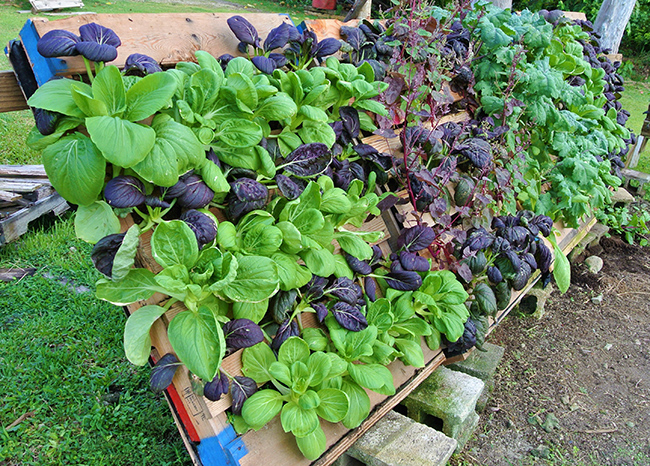
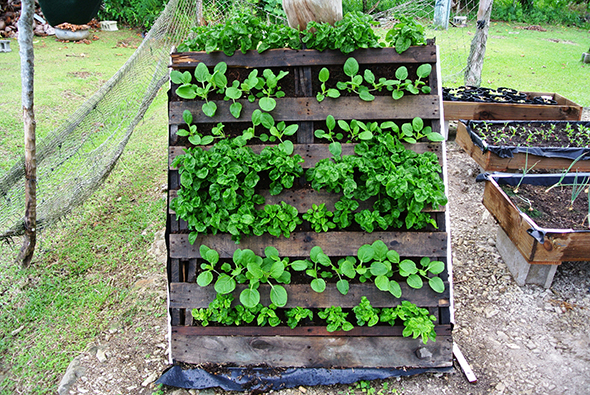
Salad wall: A vertical grower made out of re-purposed pallets to grow nutritious salad vegetables.

Filed Under: News from land grants, Yap Extension, Yap Research Tagged With: green vegetables, Yap Day

Highly efficient in vitro multiplication of commercially important black pepper cultivar, and sustainable commercial cultivation in Micronesia

February 26, 2017

KOSRAE, FSM. Dr. Virendra M. Verma, Researcher and Extension Specialist, Kosrae Agricultural Experiment Station.

Black Pepper Micropropagation for Elite Seedling Production: Comparison of Local Practices and Commercial Cultivation Methods, is a multi-state research project approved by the United States Department of Agriculture, National Institute of Food and Agriculture (USDA-NIFA) for the Micronesian region. The project director of this project, Dr. Virendra M. Verma, shared that this project involves multiplication of elite and disease-free black pepper seedlings, and a comparative research study of local practices and commercial cultivation methods. The project aims towards developing sustainable black pepper production systems in Micronesia by providing elite and disease-free seedlings, appropriate recommendations for commercial black pepper production, and developing skills and improving the agricultural knowledge of local farmers. Adoption of new practices such as micropropagation of black pepper for improved and enhanced productivity will ultimately help in reviving local black pepper industry.

This project is of great significance as it is specifically designed to develop black pepper micropropagation and nursery management systems to produce elite seedlings in bulk quantities to ensure the year-round availability of identical, disease-free and high quality planting material, find alternatives for tree fern supports, determine appropriate fertilizer type and doses, along with the development and publication of a commercial black pepper cultivation guide appropriate for Micronesia.

Black pepper (Piper nigrum L.) is a flowering vine of Piperaceae family, which is often cultivated for its berries that are usually dried and used as a spice. Native to the humid jungles of the Malabar Coast of Southwestern India, black pepper is currently cultivated worldwide in the tropics. In Micronesia, it is gaining commercial importance as an important cash crop. Traditionally, the trunks of large native tree fern (Cyathea nigricans), serve as supports for commercial black pepper cultivation. Two cultivars of the tree ferns are traditionally recognized, the preferred cultivar produces juice which stains red, and the other produces a greyish juice. However, the population of these tree ferns in the region is rapidly declining due to use of tree trunks for construction of traditional houses, and their short life-span.

In this project, an economically feasible, efficient, rapid and reproducible in vitro multiplication protocol was developed for a locally preferred and commercially important black pepper cultivar (Piper nigrum cv. Srilanka). Murashige and Skoog, 1962 medium (MS) was used throughout the study. The cultures were initiated by inoculating shoot meristems as explants on MS medium augmented with various concentrations and combinations of cytokinins and auxins. To prevent the browning of explants, 100mgL-1 ascorbic acid was added to all media. The best culture initiation was observed on the MS medium augmented with 5µM 6-benzylaminopurine (BAP). For further growth and subsequent multiplication, the established cultures were transferred on MS medium augmented with 1µM BAP. The number of multiple shoots produced from each explant after two subcultures varied from 8 to 20. A 16-h photoperiod with a temperature of 24oC day and night, light intensity of 40µmol m-2 s-1, and 60% relative humidity were maintained for multiplication. Developed multiple shoots were transferred on MS medium augmented with 2µM indole-3-acetic acid for rooting. Complete plantlets were transferred to soil: vermiculate (1:1, v/v) mixture in 72-cell trays and acclimatized with 68% survival rate in 10 weeks. Fully acclimatized plants were planted in the field.

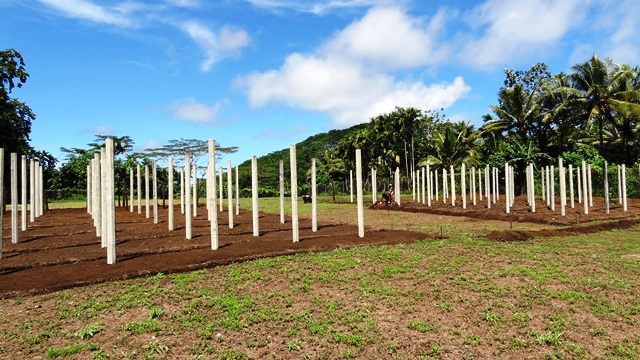
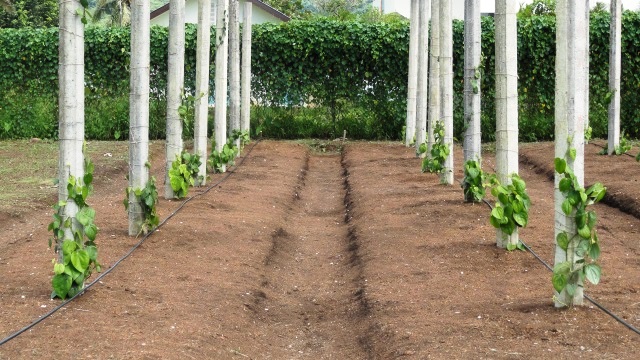
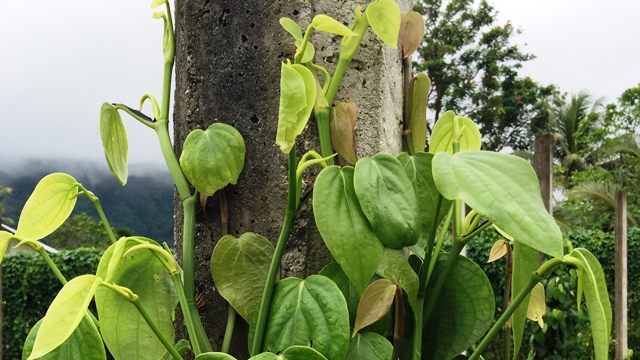
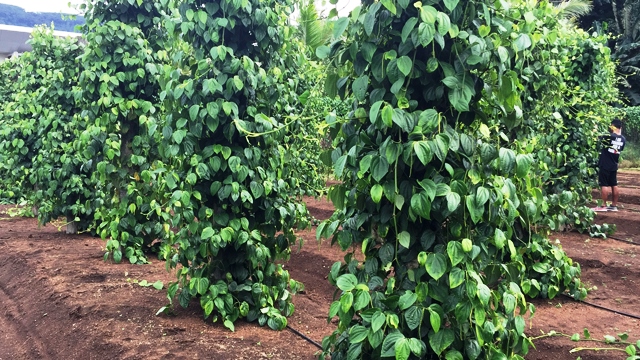
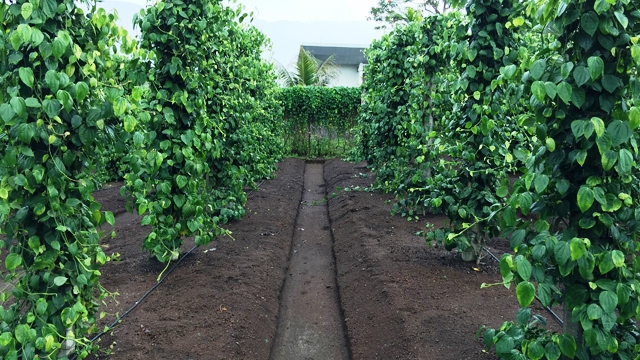
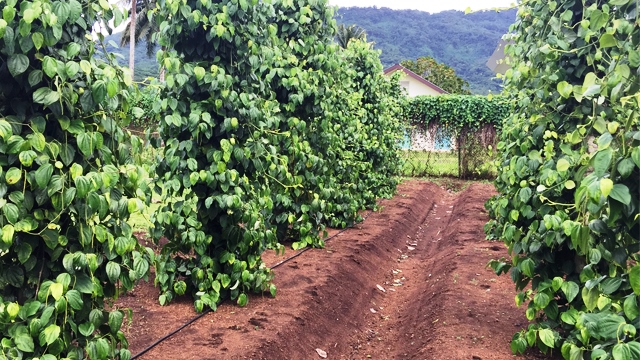
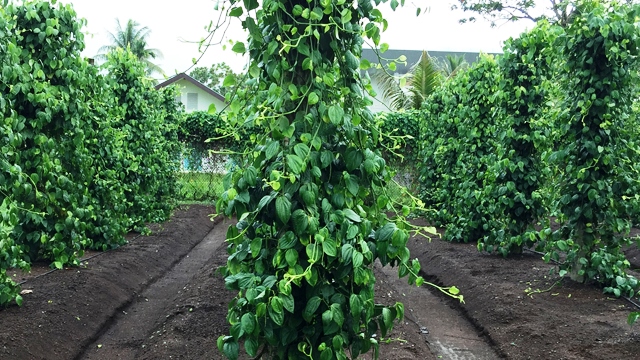
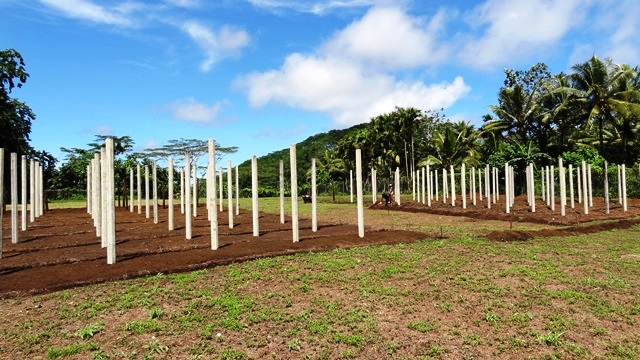
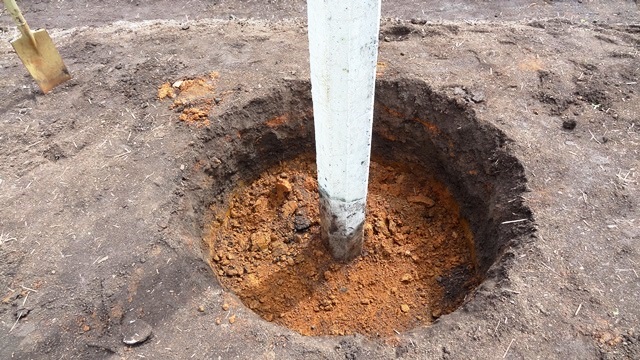
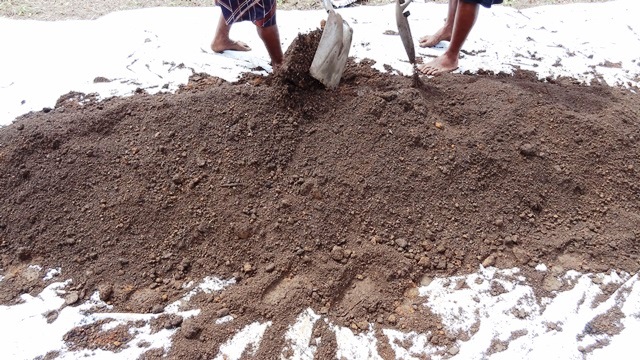
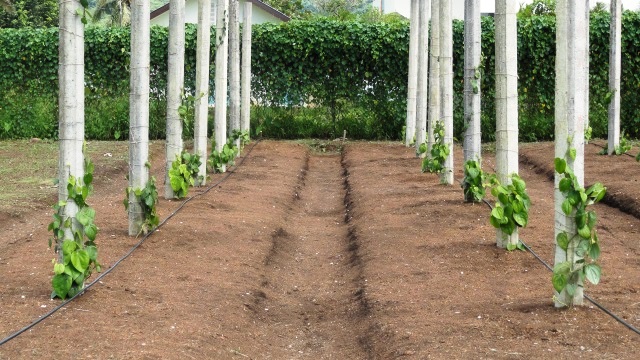
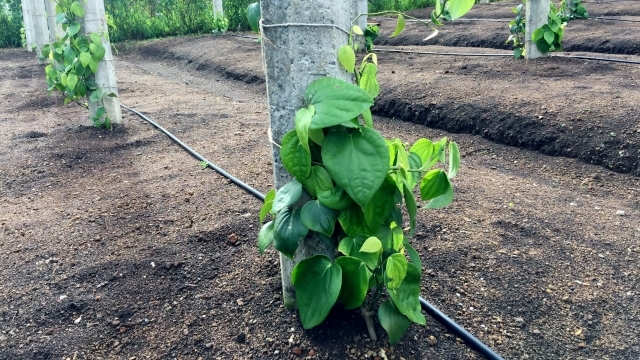
Considering the extremely limited availability of traditional tree fern supports and their very short lifespan, non-living supports such as reinforced cement-concrete standards have been specifically designed and constructed at the project’s pilot site to support the vines of fully acclimatized black pepper plants in the field. In addition, raised beds to ensure perfect water drainage, organic fertilizers for soil amendment along with organic mulching, and automatic fertilizer injectors to provide perfect nutrition, were used for the establishment and maintenance of black pepper plantations.

The successful implementation of this project has resulted in the development of a high efficiency in vitro multiplication method for the mass production of elite, diseases-free seedlings, and the acclimatization of hundreds of tissue-culture raised plants of selected black pepper cultivar through appropriate nursery management systems. Preparation has been done for designing, implementing and conducting research trials for commercial black pepper cultivation at multiple sites. The development and publication of a commercial black pepper cultivation guide to specifically suit the needs of local farmers, is also underway. To carry out research, extension, and education activities of the project, two sites in Micronesia will be developed as demonstration sites. At these sites appropriate recommendations will be provided for sustainable black pepper production through training workshops, hands-on trainings, farm visits, and field days, which will encourage and promote sustainable commercial black pepper production among local farmers in the region.

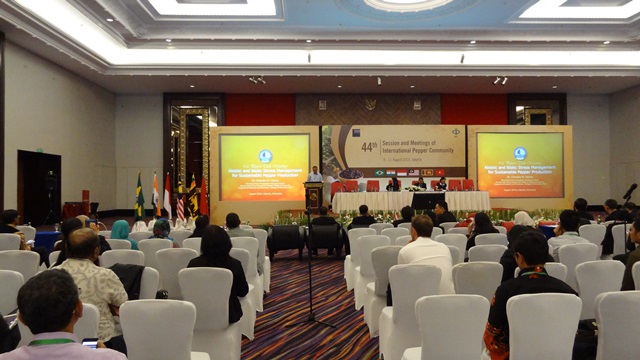
To disseminate the scientific and technical knowledge gained from the project further, Dr. Verma has participated as a prominent speaker and resource person in various conferences. His contributions specifically informed abiotic and biotic stress management for sustainable pepper production in Micronesia, and served as a guiding source for other black pepper producing countries.

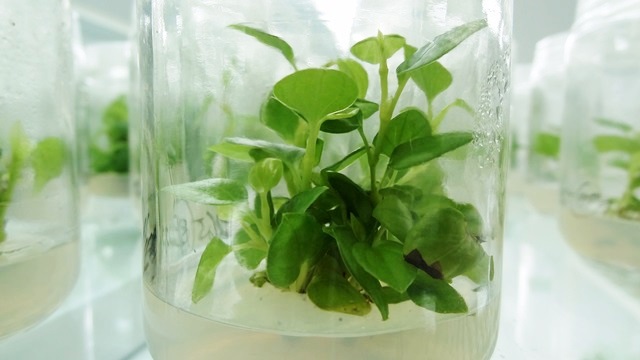
In-vitro cultures of black pepper.
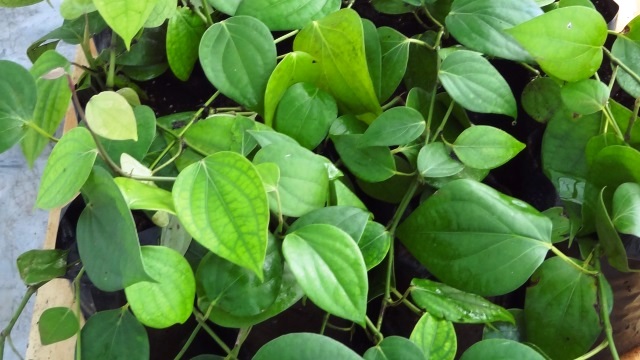
Acclimatized black pepper plants in nursery.
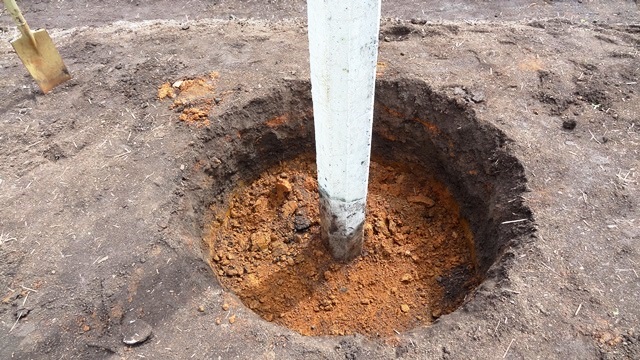
Reinforced cement concrete standards.
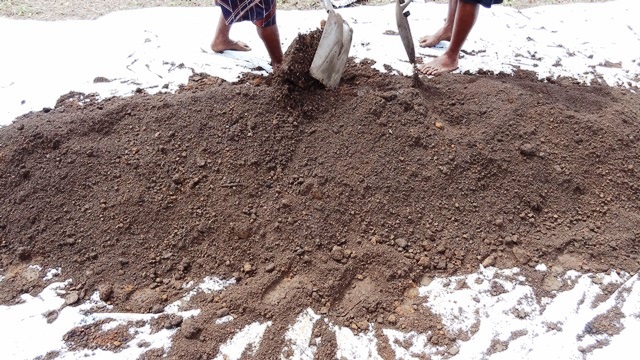
Soil amendments with organic fertilizers around reinforced cement concrete standards.
Soil amendments with organic fertilizers.
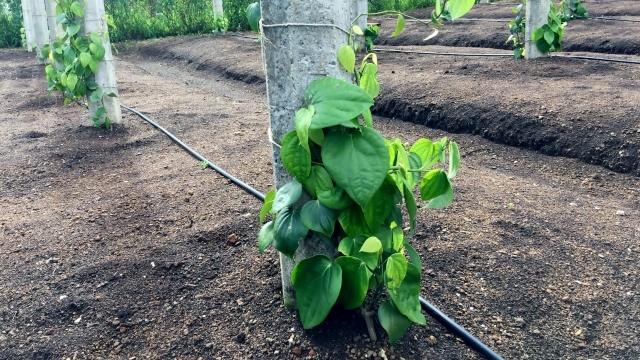
Raised bed for perfect water drainage and in vitro multiplied disease-free seedlings.
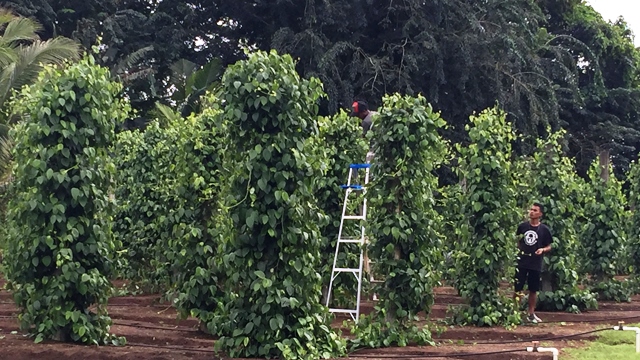
Establishment of black pepper plants in field.
Dr. Verma contributing valuable scientific and technical knowledge with other black pepper producing countries.
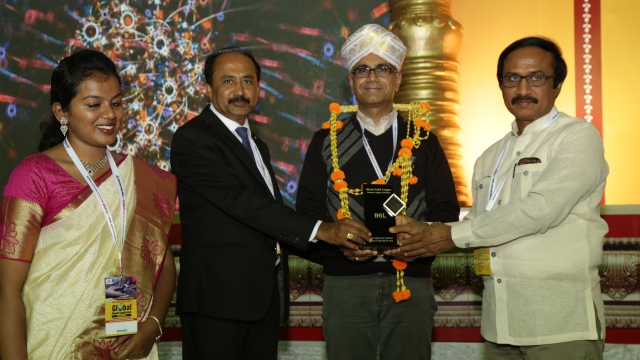
Honoring Dr. Virendra M. Verma as main technical and prominent resource person.

Filed Under: Kosrae Extension, Kosrae Research, News from land grants Tagged With: Black pepper, Kosrae

Yap CRE celebrated World Soil Day 2016

December 12, 2016

YAP, FSM. Dr. Murukesan Krishnapillai, Researcher/Extension Specialist, Cooperative Research and Extension.

Soil and land degradation is not only a physical or biochemical issue but also linked to socio-economic aspects. Poor and displaced atoll communities in Yap are the most affected by soil and land degradation as they are the ones usually occupying degraded land. Thus, achieving food security and eradicating extreme poverty requires dealing with the complexity of land degradation. Through USAID funded ‘Climate Adaptive Agriculture Resilience Project’, we empower and provide outreach, technical assistance and extension education to displaced atoll communities in volcanic soil management practices to effectively grow a variety of crops in degraded landscapes in Yap.

To commemorate and in support of World Soil Day 2016 (http://www.comfsm.fm/myShark/news/item=1681/mod=09:23:02), Yap CRE conducted two workshops on soil conservation using agroforestry practices. The objectives of these workshops were to impart the knowledge and importance of soils to the humanity and their relationship to sustainable development and food security. Over 50 community members including participants of USAID Project from community settlements in Ruu and Makiy attended this event. Using posters, hands on displays and PowerPoint presentations we educated communities the importance of soils from multiple perspectives. Later, community members from all age groups participated in a tree planting drive across the Makiy settlement (http://www.fao.org/global-soil-partnership/world-soil-day/wsd2016/events/en/).

First 3 winners, last photo, who planted highest number of saplings in one day received gifts of food baskets containing local produce.

And the competition winners are: (from left to right) – Begonia Lemairam, Williana Ilemangshiy and Rose Latachibemang. Bravo!


Filed Under: News from land grants, Yap Extension, Yap Research

Development of Salt Tolerant Sweet Potato (Ipomoea batatas (L.) Lam.) through Tissue Culture

November 8, 2016

KOSRAE, FSM. Dr. Virendra M. Verma, Researcher and Extension Specialist, Kosrae Agricultural Experiment Station, Kosrae.

Salinity and drought still remain the major abiotic stresses, which limit and pose a threat to agricultural production in many parts of the world including Micronesia. Dr. Virendra M. Verma’s research project entitled, “In Vitro Selection for Salt Tolerance in Sweet Potato,” is one effort to counteract these abiotic challenges, and contribute in sustainable agricultural production in Micronesian region. Approved by the United States Department of Agriculture, National Institute of Food and Agriculture (USDA-NIFA), this project focuses on developing salt tolerant varieties of Sweet Potato (Ipomoea batatas (L.) Lam.). The project director of this project, Dr. Verma, shared that both plant biotechnology and breeding methods were employed for the selection, assessment, and development of salt tolerant Sweet Potato varieties. Sweet Potato, a common food crop in Micronesia, was selected as the focus crop for this project because of its ‘typhoon-proof’ nature. Even after a typhoon(s), the storage roots of sweet potato remain protected under the ground, and can be used to reestablish the crop. Considering the local climatic conditions and socio-cultural demand for Sweet Potato in Micronesia, the development of salt tolerant varieties of the crop in the region, is of great significance.

Spread over a million square miles of the Western Pacific Ocean with a total land area of only about 271 square miles, the Federated States of Micronesia is made up of 607 small islands. Agriculture is an important industry that could greatly help in the economic development and growth through bringing food self-sufficiency in the region. However, current agricultural programs in Micronesia, are mostly at subsistence level, and economic development is largely dependent on the outside world. Serious damage caused by natural calamities such as wave surges, salt water flooding, and drought, continually pose challenges for the local farmers. Moreover, lack of technical know-how and changing life style along with the food habits of islanders, leading to an increase in the consumption of imported foodstuff; have led to an overall decline in local agricultural production in the region.

With the effects of global climate change and the increasing occurrence of natural disasters, farmers must be made aware of, and trained to adopt preventative measures to minimize impact of these disasters on their agricultural operations. Of all the cultivated root and tuber crops, sweet potato is probably the best at adapting quickly to new conditions. But still, its growth and development can be affected by adverse environmental conditions such as frequent wave surges and salt spray. Salinity, an abiotic stress that combines elements of water deficiency and sodium toxicity resulting in lost crop yield and arable land, is among the most serious and widespread of agricultural problems on the Micronesian islands. Hence, the focus of this project is to develop salt tolerant varieties of sweet potato.
Sweet potato ranks seventh in the world among food crops with respect to annual production, and it is the fifth most important food crop in developing countries. It is a highly functional low calorie food that contains various key nutrients. Every sweet potato contains high levels of starch, along with abundant vitamins (B-carotene, B1, C and E), minerals (Potassium) and dietary fiber (such as cellulose and pectin). To meet the ever-increasing demands of this nutritionally-rich and culturally-preferred food crop, there is crucial need to increase its agricultural production.
The cultivation of sweet potato is becoming more and more important with each passing day as the crop has great potential as food product. It needs a few inputs and has potentially high yields, which make it an inexpensive food. In addition, it is well suited for processing into food products for people and animals alike. Considered as the crucial staple crops for ensuring food, nutritional, and economic security, sweet potatoes are placed on high agricultural priority in the Micronesian region. However, the limitations in availability of salt-tolerant germplasm, and disease-free and elite seedlings, are a major bottleneck in sweet potato production. The ability to successfully grow sweet potato for sustenance in Micronesia depends on availability of salt tolerant varieties and on skillful use of appropriate cultivation techniques.

The study undertaken in Dr. Verma’s this research project, involved the assessment and development of salt tolerance in sweet potato through in vitro, greenhouse, and field selection of tissue-culture raised plants. To establish aseptic cultures of collected sweet potato germplasm, various in vitro experiments were performed. Different concentrations of sodium chloride were used for in vitro selection of salt tolerant germplasm, which was further evaluated for salt tolerance in the greenhouse., In vitro selected germplasm of salt tolerant sweet potato was finally field evaluated at eight sites in four replications. Results based on various physiological and morphological parameters collected during this research indicate that the developed salt tolerant varieties of sweet potato performed very well at coastal sites where salt spray due to high wave surges is very frequent. The findings of this research are being disseminated locally and globally through presentations in national and international conferences. To provide local farmers and producers with guidelines for cultivating sweet potato, an extension publication in form of a book entitled, “Sweet Potato Cultivation Guide,” has been published.

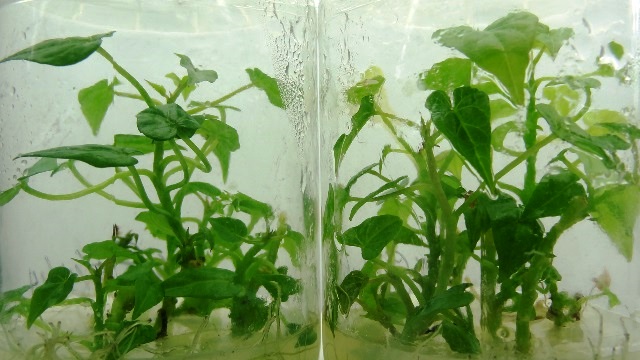
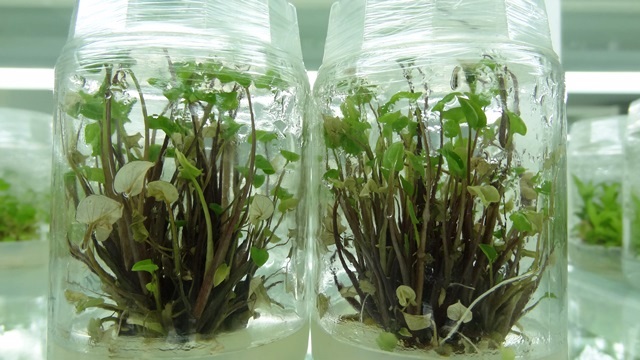
Invitro cultures of salt-tolerant sweet potato.
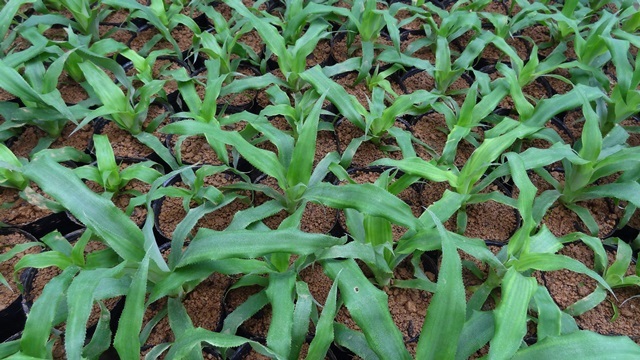
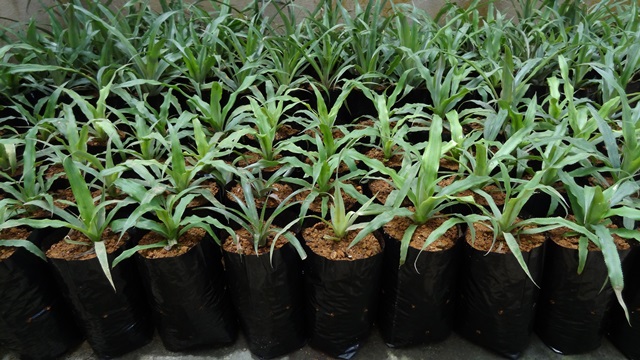
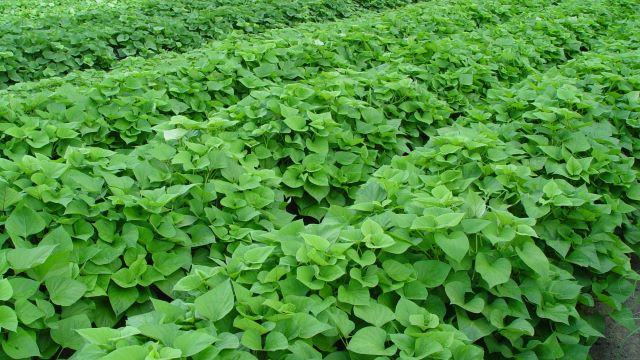
salt-tolerant-sweet-potato-in-field-for-evaluation
Salt-tolerant sweet potato-in-field for evaluation.

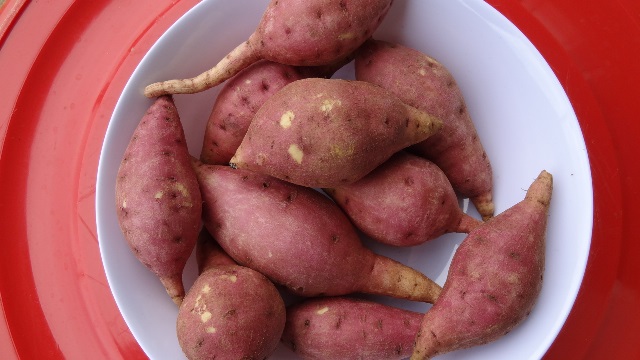
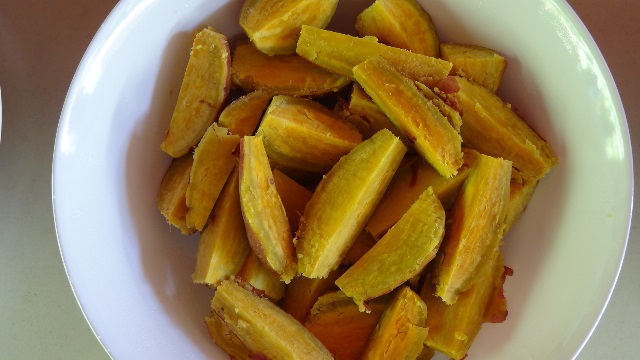
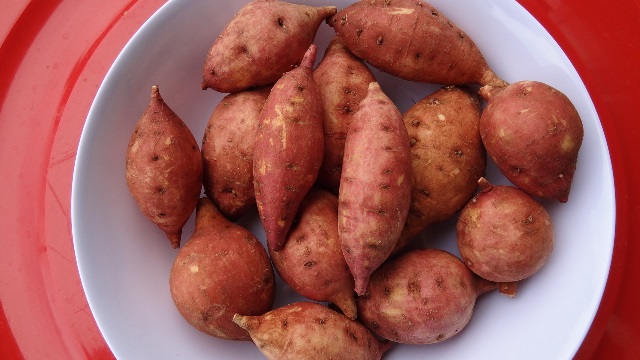
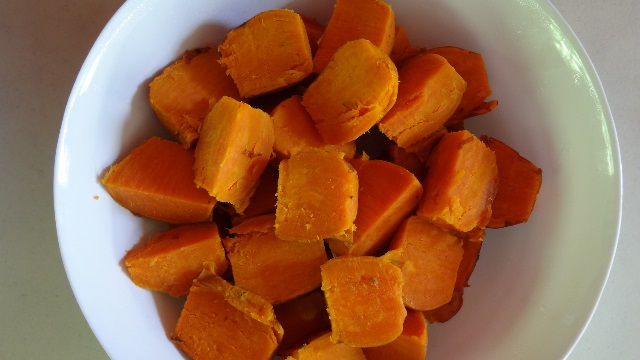
The cultivation of developed salt tolerant sweet potato varieties in Micronesia through this research project will lead to successful production of sweet potato in the region, and contribute in sustaining traditional socio-cultural life of the Micronesian people, and thereby, play a critical role in ensuring food and nutritional security of the region.  Examples of raw and cooked test varieties are below.  Recently, many countries have embraced sweet potato as a substitute for imported carbohydrates and for attaining national food security goals. The crop is also gaining importance as a key income earner for many small-scale producers, and a foreign exchange earner for many countries. As such, there is a growing global demand for sweet potato. It is our hope that the outcomes of this research will provide current and potential farmers and producers with practical information that will assist in developing sustainable crop production systems, and increasing productivity of sweet potato in Micronesia and beyond.

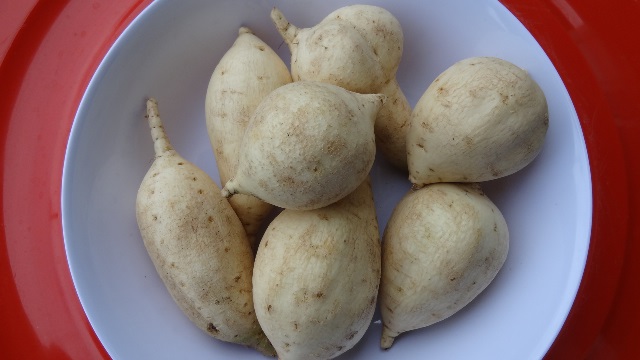
Selected salt-tolerant-sweet potato germplasm - cultivar 1.
Selected salt-tolerant-sweet potato germplasm – cultivar 1.
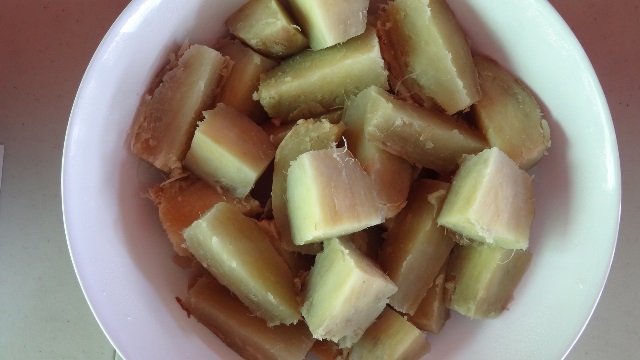
steamed-salt-tolerant-sweet-potato-germplasm-for-taste-evaluation-1
Steamed salt-tolerant-sweet potato germplasm – cultivar 1.


Selected salt-tolerant-sweet potato germplasm - cultivar 2.
Selected salt-tolerant-sweet potato germplasm – cultivar 2.
steamed-salt-tolerant-sweet-potato-germplasm-for-taste-evaluation-2
Steamed salt-tolerant-sweet potato germplasm – cultivar 2.


Selected salt-tolerant-sweet potato germplasm - cultivar 3.
Selected salt-tolerant-sweet potato germplasm – cultivar 3.
steamed-salt-tolerant-sweet-potato-germplasm-for-taste-evaluation-3
Steamed salt-tolerant-sweet potato germplasm – cultivar 3.

Filed Under: Kosrae Extension, Kosrae Research, News from land grants

Yap CRE participated in the World Food Day 2016 celebrations

October 17, 2016

YAP, FSM. Dr. Murukesan Krishnapillai, Researcher/Extension Specialist, Cooperative Research and Extension.

Food and Agriculture Organization of the United Nations (FAO) celebrates World Food Day each year on 16 October to commemorate the founding of the Organization. This year, World Food Day was exceptionally celebrated on 14 October. The theme of this year’s World Food Day was “Climate is changing. Food and Agriculture must too.”  Photos of this great event are below!

One of the biggest issues related to climate change is food security. Population in the small island developing states are being hit hardest by higher temperatures and in weather-related disasters. These disasters are intensified by climate change and are increasing in frequency and intensity. Without concerted action to build resilience, many of the poorest and most vulnerable island inhabitants will struggle to generate enough food and income to feed themselves and their families.

The Cooperative Research and Extension (CRE) wing of the College of Micronesia-FSM, Yap Campus participated in the World Food Day 2016 activities with usual fervor. This year, Yap observed World Food Day along with the International Day for Disaster Reduction at Yap’s Living History Museum premises. Besides Yap CRE, Yap Interagency Nutrition Education Council (YINEC), International Organization for Migration (IOM) and Waab Community Health Program attended this event. Yap State organizing committee for Food Security and Catering for the upcoming 2018 Micronesian Games also participated in the event by displaying and testing out samples of healthy menus for public comments and feedback.

As part of the celebrations, Yap CRE exhibited various vegetable cultivation models and climate-smart, low-cost food production systems. The highlight of this year’s event was the involvement of participants from USAID funded Climate Adaptive Agriculture and Resilience Project. Participants displayed and sold various farm produce grown in their home gardens as part of this project.

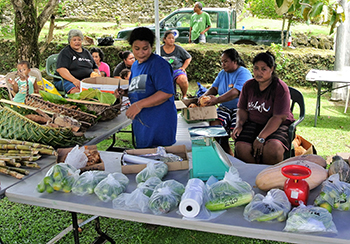
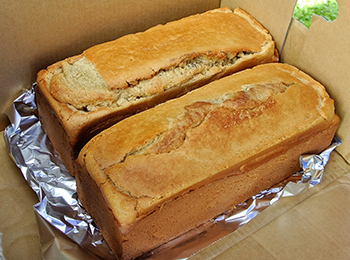
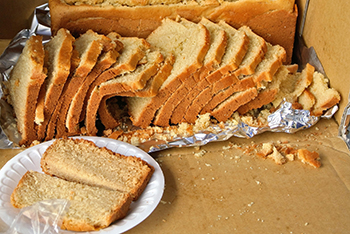
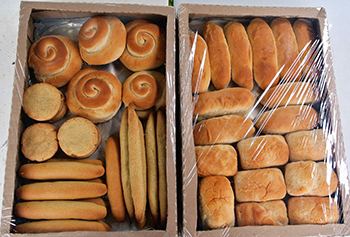
The Expanded Food and Nutrition Education Program (EFNEP) of Yap CRE displayed various value added products made from local produce such as mango jelly, pumpkin jam, native orange jelly, hibiscus jelly, breadfruit flour, breadfruit chips and banana chips. Loaves of bread, pastries and cookies made from breadfruit flour attracted special attention of the public.

Photos of World Food Day on Yap! 
View of CRE Booth. Fresh veggies attracted the attention of public.
 photo-2-350 photo-3-350
 More, fresh veggies attracted the attention of public. Some of the participants of USAID Project – Climate Adaptive Agriculture and Resilience.
 photo-4-350  photo-5-350
Participants of USAID Project displayed and sold various small farm produce besides vegetables. Loaves of bread made out of breadfruit flour.
 photo-6-350 photo-7-350
 More, loaves of bread made out of breadfruit flour.  Pastries and cookies made out of breadfruit flour.
 photo-8-350  photo-9-350
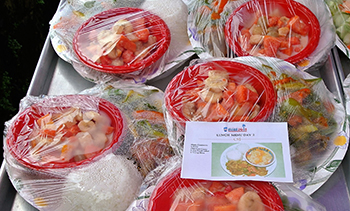
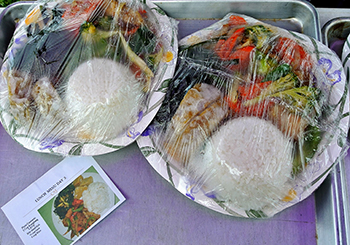
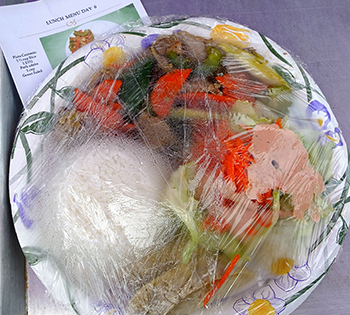
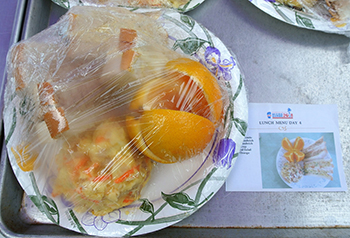
Healthy lunch plates prepared by Food Security and Catering Committee for the 2018 Micronesian Games.  More healthy lunch plates.
 photo-10-350  photo-11-350
More healthy lunch plates.  More healthy lunch plates.
 photo-12-350 photo-13-350
More healthy lunch plates. Healthy lunch plates from YINEC.
 photo-14-350 photo-15-360


Filed Under: News from land grants, Yap Extension, Yap Research

Yap CRE conducted two workshops on chicken farming and food processing

September 4, 2016

YAP, FSM. Steven Young-Uhk, Coordinator, Cooperative Research and Extension.

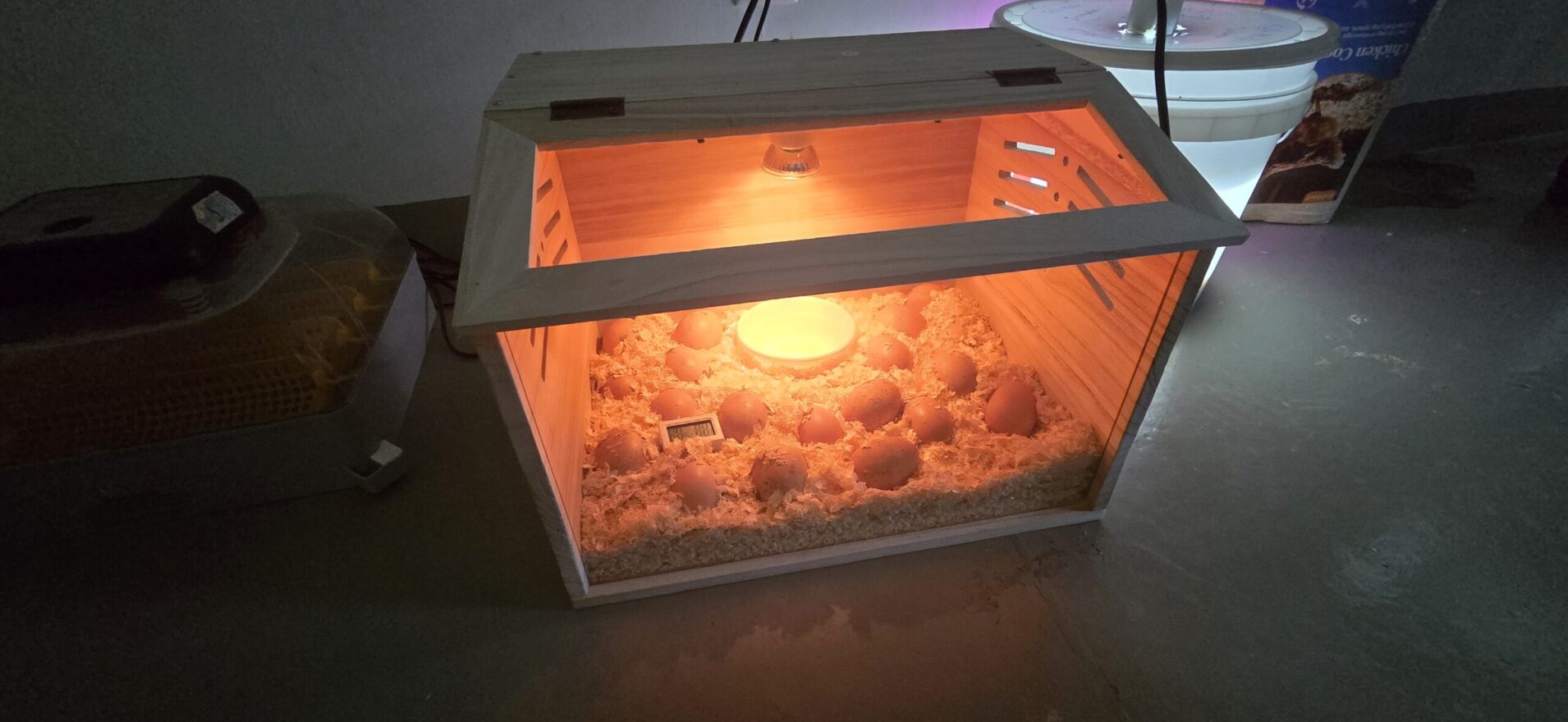
Yap CRE conducted a three-day workshop on chicken farming between August 3 and 5. Twenty-seven participants including extension agents, agriculture professionals, farmers, men and women attended the workshop. On the first day, participants learned about best practices on caring for a day-old chicks, feeding and caring of pullets, and laying hens. Additionally, Yap Small Business Development Center made a presentation and held discussions on the cost/benefit analysis of raising chickens for eggs in Yap. On the second day, hands-on training on local feed processing for laying hens was provided. The 3rd day of the workshop was devoted to field trip in which participants were introduced to several family chicken farms, giving them firsthand information about the layout, housing designs, types of waterers and feeders, litter materials, and different ways for nesting and roosting.

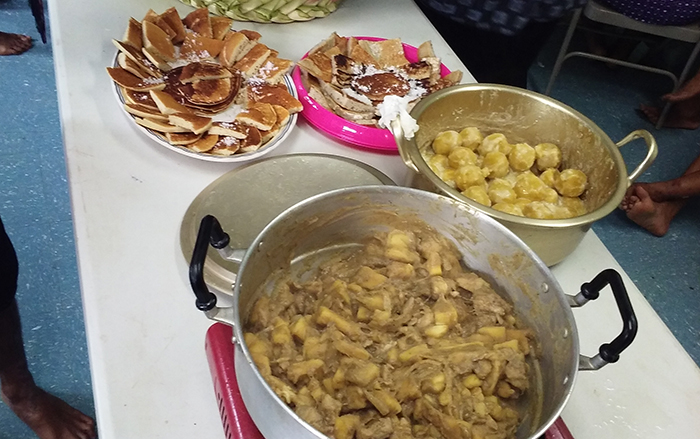
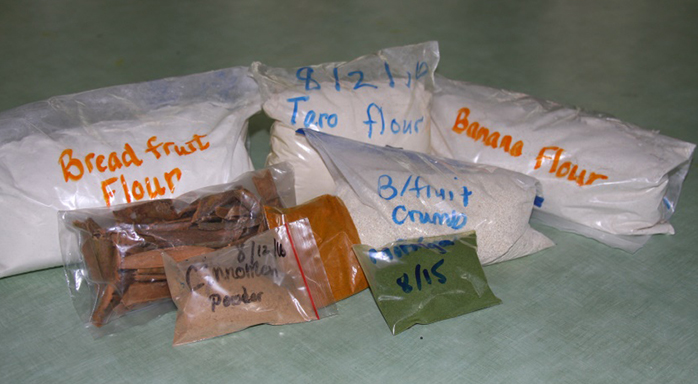
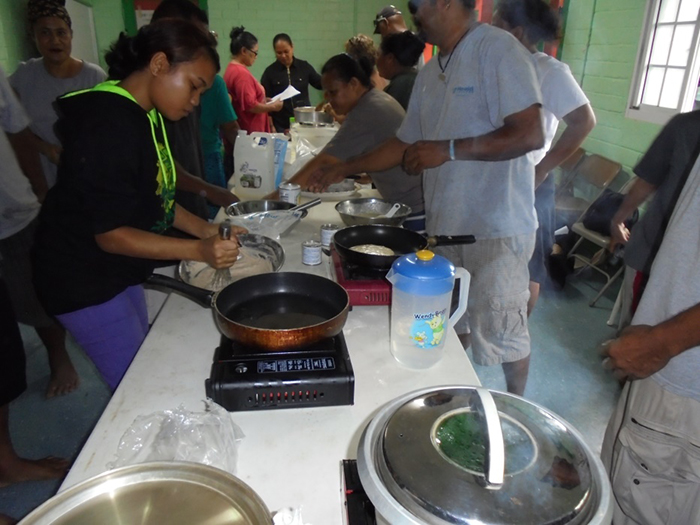
The second workshop on food processing was conducted from August 16 to 18. Altogether 44 participants including extension staffs, agriculture professionals, school teachers, business owners, food processors and farmers attended this workshop. This three-day event exposed participants to method of processing breadfruit into flour, local method of preserving breadfruit through fermentation called mar, and uses of flour in several recipes. Several products made from breadfruit flour, taro flour and banana flour were on display. Information on breadfruit including propagation methods, uses and value-addition, marketing, and nutritional and health benefits were also presented.

The Western Sustainable Agriculture Research and Education (WSARE) through the College of Micronesia-Land Grant Program supported these workshops.

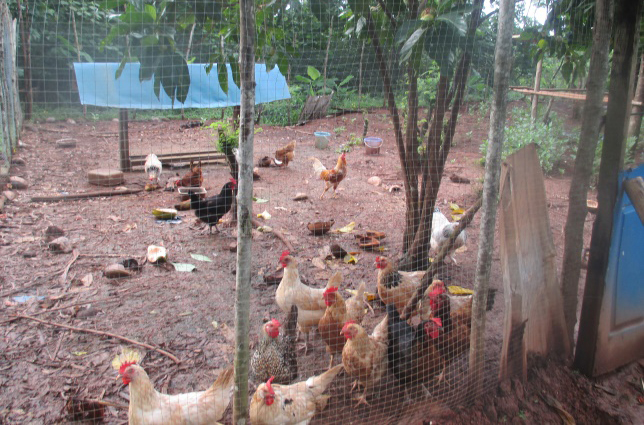
A typical backyard chicken farm for the family; a fenced area to provide protection and space for birds to range and makeshift shelters for roosting, nesting, waterer and feeders.


Presentation on caring and feeding of pullets and layers during the workshop on chicken farming.


Locally made chicken feed.


Locally processed food items on display during food processing workshop.


Locally processed food products.
Participants tried out locally made breadfruit flour in many cooking recipes.

Filed Under: News from land grants, Yap Extension Tagged With: breadfruit, chicken, food processing, Yap

Yap CRE researcher bags international award

August 7, 2016

YAP FSM.

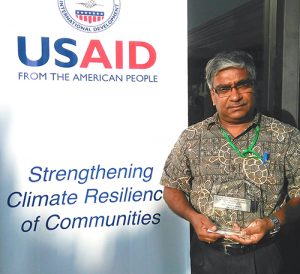
Dr Muru with his award.

Dr. Murukesan Krishnapillai, Researcher/Extension Specialist from the Cooperative Research and Extension, College of Micronesia-FSM Yap Campus won one of the two top prizes for Best Papers Awards during the two-day Symposium on Climate Change Adaptation in the Pacific Region held on July 27-28 at Tanoa Waterfront Hotel in Lautoka, Fiji. This symposium was organized by the University of Fiji in collaboration with the Research and Transfer Centre “Applications of Life Sciences” of the Hamburg University of Applied Sciences (Germany) and the International Climate Change Information Program (ICCIP). It focused on “fostering resilience and the regional capacity to adapt” showcasing experiences from research, field projects and best practices in climate change adaptation among countries in the region and that could be replicated elsewhere. The event was held in conjunction with USAID Pacific American Climate Fund Midterm Regional Workshop on Grant Implementation Challenges, Achievements and Best Practices. The College of Micronesia-FSM Yap CRE is one of the grantees, and through their USAID funded Climate Adaptive Agriculture and Resilience project is working to make displaced atoll communities more resilient and able to respond to crises magnified by the changing climate.

Dr. Muru’s paper on “Climate-friendly adaptation strategies for the displaced atoll population in Yap” won the second prize in the Best Papers Award category. The paper will be published in the upcoming book on “Climate Change Adaptation in Pacific Countries: Fostering Resilience and Maintaining Life Quality” as part of the award-winning book series ‘Climate Change Management’ published by Springer http://www.springer.com/series/8740.

Caption for front picture:
Dr. Muru receives award from Dr. Arthur Webb, Coastal Zone Scientist at University of Wollongong’s Australian National Centre for Ocean Resources and Security, and one of the Lead Authors of IPCC’s 5th Assessment Report on Small Islands.

Filed Under: News from land grants, Yap Research Tagged With: climate change, Yap

COM’s RMI Regent Minister Heine Visits Sea Cucumber Hatchery

June 19, 2016

KOLONIA, POHNPEI, FSM. Dr. Manoj R. Nair, Director & Chief Scientist, COM Land Grant Aquaculture Programs, Nett Point, Pohnpei, FSM.

College of Micronesia Land Grant Program (NIFA, USDA) (COMLG), Board of Regents Member & Minister of Education Republic of the Marshall Islands Mr. Wilbur Heine and College of Marshall Islands Dean of Land Grant Mr. Biuma Samson visited Pohnpei from June 5-7, 2016.

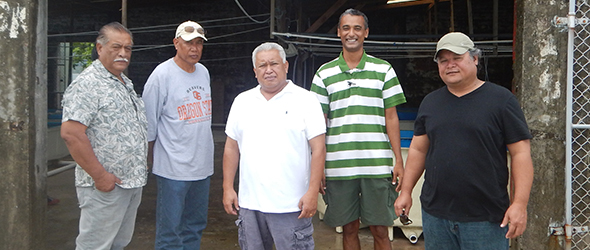
Left to Right OFA Administrator Mr. Casiano Shoniber, Dean CMI Land Grant Biuma Samson, RMI Ambassador to Washington DC Mr. Gerald Zackios,, Director and Chief Scientist COM Aquaculture , Dr. Manoj R. Nair , Minister of Education RMI and COM Board Member, Mr. Wilbur Heine in front of the COM Land Grant Nett Point Hatchery at Nett Point, Pohnpei State.
Left to Right OFA Administrator Mr. Casiano Shoniber, Dean CMI Land Grant Biuma Samson, RMI Ambassador to Washington DC Mr. Gerald Zackios, Director and Chief Scientist COM Aquaculture, Dr. Manoj R. Nair , Minister of Education RMI and COM Board Member, Mr. Wilbur Heine in front of the COM Land Grant Nett Point Hatchery at Nett Point, Pohnpei State.

The main purpose of the visit was to visit the COM Land Grant Aquaculture Program at the COM Land Grant Nett Point hatchery. The COM Land Grant hatchery at Nett Point is currently developing site specific aquaculture technologies for economic development of FSM and Palau. The main focus currently is on sea cucumber aquaculture. The targeted species is the commercially important sea cucumber species Holothuria scabra commonly called sandfish and locally called “Langon” in Pohnpeian language. The sea cucumber farming tehnology being developed and trialed is based on hatchery produced sea cucumber juveniles.

Minister Wilbur Heine wanted to actually see the work being undertaken hands on by the local staff under the supervision of Dr. Nair. Minister Wilbur Heine and Dean Biuma Sampson had discussions with Dr. Nair to explore the possibility of coming over and establishing a sea cucumber hatchery in Majuro at the CMI Arrak Campus aquaculture facility and train Marshallese staff at COM Land Grant Nett Point hatchery on sea cucumber. These staff are expected to run the hatchery in Majuro when finished and up and running.

During the visit at Nett Point, Minster Wilbur Heine and Dean Biuma Samson also had the opportunity to meet the new Adiminstrator of Pohnpei State Government Office of the Fisheries and Aquaculture (OFA) Mr. Casiano Shoniber. The Minister Wilbur Heine and Dean CMI Land Grant was accompanied by Former Secreteriat of Pacific Community (SPC) Northern Region Chief and the new Republic of the Marshall Islands Ambassador to Washington DC, Mr Gerald Zackios.

Filed Under: News from land grants, Pohnpei Research Tagged With: aquaculture, Pohnpei

Development of Salt tolerant giant swamp taro (Cyrtosperma merkusii (Hassk.) Schott) and soft taro (Colocasia esculenta (L.) Schott) through tissue culture

May 6, 2016

KOSRAE, FSM. Dr. Virendra M. Verma, Researcher and Extension Specialist, Kosrae Agricultural Experiment Station.

Salinity and drought still remain the major abiotic stresses that limit as well as pose a threat to agricultural production in many parts of the world including Micronesia. The research project entitled, “In Vitro Selection for Salt Tolerance in Taro,” focused on developing salt tolerant varieties of giant swamp taro (Cyrtosperma merkusii (Hassk.) Schott), and soft taro (Colocasia esculenta (L.) Schott). Approved by the United States Department of Agriculture, National Institute of Food and Agriculture (USDA-NIFA), this project incorporated both plant biotechnology and breeding methods for the selection, assessment, and development of salt tolerant taro varieties. The project director of this project, Dr. Virendra M. Verma, shared that since taro is grown in lowland swamp areas across Micronesia, the crop is especially vulnerable to damage from saltwater. Considering the traditional and cultural importance given to giant swamp taro and soft taro as the most important staple food crops in the Micronesia region, the availability of salt tolerant taro varieties through this research project, is of great significance.

Giant swamp taro and soft taro, members of the family Araceae, are ancient crops that are grown throughout the humid tropics for their edible corms, leaves and petioles as well as for traditional uses. Nutritionally, taro is rich in fiber, calcium, potassium, iron, vitamin A, vitamin B1, vitamin B2, and vitamin C. The corms of taro are superior to potatoes in nutritional value, containing a higher proportion of proteins, calcium and phosphorus. The vitamin B content in taro corms is equivalent to that of cabbage and twice that of potato. Taro also contains greater amounts of vitamin B-complex than whole milk. In corms, the main bulk starch is present in very fine grains which make them easily digestible. The corms can be boiled, roasted, fried as chips or cooked in curries. The young leaves and petioles of soft taro are also used as food and cooked like any other green vegetable. The cooked leaves of soft taro have the same nutritional value of spinach.

Salinity, an abiotic stress that combines elements of water deficiency and sodium toxicity resulting in lost crop yield and arable land, is among the most serious and widespread of agricultural problems on the Micronesian islands. Giant swamp taro and soft taro are among the most important staple food crops in the region. Cultivated for local consumption as well as for export, these crops contribute significantly to the regional socio-economic growth and provide livelihood to almost all island people. Considered as the crucial staple crops for ensuring food, nutritional, and economic security, taros are placed on high agricultural priority in the region. However, the limitations in availability of salt-tolerant germplasm, and disease-free and elite seedlings, are a major bottleneck in taro production. Therefore, the efforts to develop salt-tolerant plants are of immense importance to increase crop productivity. In recent years, tissue culture based in vitro selection has emerged as a feasible and cost-effective tool for developing and/or screening salt tolerant germplasm.

The research study undertaken in Dr. Verma’s project involved assessment and development of salt tolerance in giant swamp taro and soft taro through in vitro, greenhouse, and field selection of tissue-culture raised plants. To establish aseptic cultures of collected taro germplasm, various in vitro experiments were performed. Different concentrations of sodium chloride were used for in vitro selection of salt tolerant germplasm. This in vitro selected germplasm was further evaluated for salt tolerance in the greenhouse, and was finally field evaluated at eight sites in four replications. In vitro selected germplasm of salt tolerant taros performed very well at coastal sites. Results based on various physiological and morphological parameters collected during this research are presented in international conferences, and a manuscript is under preparation to be published in peer-reviewed and reputed scientific journals.

The cultivation of the developed salt tolerant taro varieties in the Micronesian region through this research project would not only lead to the successful production of taro but would also contribute for the food and nutritional security of the region, and thereby, play a critical role in the preservation of traditional socio-cultural life of the Micronesian people.

In vitro cultures of salt tolerant soft taro.
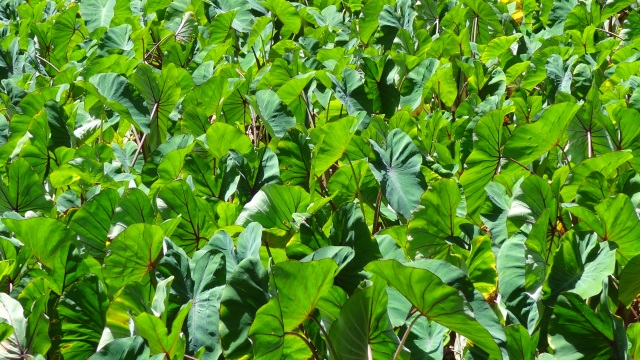
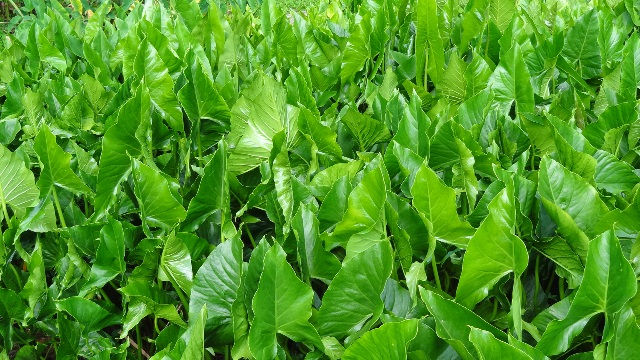
Salt tolerant soft taros in field for evaluation.


In vitro cultures of salt tolerant giant swamp taro.
Salt tolerant giant swamp taros in field for evaluation.

Filed Under: Kosrae Extension, Kosrae Research, News from land grants Tagged With: Kosrae, taro, tissue culture

High efficiency micropropagation of pineapple for mass-scale elite seedling production

May 2, 2016

KOSRAE, FSM. Dr. Virendra M. Verma, Researcher and Extension Specialist, Kosrae Agricultural Experiment Station

Pineapple Micropropagation and Commercial Cultivation to Enhance Productivity in Micronesia, is a multi-state research project approved by the United States Department of Agriculture, National Institute of Food and Agriculture (USDA-NIFA) for the Micronesian region. The project director of this project, Dr. Virendra M. Verma, shared that this project focuses on enhancing pineapple production in the Federated States of Micronesia (FSM) and the Republic of the Marshall Islands (RMI) because non-availability of disease-free and elite seedlings, shortage of trained agricultural professionals, and limited acquaintance of farmers with commercial cultivation techniques have significantly restricted pineapple production in the Micronesian region. The ultimate aim of this project is to create opportunities of income generation for local farmers through providing a means of sustainable commercial pineapple cultivation, and thereby, improve food self-sufficiency, and nutritional security in the Micronesian region.

This project is of great significance as it is specifically designed to optimize micropropagation protocol and nursery management systems to produce elite and disease-free pineapple seedlings in bulk quantities in the Micronesian region. The project utilized biotechnological techniques for micropropagation and greenhouse acclimatization of tissue-cultured plants. The project activities also include educating local farmers in sustainable agriculture practices, and providing appropriate recommendations and training for commercial pineapple production.

The pineapple (Ananas comosus L. Merrill), a tropical plant with edible multiple fruit consisting of coalesced berries, is the most economically significant plant in the Bromeliaceae family. The project involved undertaking a research study to develop an economically feasible, efficient, rapid and reproducible multiplication protocol for two local commercially important pineapple cultivars (Ananas comosus cv. Kosraean and Ananas comosus cv. Hawaiian). A highly efficient in vitro multiplication method for both cultivars was developed by using apical and lateral meristems. Murashige and Skoog, 1962 medium (MS) was used throughout the study. The cultures were initiated on MS medium augmented with various combinations and concentrations of 6-benzylaminopurine (BAP) and 1-naphthaleneacetic acid (NAA). The medium augmented with 4.5µM BAP and 2µM NAA proved best for culture establishment. For further growth and subsequent multiplication, established cultures were first transferred on MS medium augmented with 9µM BAP and 3.5µM NAA, and later on the MS medium without any growth regulators. The number of multiple shoots produced from each explant after two subcultures varied from 18 to 35. A 16-h photoperiod with a temperature of 25oC day and night, light intensity of 80µmol m-2 s-1, and 60% relative humidity were maintained for multiplication. Many micropropagated shoots formed roots while they were still on the multiplication medium. However, maximum rooting was observed on MS medium augmented with 0.5µM NAA and 0.5µM BAP. Rooted plants were transferred to soil: compost (10:1, v/v) mixture in pots and acclimatized with 93% survival rate. Hundreds of fully acclimatized, tissue-culture produced pineapple plants are ready to be planted in the field.

Successful implementation of this project has resulted in the development of a high efficiency micropropagation method for mass production of elite, diseases-free seedlings, and acclimatization of hundreds of tissue-culture raised plants of selected pineapple varieties through appropriate nursery management systems. Preparation has been started for designing, implementing and conducting research trials for commercial pineapple cultivation at multiple sites as well as for collecting data for analysis, and the development and publication of a commercial pineapple cultivation guide to specifically suit the needs of local farmers. Recommendations will be provided for sustainable pineapple production through training workshops, hands-on trainings, farm visits, and field days. Three pilot sites in the Micronesian region, specifically in the Federated States of Micronesia (FSM) and Republic of Marshall Islands (RMI) will be developed as demonstration sites to carry out research, extension, and education activities of the project to encourage and promote sustainable commercial pineapple production among local farmers in the region.

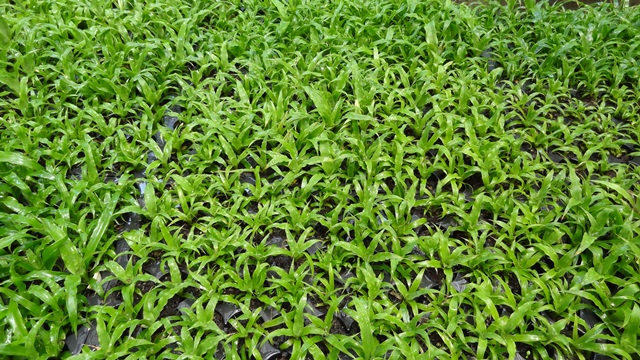
Acclimatization of pineapple plantlets in greenhouse
Acclimatization of pineapple plantlets in greenhouse.
Acclimatized pineapple plants in nursery.


Acclimatized pineapple plants ready for field transfer.


Filed Under: Kosrae Research, News from land grants Tagged With: Kosrae, Pineapple, tissue culture

Yap CRE Researcher conferred with prestigious fellowship

April 3, 2016

Pohnpei, FSM. Jim Currie, Vice President, Cooperative Research and Extension, College of Micronesia-FSM.

Dr. Muru receives a momento from Dr. Kirti Singh, Chairman, World Noni Research Foundation.

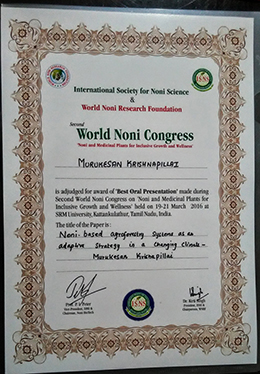
Dr. Murukesan Krishnapillai, Researcher/Extension Specialist, Cooperative Research and Extension at Yap Campus has been bestowed with the Fellowship of the International Society for Noni Science for his outstanding contributions to Noni research and science during its Annual General Body Meeting held in conjunction with the 2nd World Noni Congress at S.R.M. University in Chennai, India on 19th March 2016. Established in 2010, the International Society for Noni Science promotes research, education and development of Noni all over the world. It may be recalled that Dr. Muru pioneered the research and extension work on Noni in Yap since 2006. Between 2006 and 2011, using Smith-Lever Funds Dr. Muru carried out an extension project on noni wherein he successfully trained a group of Yapese farmers in noni production, processing and marketing. Under a Hatch Project, he also scientifically validated the potency of noni varieties in Yap.

certificate-260
The certificate given to Dr Muru for his work with none.

During the 2nd World Noni Congress Dr. Muru presented a paper on ‘Noni-based agroforestry systems as an adaptive strategy in a changing climate’ that has also been adjudged for award of best oral presentation in the technical session on Crop Management. This paper will be published in the upcoming edition of the International Journal of Noni Research.


Cover image caption: Dr. Muru receives award from Dr. Kirti Singh Chairman, World Noni Research Foundation (from L to R – Prof. P.I. Peter, Chairman, Noni Biotech, Dr. Muru, Dr. Kirti Singh, Chairman World Noni Research Foundation, Dr. P. Rethinam, Editor, International Journal of Noni Research).

Filed Under: News from land grants, Yap Research Tagged With: Yap

Cooperative Research and Extension, COM-FSM Yap Campus participated in the 2016 Yap Day celebrations

March 13, 2016

YAP, FSM. Dr. Murukesan Krishnapillai, Researcher/Extension Specialist

COM-FSM Yap Cooperative Research and Extension (CRE) staff and Agriculture students participated in the 48th Annual Yap celebrations held at Makiy, between February 29 and March 1, 2016.

Yap Day is the biggest cultural celebration in Yap. This annual two-day event is accompanied with various cultural performances including traditional dances, traditional attire displays, stories, tattoo displays, stone money carrying, log pulling, cultural education activities, besides various stalls displaying a variety of traditional handicrafts and food items.

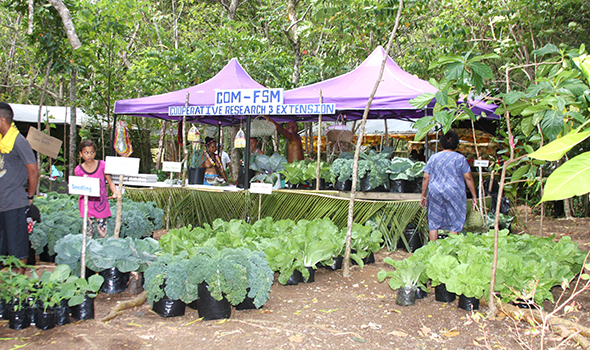
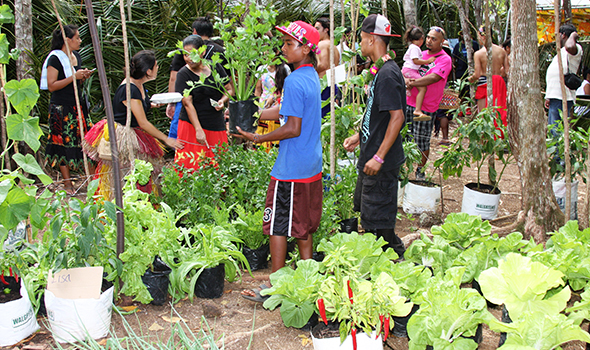
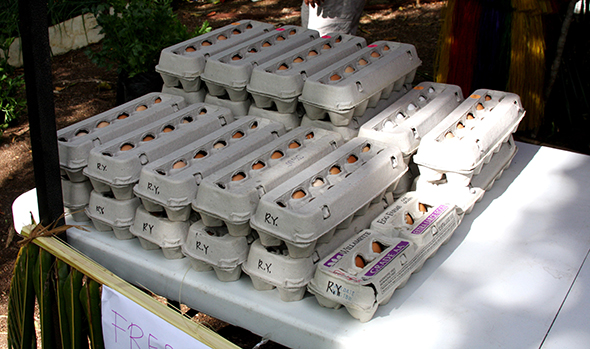
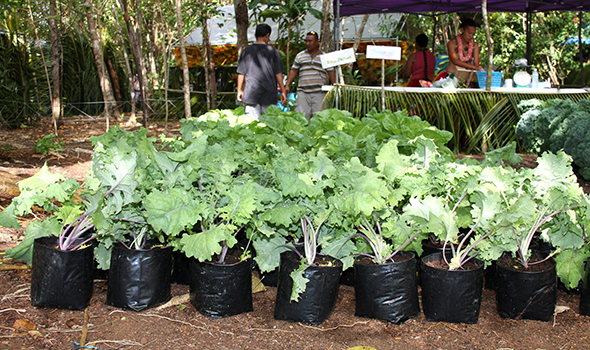
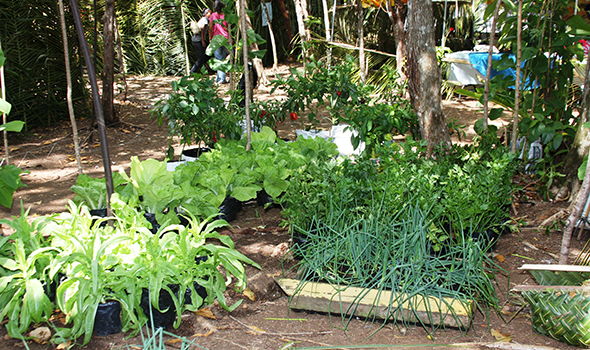
Yap CRE participated in the event and displayed family farming and urban gardening models, and low-cost food production systems. As it is customary, students and staff at the booth were dressed in traditional attire and promoted the importance of various local farm produce. A variety of vegetables from the CRE demonstration gardens and USDA-OAO OASDVFR Program clients were on display and sale. This includes kale, lettuce, Chinese cabbage, spinach, head cabbage, celery, bell pepper, spring onion and seedlings of eggplant, papaya, tomatoes and cucumbers. Backyard poultry farming is one of the priority areas of Yap CRE program and locally produced eggs from USDA-OAO OASDVFR Program clients’ farms were also on sale through this booth. Staff and students at the booth did their very best to give needed information to plant healthy vegetables at home and in the community.

The variety of leafy vegetables and the many growing systems on display received acclaim from many off-island visitors. Yap CRE is an active promoter of integrated family farming for food and nutrition security. Family farming is a way of life with a future and is the best way to ensure islands’ food security. It guarantees food in a sustainable manner while taking care of islands’ environment and respecting traditions and cultures.  Please enjoy some images from the event!

CRE staff pose in front of the booth 590-350

CRE staff pose in front of the booth.

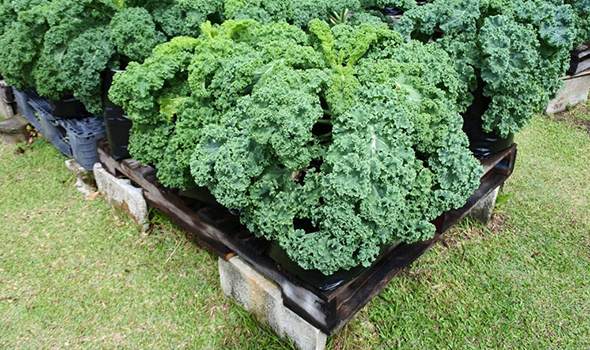
Blue kale in polybags_1 590-350

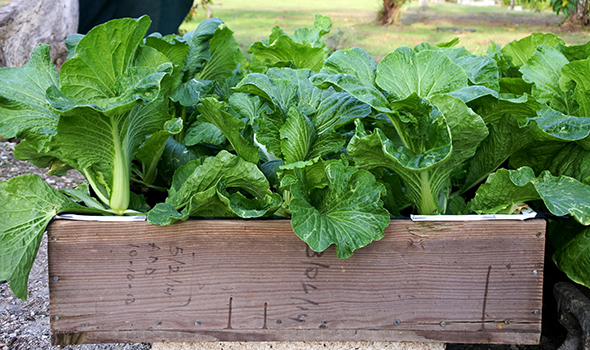
Chinese cabbage in grow box.

Chinese cabbage in grow box 590-350

Chinese cabbage in grow box.

CRE booth 590-350

YAP CRE booth.

Cucumber plant in growbag with stand-alone trellis 400

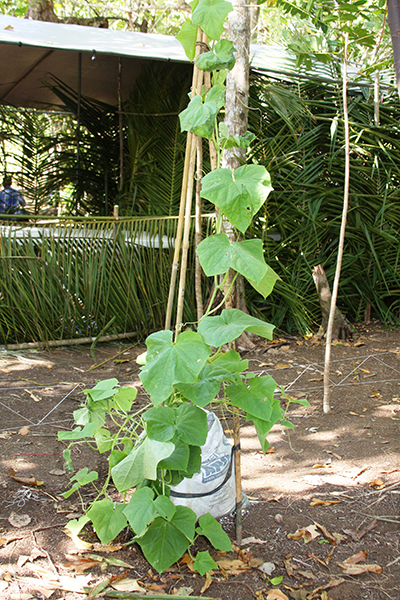
Cucumber plant in growbag with stand-alone trellis.

Head cabbages in polybags_1 590-350

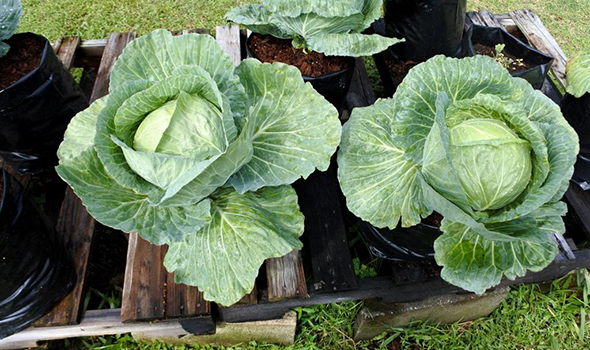
Head cabbage in polybags.

A view of garden produce from a youth group 590-350

A view of garden produce from a youth group.

Product of Yap-Eggs from OASDVFR Program clients backyard poultry farms 590-350

Locally-grown eggs.

Purple kale in polybags 590-350

Blue kale in polybags.

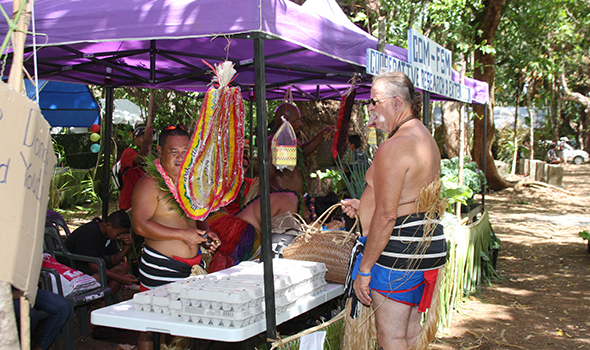
Tim Bigelow, a successful poultry farmer (right) and OASDVFR Program Client discusses with Steven Young Uhk, CRE Coordinator (left) 590-350

Tim Bigelow, a successful poultry farmer (right) and OASDVFR Program Client discusses with Steven Young Uhk, CRE Coordinator (left).

Veggies from OASDVFR Program clients gardens 590-350

Veggies from OASDVFR Program clients gardens

Filed Under: News from land grants, Yap Extension, Yap Research Tagged With: vegetables, World food day, Yap

Yap CRE participated in the 2015 World Food Day Celebrations

October 25, 2015

YAP, FSM. Dr. Murukesan Krishnapillai, Researcher/Extension Specialist, Yap Agricultural Experiment Station

The Cooperative Research and Extension (CRE) wing of the College of Micronesia-FSM at Yap Campus participated in the 2015 World Food Day celebrations in Colonia, Yap.

World Food Day is celebrated every year around the world on 16 October in honor of the date of the founding of the Food and Agriculture Organization of the United Nations. Main goal of this special day is to raise public awareness about hunger challenges and encourages people worldwide to take action in the fight against hunger. The theme of 2015 World Food Day was “Social protection and agriculture: breaking the cycle of rural poverty,” which aimed to underline the role of social protection plays in reducing chronic food insecurity and poverty by ensuring direct access to food or the means to buy food. Social protection is a viable alternative for stimulating agricultural production and local economic activity. It provides direct income support, with an immediate impact on food security and poverty reduction. Social protection also promotes sustainable food systems, natural resource management and resilient livelihoods.

This year, Yap Interagency Nutrition Education Council organized World Food Day celebrations in Colonia, Yap. As part of the celebrations, Yap CRE participated in the event. Under its NIFA Planned Program ‘Global Food Security and Hunger,’ Yap CRE’s projects and programs are focused on social protection and contribute directly towards the post-2015, new Sustainable Development Goal 1 – End poverty in all its forms everywhere, sub goal 1.3 – Implement nationally appropriate social protection systems and measures for all, including floors, and by 2030 achieve substantial coverage of the poor and the vulnerable. During this event, Yap CRE exhibited various urban vegetable garden models and low-cost food production systems, distributed brochures, fliers and booklets on vegetable gardening and sold a range of vegetables such as Bok Choy, Chinese cabbage, Mesclun, Swiss chard, kale, Kang Kong, spinach, lettuce, tomato, sweet pepper, eggplant and okra raised in our demonstration gardens. Eggs produced locally by our Outreach Project clients were also on display and sale. CRE staff also conducted cooking demonstrations as part of outreach activities under the Expanded Food and Nutrition Education Program. Healthy dishes from local vegetables such as Kang Kong, bird nest fern, Chili pepper leaves, pumpkin tips with local seasoning like coconut oil, Ambarella leaves, basil leaves and taro starch were on display and tasting.  The event attracted many people including visitors and we are enthused by the overwhelming response shown by the local community.

More pictures of this event can be viewed at:

https://app.box.com/s/hn07xjpsrr39pd5d9ygzk2iu3p71js6z

gov-yap
Hon. Tony Ganngiyan (right), Governor of the State of Yap visits the booth.


A view of the CRE booth.


Filed Under: News from land grants, Yap Research Tagged With: vegetables, World food day, Yap

Training on Climate-smart agriculture methods: Chuuk, RMI, Palau

October 25, 2015

YAP, FSM. Dr. Murukesan Krishnapillai, Researcher/Extension Specialist, Yap Agricultural Experiment Station

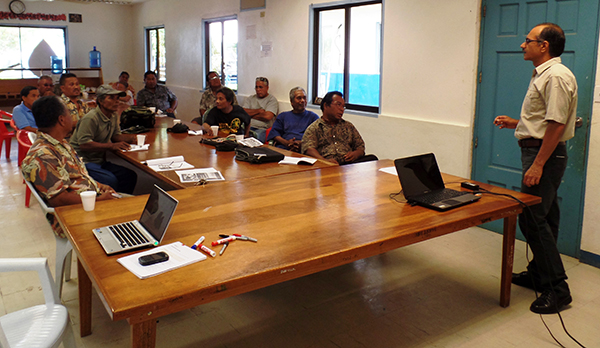
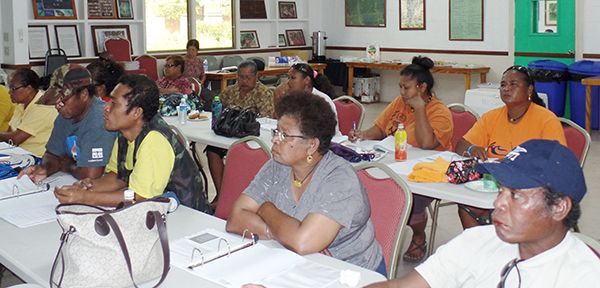
Two Researchers from the College of Micronesia-FSM Cooperative Research and Extension conducted a series of training workshops on ‘Climate-Smart Agriculture’ between May 3 and May 13 under the Professional Development Program of the Western Sustainable Agriculture Research and Education. Workshops were conducted at the College of Marshall Islands, Majuro, College of Micronesia-FSM at Chuuk Campus and at the Palau Community College. Purpose of these workshops was to educate and train extension agents, agriculture professionals and farmers in climate-smart agricultural practices. Altogether 51 participants (10 in Majuro, 14 in Chuuk and 25 in Palau) participants including extension agents, agriculture professionals, farmers and staff of various government agencies attended this workshop. The workshops were facilitated by Dr. Murukesan Krishnapillai (Researcher/Extension Specialist, Yap Campus) and Dr. Virendra Verma (Researcher/Extension Specialist, Kosrae Campus). The training workshops covered the following six topics: i) What is smallholder farming, ii) Climate change impacts that you can expect, iii) Climate change impacts on smallholder farming, iv) Improving soil fertility and farm productivity, v) Climate-smart adaptation strategies and, vi) Climate-smart agricultural adaptation strategies. Training sessions were supported by a training manual and several online brochures/training guides. Pre-and post-evaluation results show that participants gained knowledge and awareness on the topics discussed to serve the communities in a better way.

Dr Verma presents information for the Chuuk farmers and Land Grant staff.
Palau participants get updated on what might be necessary as the climate changes.

Filed Under: News from land grants, Yap Research Tagged With: Chuuk, climate change, Marshall Islands, Palau, training, vegetables, Yap

Yap CRE participates in the World Food Day Celebrations

October 30, 2014

YAP, FSM. Dr. Murukesan Krishnapillai, Researcher/Extension Specialist, Yap Agricultural Experiment Station

Yap Cooperative Research and Extension (CRE) and College of Micronesia-FSM Yap Campus Agriculture students participated in the 2014 World Food Day celebrations in Yap.

World Food Day is celebrated every year around the world on 16 October in honor of the date of the founding of the Food and Agriculture Organization of the United Nations in 1945. The 2014 World Food Day theme – Family Farming: “Feeding the world, caring for the earth” – has been chosen to raise the profile of family farming and smallholder farmers. It focuses world attention on the significant role of family farming in eradicating hunger and poverty, providing food security and nutrition, improving livelihoods, managing natural resources, protecting the environment, and achieving sustainable development, in particular in rural areas. The UN General Assembly has designated 2014 “International Year of Family Farming.” This is a strong signal that the international community recognizes the important contribution of family farmers to world food security.

This year, Yap State observed the World Food Day along with 2014 International Day for Disaster Reduction on October 17, at Colonia Community Center. The event was organized by the International Organization for Migration, Yap Office in association with Yap Interagency Nutrition Education Council.

Yap CRE is an active promoter of integrated family farming for food and nutrition security. Family farming is a way of life with a future and is the best way to ensure islands’ food security. It guarantees food in a sustainable manner while taking care of islands’ environment and respecting traditions and cultures.

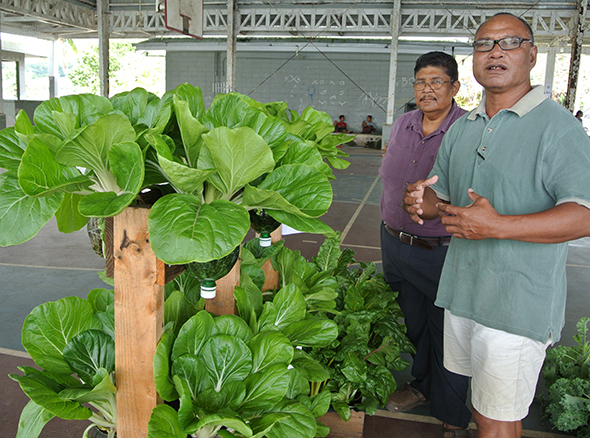
As part of the celebrations, Yap CRE participated in the event and exhibited various urban farm models and low-cost food production systems, displayed posters on chicken farming and distributed brochures and pamphlets on family farming and safe food handling procedures, raising awareness of the issues behind successful family farming and their role in ensuring food security. Some of our vertical urban garden models attracted special attention of the public. Ag students exhibited and sold a range of fresh garden produce and plants grown as part of their course work.

Mr. Santiago, ECE Program Coordinator (front) with Dr. Martin Bell, Yap Memorial Hospital (back) discusses the importance of urban garden systems.
Ag Students, as volunteers in the CRE booth.
A view of the CRE booth.
Another view of the CRE booth.
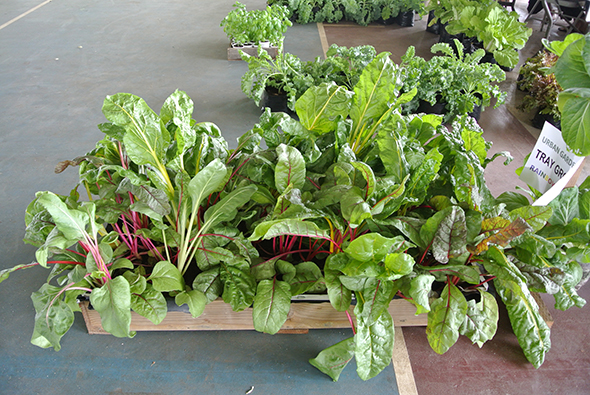
Rainbow Chard in wooden grower.
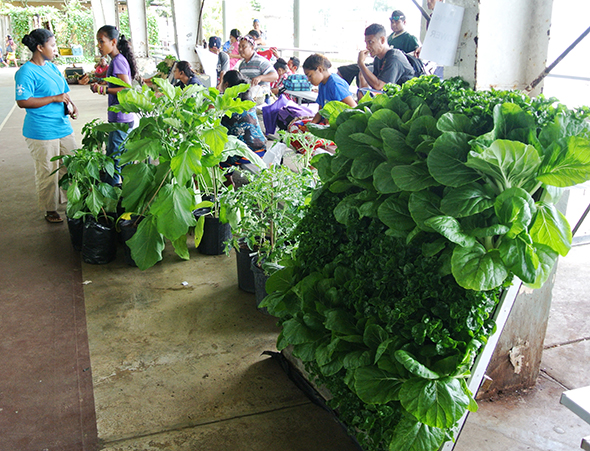
A third view of CRE booth – Vertical pallet grower at the foreground.
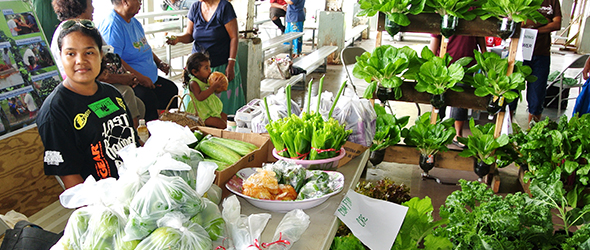
Ms. Stacey Gurlee, Ag student/Works study intern and a successful beginning farmer, displaying some of her farm produce.
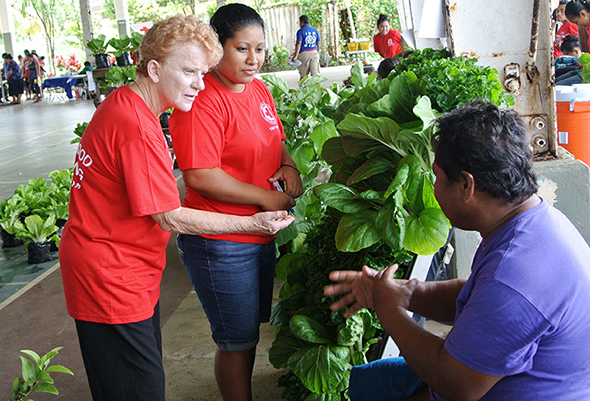
Micronesia Red Cross Yap Chapter Volunteers (in red tees) asking the specifics of vertical pallet grower from George Chuwmai.
Dr. David Mustra (left) and Ms. Denitha Palemar (center), Yap Memorial Hospital and Ms. Lourdes Roboman, COM-FSM Yap Campus Dean (right), visiting the CRE booth.

Filed Under: News from land grants, Yap Research Tagged With: vegetables, World food day, Yap

Training on urban vegetable gardening methods

September 23, 2014

YAP, FSM. Dr. Murukesan Krishnapillai, Researcher/Extension Specialist, Yap Agricultural Experiment Station

Densely populated urban settlements in places like Pohnpei, Majuro and Kwajalein resulting from constant flow of people from rural outer islands result in extensive youth unemployment and associated social problems. Population density of this magnitude, when associated with overcrowding, lack of enough space or quality soil for field-based cultivation often entails health and social challenges of varying severity. The influx and consumption of less nutritious imported food have induced prevalent health problems such as diabetes, hypertension, obesity, gout and a high incidence of malnutrition among children.

Urban agriculture is a method of transforming underutilized or neglected space into a resource providing opportunities for social interaction, greater community cohesion and self-sufficiency, and engagement of people in underserved neighborhoods. It connects people to opportunity so that they move from stagnant, difficult conditions to vibrant and productive lifestyles. It offers a pathway out of poverty. It has low start-up costs, short production cycles, and high yields per unit of time and unit of area and water. Value of leafy green vegetables to combat nutrient deficiency is irreplaceable and irrefutable. The urban agriculture has also potential for primary or supplemental income.

With this in mind, a multi-site extension program has begun to establish urban vegetable demonstration gardens in Pohnpei and Majuro for education and training. As part of this, a three-day training workshop on urban vegetable gardening was recently completed at Yap CRE. Extension staff from the College of Marshall Islands Land Grant Program, Pohnpei CES, Yap CRE and Yap SDA School attended this training workshop. The objectives of this training program were to:  i) illustrate soil profile and their significance in urban gardening, ii) describe the important steps in urban vegetable gardening, and iii) provide hands-on training on urban garden designs and construction of various growers suitable for urban gardening. Following a specially designed extension program based on lecture cum hands-on activities and supported by various extension publications, participants were engaged in topics such as soil characteristics, quick composting methods, growing media preparation, urban garden designs, construction of various types of plant growers, nutrient management, etc. As part of the training, participants built some unique vertical growers and filled with locally prepared media and transplanted some seedlings. Observations, discussions and pre- and post-tests were conducted to evaluate this training activity.

Compost preparation.
Participants displaying the ‘green and brown alternative’ compost pile.
Seedlings in polybags.
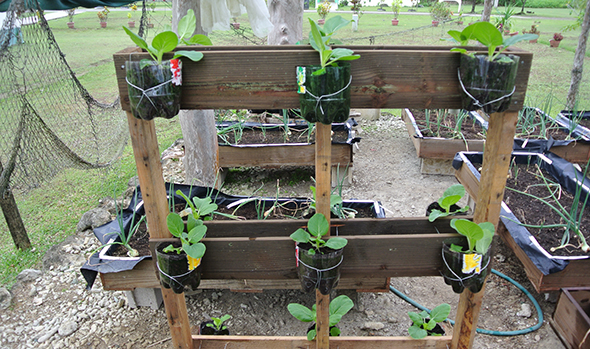
Vertical planter from repurposed pallets.
Pots made out of reused plastic bottles.

Filed Under: News from land grants, Yap Research Tagged With: container gardening, urban gardening, Yap

USDA-NIFA approved second multi-state/site research project on pineapple for Micronesia

September 11, 2014

KOSRAE, FSM. Dr. Virendra M. Verma, Researcher and Extension Specialist, Kosrae Agricultural Experiment Station.

Tissue cultured pineapple plants.

The United States Department of Agriculture, National Institute of Food and Agriculture (USDA-NIFA) has approved another multi-state/site research project for Micronesian region. The project entitled: Pineapple Micropropagation and Commercial Cultivation to Enhance Productivity in Micronesia, is the second multi-state/site research project initiated after recent recommendations from the College of Micronesia’s Board of Regents. The project director of this project Dr. Virendra M. Verma shared that this project aims to enhance pineapple production in the Federated States of Micronesia (FSM) and the Republic of the Marshall Islands (RMI) through micropropagation and commercial cultivation. Non-availability of disease-free and elite seedlings, shortage of trained agricultural professionals, and limited acquaintance of farmers with commercial cultivation techniques have significantly restricted pineapple production in Micronesia. This project aims to enhance pineapple production to improve food self-sufficiency, nutritional security, and provide means of income generation in Micronesia.

This project is of great significance as it is specifically designed to optimize micropropagation and nursery management systems to produce elite and disease-free pineapple seedlings in bulk quantities, provide appropriate recommendations and adequate opportunities to educate and train local farmers in sustainable and commercial pineapple production. Pineapple (Ananas comosus L. Merrill), the most economically significant plant in the Bromeliaceae family, is one of the most important horticultural crop in the tropical and sub-tropical regions of the world. In Micronesia, pineapple is a desirable fruit in traditional feasts. The crop also has great potential for export. Mainly grown for fresh and canned fruit and juice, pineapple is the only source of bromelain enzyme that is used in pharmaceuticals and as a meat-tenderizing agent. The fresh fruit is very low in saturated fat, cholesterol and sodium. It is also a good source of dietary fiber, thiamin, vitamin B6 and copper, and a very good source of vitamin C and manganese.

To overcome the limitations affecting pineapple production in Micronesia, the project activities include: Collection of pineapple germplasm of local cultivars and establish in vitro cultures of collected germplasm; refinement of micropropagation protocol for multiplication of collected pineapple germplasm; optimization of acclimatization and nursery management systems to produce elite seedlings for commercial pineapple cultivation; designing, implementing and conducting research trials for commercial pineapple cultivation at multiple sites and collection of data for analysis; and development and publication of commercial pineapple cultivation guide to specifically suit the needs of local farmers. Recommendations will be provided for sustainable pineapple production through training workshops, hands-on trainings, farm visits, and field days. Two pilot sites in Micronesia i.e., one each at the Federated States of Micronesia (FSM) and Republic of Marshall Islands (RMI) will be developed as demonstration sites for research, extension, and education activities of the project aiming to promote commercial pineapple production.

The extension and outreach activities will develop positive attitudes, zeal for learning sustainable cultivation techniques and farming aspects of pineapple, and will change the behavior of the participating farmers. Participants of extension and outreach activities will be guided to adopt recommended techniques and start commercial pineapple production farms. The ultimate goal of the project is to develop sustainable commercial pineapple production systems in Micronesia through providing elite, disease-free pineapple seedlings and by providing training to local farmers to improve their knowledge and skills for sustainable, commercial pineapple production.

Filed Under: Kosrae Research, News from land grants Tagged With: Kosrae, Pineapple, tissue culture

USDA-NIFA Approved First Multi-State/Site Research Project on Black Pepper for Micronesia

July 9, 2014

KOSRAE, FSM. Dr. Virendra M. Verma, Researcher and Extension Specialist, Kosrae Agricultural Experiment Station.

Tissue-cultured black pepper plants in the lab.

The United States Department of Agriculture, National Institute of Food and Agriculture (USDA-NIFA) approved multi-state/site research project on black pepper for Micronesia entitled Micropropagation for elite seedling production: Comparison of local practices and commercial cultivation methods. This is the first multi-state/site research project initiated after recent recommendation from the College of Micronesia’s Board of Regents. The project director of this project Dr. Virendra M. Verma shared that this project aims towards developing sustainable black pepper production in Micronesia by providing elite and disease-free seedlings, appropriate recommendations for commercial production, and developing skills and improving knowledge of local farmers about black pepper cultivation.

The project is of great significance as non-availability of disease-free and elite seedlings, shortage of trained agricultural professionals, and limited skills of farmers for commercial production have caused serious decline in black pepper production in Micronesia. Black pepper (Piper nigrum L.) belongs to the family Piperaceae. It is a universal table condiment used to flavor all types of cuisines worldwide and is known to stimulate metabolism, aid absorption of nutrients, and boost the efficacy of drugs. This project is specifically designed to develop micropropagation and nursery management systems to produce elite, disease-free seedlings in bulk quantities, and provide appropriate recommendations and adequate opportunities to educate and train local farmers in sustainable commercial black pepper production.

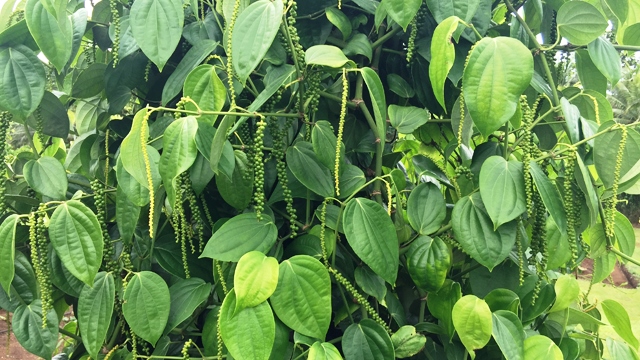
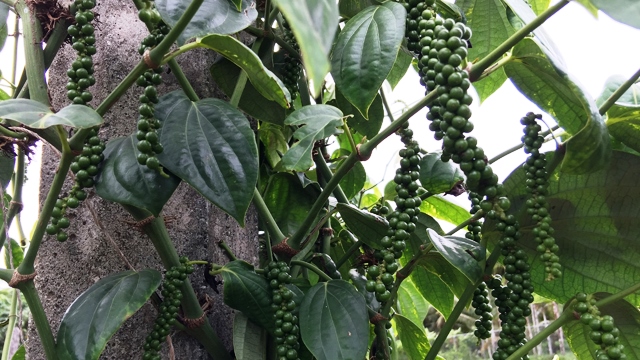
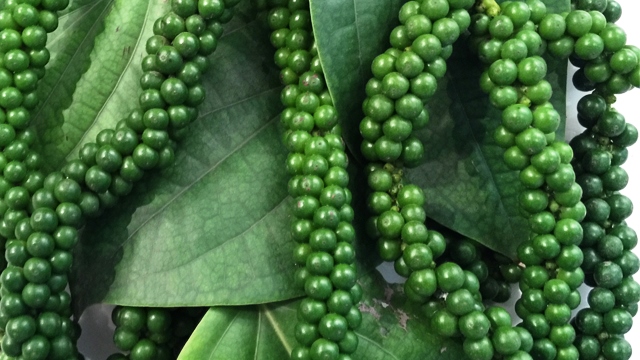
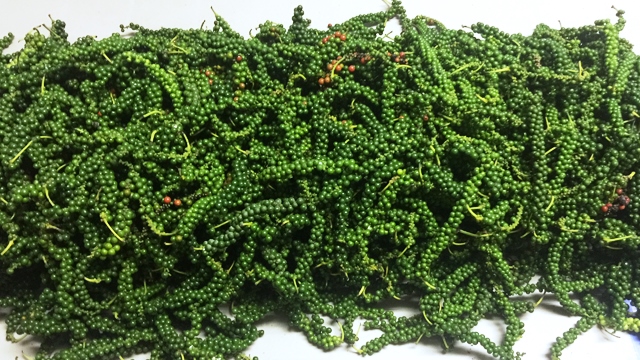
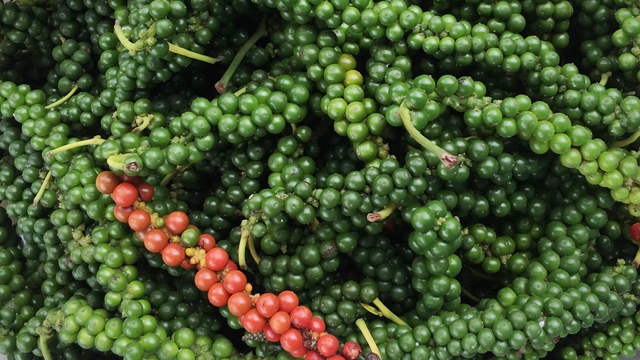
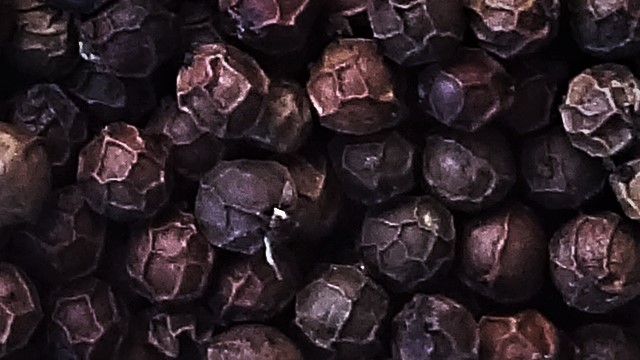
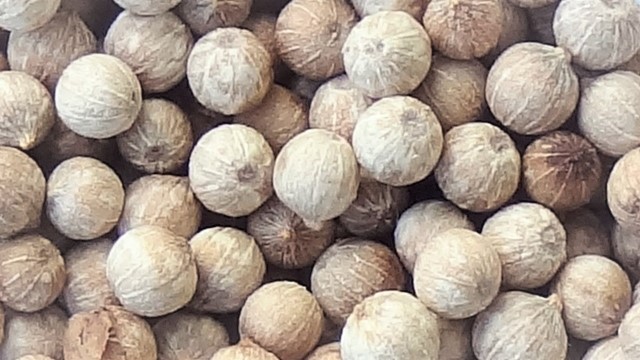
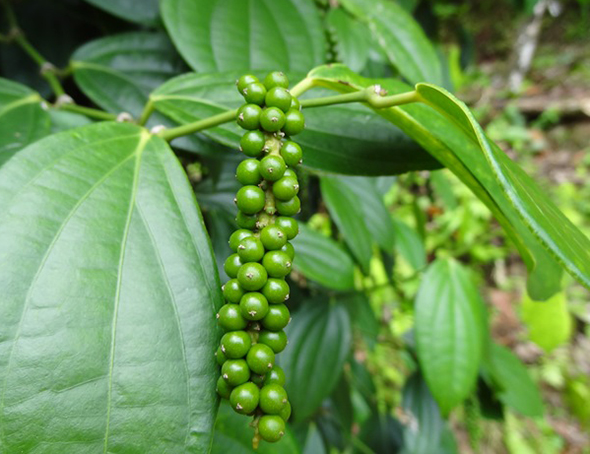
Raw pepper corns on the plant.

The project activities include: Collection of black pepper germplasm and establishment of in vitro cultures of collected germplasm; development of efficient micropropagation protocols for the multiplication of collected germplasm, development of acclimatization and nursery management systems to produce elite seedlings for commercial cultivation; designing comparative study of local practices and commercial cultivation methods; implement and conduct research trials at multiple sites and collect data for analysis; development and publication of commercial black pepper cultivation guide; and providing recommendations for sustainable black pepper production.

The extension and outreach activities will develop positive attitudes, zeal for learning sustainable cultivation techniques and farming aspects of black pepper, and will change the behavior of the participating farmers. Production of elite and disease-free black pepper seedlings will increase. Participants of extension and outreach activities will be guided to adopt recommended techniques and start commercial black pepper production farms. The ultimate goal of the project is to develop sustainable commercial black pepper production systems in Micronesia through providing elite, disease-free black pepper seedlings in bulk quantities and by improving knowledge and developing skills of local farmers about black pepper micropropagation, acclimatization and nursery management systems.

Filed Under: Home left 1, Kosrae Research, News from land grants Tagged With: Black pepper, Kosrae, tissue culture

Pearl farm management and halfpearl seeding training in Pakin Atoll, Pohnpei State, February 5-7, 2104

March 1, 2014

KOLONIA, POHNPEI, FSM. Dr. Manoj R. Nair (1) and Justino Smith (2)

(1) Director & Chief Scientist, COM Land Grant Aquaculture Programs, Nett Point, Pohnpei, FSM
(2) Senior Aquaculture Extension Agent, COM–FSM Pohnpei Campus, Pohnpei, FSM

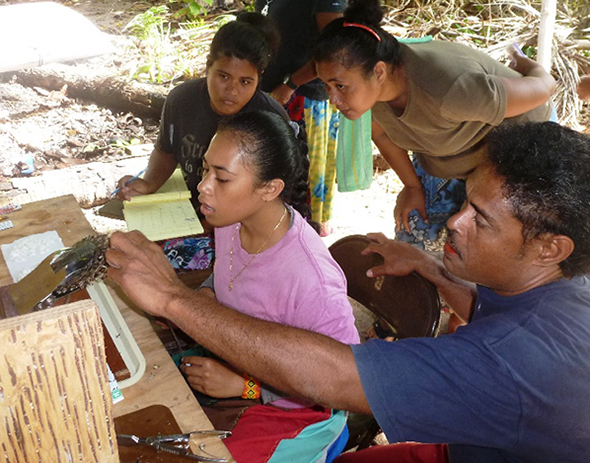
As part of a joint project between College of Micronesia Land Grant Porgram (NIFA, USDA) (COMLG), Pakin Community Association (PCA) , Office of the Fisheries and Aquaculture, Pohnpei State (OFA), Conservation Society of Pohnpei (CSP) funded by Small Grants Program (SGP) under the Global Environment Fund (GEF), United Nations, a team from COMLG and OFA led by Dr. Manoj R. Nair, Chief Scientist and Aquaculture Project Director, COMLG, visited Pakin Atoll in Sokehs District of Pohnpei State from February 5-7, 2014 to provide hands-on training for pearl farm management and half pearl seeding training to community members on Pakin. As part of the excersise several members of the community were retrained in pearl farm nursery management and farm maintanance techniques. In addition 6 pre-sleected candidates were (3 girls and 3 boys) imparted hands on skill training in half pearl seeding training by COMLG personnel. The nursery husbandry technique training involved teaching the community how to handle oysters more efficiently while cleaning without stressing and damaging the oysters. They were further taught making chaplets, drilling oysters without damage, hanging oysters, fixing longlines etc..

COMLG Team member Clayton imparting training on half pearl seeding to trainee Kayleen.


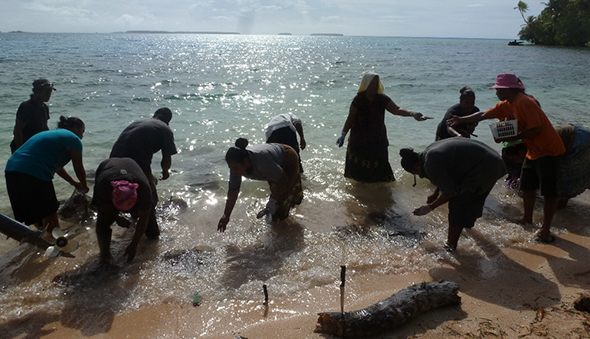
Community member getting trained in handling oysters while cleaning.

Six trainees were imparted skill training in half pearl seeding. They were taught different aspects of pearl biology and half pearl seeding, how to handle tools, keep records, post operative care of oysters etc.. Two Master Technicians imparted hands on training to the six trainees. The trainees combinly seeded 97 oysters implanting 5-6 half pearl nuclei per oyster. Each trainees performance has been carefully recorded by the team and oysters tagged. This data will allow the team to monitor individual trainee performance to assess and evaluate them and seleact a couple among the six to further train them and thereby attaining confidence to seed all the current and future oysters for the Pakin Community farm thereby making them self-sufficient as far as half pearl seeding is concerened.

COMLG Team with the community member trainees during the certificate ceremony.

The team wishes to thank the GEF program for their funding support, Executive Director, COMLG (NIFA, USDA) and Adminstrator, OFA for their in-kind contribution for this project. Special thanks are also due to Mr. Masahiro Ito, former Director and Chief Scientist COMLG Aquaculture Programs for his valuable inputs in this project’s conceptulization, design and its initial initiation. The team further acknowdge with thanks the warm hospitality of Pakin community. Dr. Nair or Justino Smith, Senior Aquaculture Extension Agent can be reached at 320-2462/ 2728 or 5731; 320-6038 (COMLG Nett Point Aquaculture Hatchery) for further information about this project or other queries on Aquaculture Programs at COMLG.

Filed Under: Home right 1, News from land grants Tagged With: Pearl, Pohnpei

Remote Satowan Island welcomes CRE program

February 11, 2014

WENO, CHUUK.  Kalvin Assito, Community Resource Development Agent (CRD).  Cooperative Extension Service

Chuuk CRE, for the first time, brought the community outreach programs to the remote islands of Satowan Atoll.  The island group is about 180 miles from Weno and has about 1,000 residents.  CRE agents provided 8 varieties of sweet potato to the traditional leader for multiplication and sharing.  These varieties were produced through climate change adaptation research in an effort to improve food security.

chuuk-590-250

During the visit the CRE agents attended a meeting of the Municipal government leaders.  At that meeting the leaders reported their 2013 accomplishment reports and plans for 2014.  The CRE- Community Resource Development agent discussed ‘livelihood training’ in handicrafts, sewing, cooking and using local natural resources for food security.

The residents of Satowna, lead by Mayor Miaichy Assito expressed their appreciation and thanks to CRE.  They expressed the hope that CRE can soon offer all training programs for the benefit of Satowan and their neighboring islands.

CRD Agent, Kalvin Assito, met with the Mayor on Satowan and his people
CRD Agent, Kalvin Assito, met with the Mayor on Satowan and his people.

Filed Under: Chuuk Extension, News from land grants Tagged With: Chuuk, sweet potato

In vitro selection for salt tolerance in taro and sweet potato

February 10, 2014

KOSRAE, FSM. Dr. Virendra M. Verma, Researcher and Extension Specialist, Kosrae Agricultural Experiment Station.

Bottles of tissue cultured taro.

In Vitro Selection for Salt Tolerance in Taro
Dr. Verma is Project Director of research project on In Vitro Selection for Salt Tolerance in Taro. Salinity, an abiotic stress that combines elements of water deficiency and sodium toxicity is among the most serious and widespread of agricultural problems on islands resulting in lost crop yield and arable land. Therefore, the efforts to develop salt-tolerant plants are of immense importance to increase crop productivity. In recent years, tissue culture based in vitro selection has emerged as a feasible and cost-effective tool for developing salt tolerant plants. Taro is one of the most important staple food crops in the Pacific Region for local consumption as well as for export. The crop contributes significantly to the socio-economics and provide livelihood to almost all island people and thus is crucial for ensuring nutritional and economic security.

In vitro selected salt tolerant taro plantlets with well-developed roots were acclimatized before transfer to the field. For acclimatization, the plantlets were transferred into pots containing sterile potting mix to avoid contamination and were kept in the greenhouse for subsequent 2-3 weeks. Acclimatized plants were then transferred to the nursery for maintenance. Fully acclimatized taro plants were evaluated for salt tolerance level in the field using randomized complete block design having 2’ distance between plants and 3’ between rows, ten plants per replication and six replications at two sites (coastal and inland) with susceptible local check in-between. Some plants of taro performed very well at coastal sites. In vitro conservation of selected salt tolerant taro germplasm for mass multiplication in future has been started.

Participants’ knowledge and skills about in vitro and in vivo selection techniques have been increased through collection and review of related literature, in vitro experimentation and conservation, establishment of nursery management system, development of high efficiency multiplication protocols, and production of elite seedlings.

Field days were organized at evaluation sites and participants from various municipalities attended and participated in the field days. The participants included enthusiastic small-scale farmers, producers, agriculture students, youths, extension agents, state government agricultural staff and agricultural professionals. During the field days, technical assistance and support were provided. Participants were encouraged to ask questions and appropriate answers were provided. All the participants showed great interest in the project and expressed willingness to participate in future training workshops.

Multi-color cultivation guide on taro has been developed, printed and distributed to all interested farmers.


In Vitro Selection for Salt Tolerance in Sweet Potato

KOSRAE, FSM. Dr. Virendra M. Verma, Researcher and Extension Specialist, Kosrae Agricultural Experiment Station. Dr. Verma is Project Director of research project on In Vitro Selection for Salt Tolerance in Sweet Potato. Salinity, an abiotic stress that combines elements of water deficiency and sodium toxicity is among the most serious and widespread of agricultural problems on islands resulting in lost crop yield and arable land. Therefore, the efforts to develop salt-tolerant plants are of immense importance to increase crop productivity. In recent years, tissue culture based in vitro selection has emerged as a feasible and cost-effective tool for developing salt tolerant plants. Sweet potato is one of the most important staple food crops in the Pacific Region for local consumption as well as for export. It contributes significantly to the socio-economics and provides livelihood to almost all island people and thus is crucial for ensuring nutritional and economic security.

Germplasm of different varieties of sweet potato collected from the Micronesia Region, have been planted and maintained in the greenhouse. Shoot apices were isolated from all varieties and inoculated on media to establish cultures. All varieties were established in vitro and maintained for further experiments. Different types of media were formulated by using various combinations of plant growth regulators along with other media components like organic and inorganic nutrients/minerals, vitamins and amino acids to develop suitable and efficient multiplication and maintenance protocols for all varieties. In vitro screening to study salt tolerance level in collected and tissue culture maintained germplasm of sweet potato has been started. Media formulation and preparation for in vitro screening for stress tolerance are under progress for sweet potato cultures. In vitro selected and acclimatized salt tolerant sweet potato plantlets will be further screened in the greenhouse and field.

Participants’ knowledge and skills about in vitro selection techniques have been increased through collection and review of related literature, in vitro experimentation, and development of high efficiency multiplication protocols.

Multi-color cultivation guide on sweet potato has been developed, printed and distributed to all interested farmers.

Filed Under: Kosrae Research, News from land grants Tagged With: Kosrae, salt tolerant, sweet potato, taro

Cooperative Research and Extension participated in launching “Fairotiw Fairota” youth organization

July 14, 2013

WENO, CHUUK, FSM.  Kalvin Assito, Youth Agent, Chuuk Cooperative Extension Service.

On June 26, 2013, a youth organization founded by Linda Mori-Hartmann, called “Fairotiw Fairota” hosted its first youth gathering at Bay View Building in Nepukos, Weno. This non-government organization (NGO) aims to teach the youth Chuukese cultural values through the assistance of government, other NGOs, private sectors and programs.  In particular, COM-FSM CRE will be involved in teaching these young people about moral values to resist alcoholism and other delinquent behavior, cultivating their interests to do gardening and developing income-generating skills like handicraft making.

The Department of Health Director, Mayor of Weno, heads of various collaborating partners and the Chuuk Governor Johnson Elimo joined in this event.  Four other youth groups representing their islands performed traditional dances and songs that signified their own cultural values.

Chuuk Governor Johnson Elimo set himself as an example on how to value their lives and culture.  As a youth, he was under the influences of drugs that he realized was wrong. He knew that drugs make people miserable. The Governor encourages the youth to participate in worthwhile activities and groups like “Fairotiw Fairota” to ensure their lives have good purpose and high self-esteem.

Chuuk Governor Johnson Elimo addresses gathering

Governor Elimo emphatically concluded to them, “Fear the Lord, who is the key fountain in life; value your lives together with your families, villages, islands and state and be actively involved in an organization such as this to understand the secret to life”.

Youth at meeting
Youth at meeting

Filed Under: Chuuk Extension, News from land grants Tagged With: Chuuk, youth

Extensive hands-on trainings on integrated sustainable agriculture for root crops, vegetables and fruit production

July 14, 2013

KOSRAE, FSM. Dr. Virendra M. Verma, Researcher/Extension Specialist, Kosrae Agricultural Experiment Station. 

The key concept of the project was to implement and demonstrate to small-scale farmers, a successful integrated sustainable agriculture system that is promising in island conditions and is safe for the environment. The project provided adequate opportunities to educate and train farmers and rural communities in on-farm implementation of sustainable agriculture systems through hands-on trainings including PowerPoint presentations.

Project coordinator Dr. Verma, producers and participants maintained a high level of interest for development, implementation and demonstration of multiple integrated activities for cropping systems in a sustainable manner. Demonstration plots developed and used for demonstration of planned outreach activities to encourage establishment of integrated sustainable agriculture systems. At the project sites, vigorously growing crops, harvest of excellent sweet potatoes, bananas, eggplants, soft taro, pineapple, hot peppers, black pepper, watermelons, wax guard, Chinese cabbage and papaya attracted much attention of local communities.

Experiments are showing positive results and farmers are showing increased interest in developing agricultural farms. The extension activities have improved knowledge, created awareness and developed skills of participants in sustainable agriculture systems. Ultimately extension activities have developed positive attitudes, zeal for learning techniques and farming aspects, and have changed the behavior and economic condition of the participants.

Crops explored at workshop.

Banana
Banana

Black pepper
Black pepper

Chinese cabbage
Chinese cabbage

Eggplant
Eggplant

Hot pepper
Hot pepper

Papaya
Papaya

Pineapple
Pineapple

Soft taro
Soft taro

Sweet potato
Sweet potato

Sweet potato
Sweet potato

Watermelon
Watermelon

Wax gourd
Wax gourd

Filed Under: Kosrae Research, News from land grants Tagged With: fruits, Kosrae, root crops, training, vegetables

  • « Go to Previous Page
  • Page 1
  • Page 2
  • Page 3
  • Page 4
  • Go to Next Page »

Copyright © 2025 College of Micronesia - Land Grant Program | P.O BOX 1179 Kolonia, Pohnpei FM 96941 | (691) 320-2462/2728