• Skip to secondary menu
  • Skip to main content
logo-removebg-preview.png

COLLEGE OF MICRONESIA

LAND GRANT PROGRAM
Contact us: (691) 3202462/2728
P.O Box 1179 Kolonia,Pohnpei FM 96941
  • COLLEGE OF MICRONESIA LAND GRANT PROGRAM
  • COLLEGE OF MICRONESIA LAND GRANT PROGRAM
  • COLLEGE OF MICRONESIA LAND GRANT PROGRAM
  • COLLEGE OF MICRONESIA LAND GRANT PROGRAM
  • COLLEGE OF MICRONESIA LAND GRANT PROGRAM
  • Home
  • About Us
    • Org. Chart
      • COMLG CENTRAL – ORG. CHART
    • Who is NIFA, COM Land Grant, and what do we do
    • COM Land Grant Administration
    • COM Land Grant Board of Regents
    • College of the Marshall Islands Cooperative Research and Extension Program
    • College of the Micronesia – FSM & Land Grant Program
    • Palau Community College Land Grant Program
    • College of Micronesia Land Grant locations map
    • Frequently asked questions
    • Contact Us
  • Land Grant people
    • All College of Micronesia Land Grant People
    • College of Micronesia Land Grant Program Administration
    • College of Micronesia-FSM Land Grant Administration
    • COM-FSM Chuuk Campus People
    • COM-FSM Kosrae Campus People
    • COM-FSM Pohnpei Campus People
    • COM-FSM Yap Campus People
    • College of Marshall Islands People
    • Palau Community College people
  • Research
    • Marshall Islands Agricultural Research Station
    • College of Micronesia – FSM – Research
      • Chuuk Agricultural Experiment Station
      • Kosrae Agricultural Experiment Station
      • Pohnpei Agricultural Experiment Station
      • Yap Agricultural Experiment Station
    • Palau Agricultural Experiment Station
    • Special Research Projects
  • Extension
    • College of the Marshall Islands – Extension
    • College of Micronesia – FSM – Extension
      • Chuuk Cooperative Extension Service
      • Kosrae Cooperative Extension Service
      • Pohnpei Cooperative Extension Service
      • Yap Cooperative Extension Service
    • Palau Community College – Extension
  • Instruction
    • College of the Marshall Islands – Resident Instruction
    • College of Micronesia – FSM – Resident Instruction
    • Palau Community College – Resident Instruction
  • Publications
  • Links
    • College of the Marshall Islands
    • College of Micronesia – FSM
    • Palau Community College
    • Agriculture Development in the American Pacific (ADAP)
    • Center for Tropical and Subtropical Aquaculture (CTSA)
    • USDA NIFA
    • USDA NIFA Reporting Portal
    • Association of Public Land-Grant Universities – APLU
    • Western Sustainable Agriculture Research and Education
  • Jobs
  • Program Impacts & Success Stories
  • Calendar
  • RFP
  • Policies
  • Information & updates

News from land grants

College of Micronesia-FSM Marine Science & Aquaculture Class visits COM Nett Point Aquaculture Hatchery

March 19, 2024

On March 19, 2024, Students from the College of Micronesia-FSM’s Marine Science & Aquaculture class, guided by science instructor Peltin Olter Pelep, embarked on a site visit to the COM Nett Point aquaculture hatchery. The students were introduced to the sea cucumber hatchery operations methods, from broodstock collection, spawning, and larval rearing, Nursery -1 in the incubator, and lectures on Nursery-2 and grow-out farming methods.

Led by the hatchery project staff members Rex, Clayton, and Balenko, the students were given an overview of the incubator’s operations and species samples via microscope for observation.

Instructor Peltin demonstrated his interest in and support for the hatchery’s efforts, especially its role in promoting sustainable practices of Micronesian marine resources. He emphasized the importance of conservation efforts to safeguard the sea cucumber species from overharvesting in the wild. Peltin encouraged his students to consider internships at the hatchery, recognizing the greater opportunity for them to gain professional skills and knowledge in sustainable aquaculture practices.

Instructor Peltin hopes to take his students to the nursery farms at Nihco Marine Park and Grow-out farms later to observe and learn about the third and fourth stages of the Program, Nursery-2 and Grow-out, respectively.
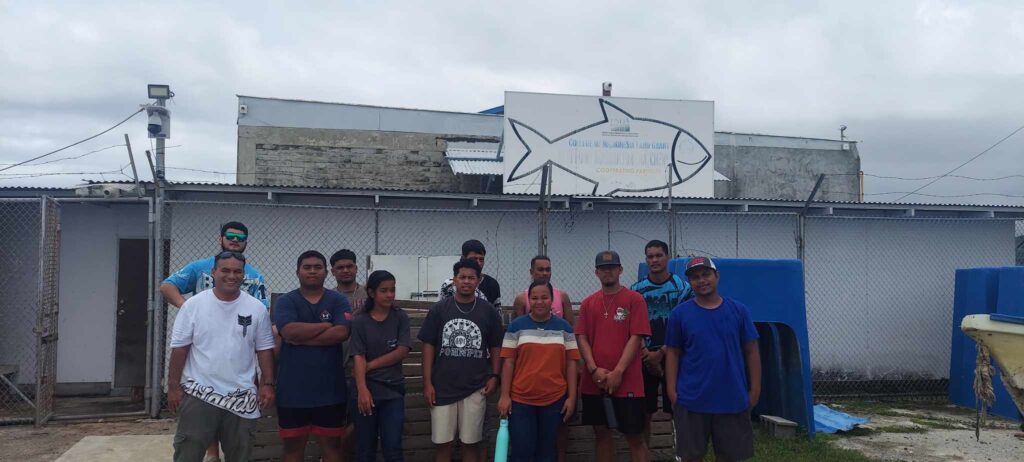
COM-FSM Marine Science Students with instructor Peltin Olter Pelep during their visit to COM Land Grant Nett Point Hatchery on March 19, 2024
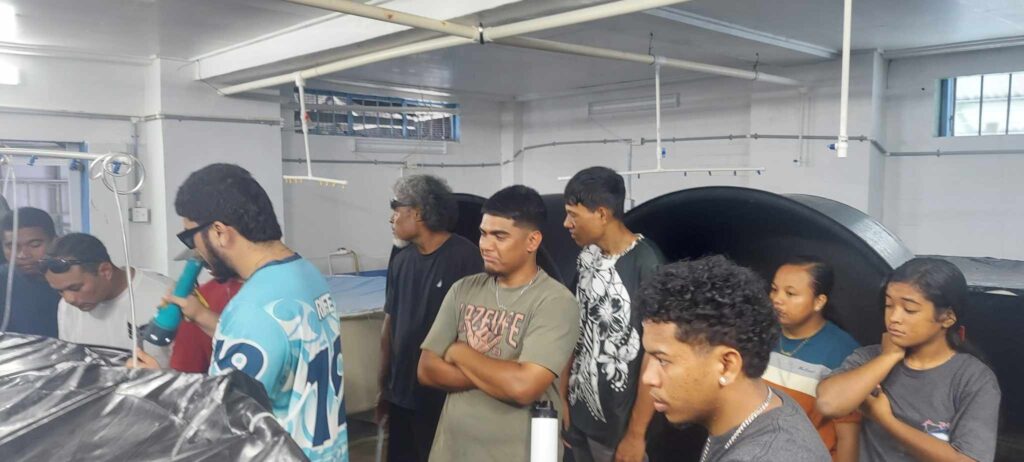
COM-FSM Marine Science Students observing and learning the techniques of larval rearing from COM Land Grant Nett Point Hatchery staff
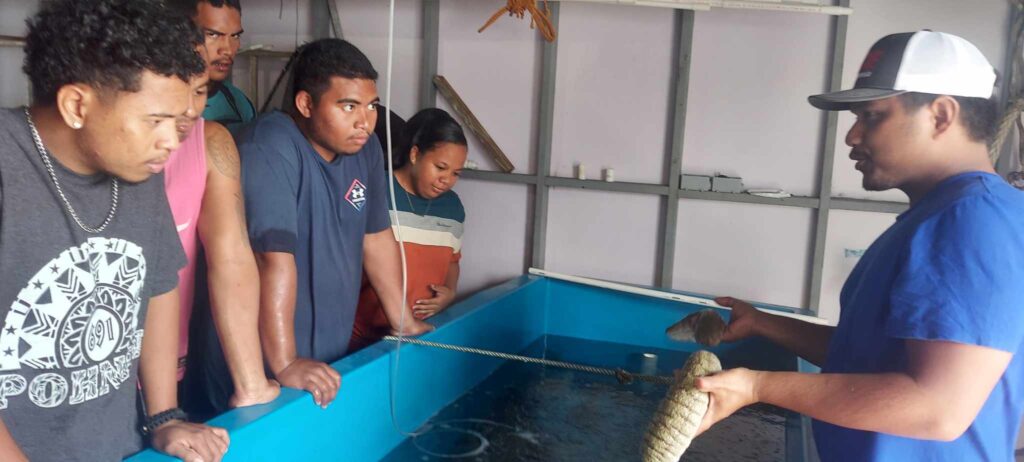
COM-FSM Marine Science Students learning the techniques of spawning from Hatchery staff and COM-FSM Marine Science Alumni Rex Edmund
Filed Under: COM Central Office, News from land grants, Pohnpei Extension, Pohnpei Research, Uncategorized

Director, Island Sustainability Institute, Sophia University, Tokyo, Japan, visit COM Nett Point Aquaculture Hatchery

March 9, 2024

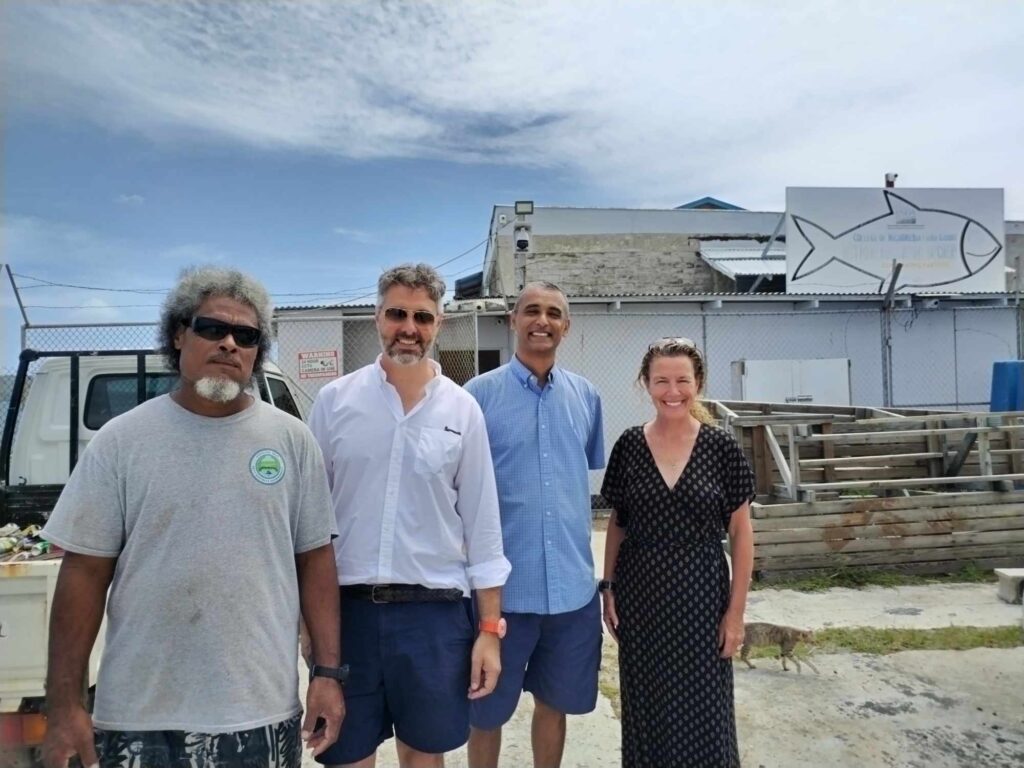
 Dr. Anne McDonald and Dr. Iain Hall, Director and Visiting Researcher, respectively, at the Island Sustainability Institute, Sophia University, Tokyo, Japan, are in Pohnpei as part of helping Pohnpei State to finalize its Food Security Policy. The team showed interest in COM Land Grant Aquaculture Program activities and visited the  COM Land Grant Nett Point Aquaculture Hatchery in Pohnpei on March 9, 2024. 

The team observed the Sandfish sea cucumber larval rearing activity and interviewed the Micronesian staff under Dr. Manoj R Nair, Director and Chief Scientist of Aquaculture Technology Development, Rex Edmund, and Clayton Maluwelgiye about different aspects of the sea cucumber hatchery, nursery and farming program and how they work towards improving ordinary Micronesians’ livelihoods.

Dr. McDonald was impressed with the program and encouraged project staff Rex to apply for a Master’s degree program at her university for his professional development.

Pictured from left to right: Clayton Maluwelgiye, Dr. Iain Hall, Dr. Manoj Nair, and Dr. Anne McDonald at the COM Land Grant Nett Point hatchery in Pohnpei.

Filed Under: COM Central Office, News from land grants, Pohnpei Extension, Pohnpei Research, Uncategorized

PCC Land Grant staff train and install a soil probe in Yap

February 14, 2024

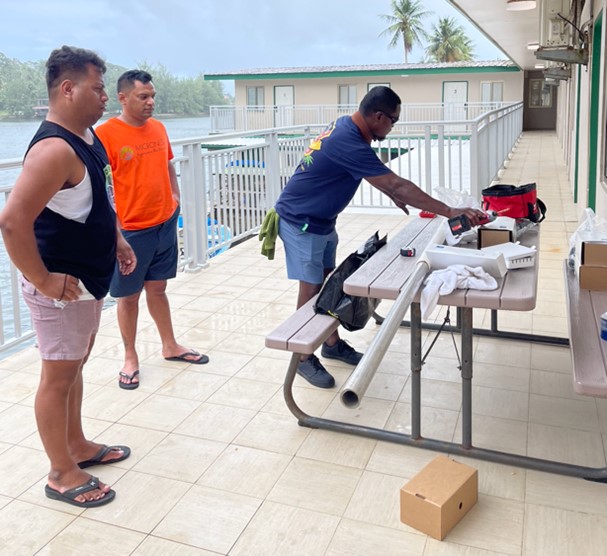
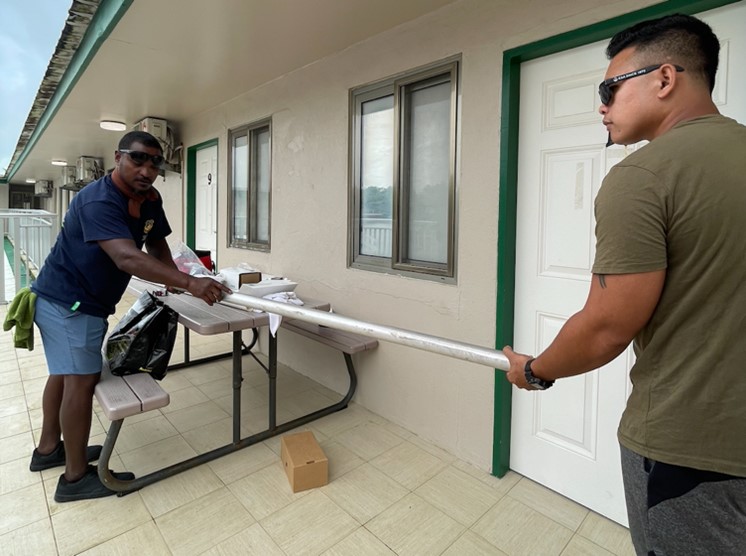
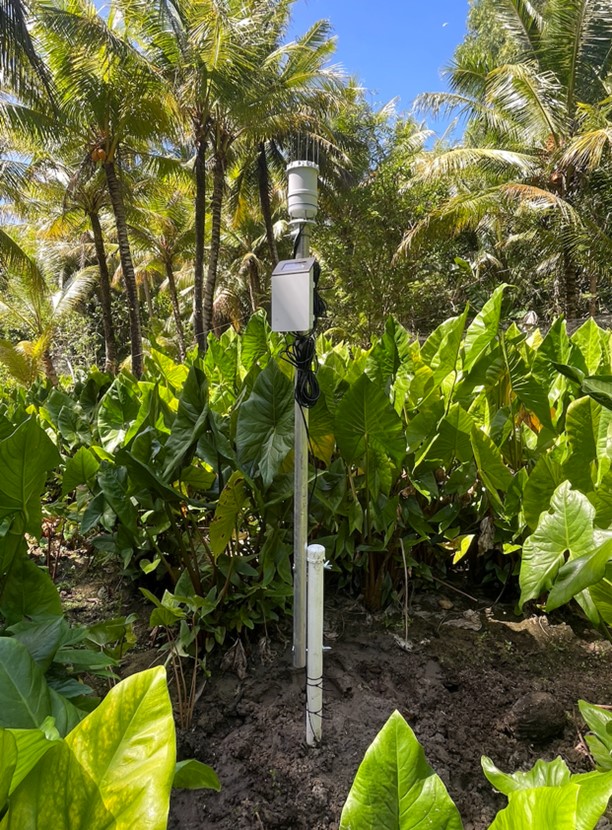
During their attendance at the Plan of Work meeting in Yap from February 10-17, 2024, PCC Land Grant Vice President Dr. Christopher Kitalong, along with Director Lyndon Masami, Senior Extension Agent Elchung Hideyos, and Field Assistant McKnight McArthur, was involved in a climate change demonstration project. Elchung and McKnight demonstrated and trained CRE staff from FSM and RMI on using this all-in-one soil probe device. This soil probe measures weather, soil, hydro’s, salinity, etc. data. This data from the probe will help improve agriculture management practices and contribute to the long-term productivity and sustainability of taro cultivation systems, especially in the face of climate change. McKnight did a demonstration training on how to build the probe for the other islands. Elchung gave a presentation explaining the different parts of the soil probe, and she was also able to train the other extension agents on how to use the app to collect data and access the cloud. PCC-CRE already has 10 probes installed all around Palau from Kayangel, Ngeremlengui, Melekeok, Airai, Ngermid, Ngerbeched, Peleliu, Angaur, and even Hatohobei. This trip to Yap added the number 11th probe. Expanding this tool to the other CREs in FSM and RMI will give us a better understanding and comparison of taro cultivations in the Micronesian region to support our community in the face of climate change.

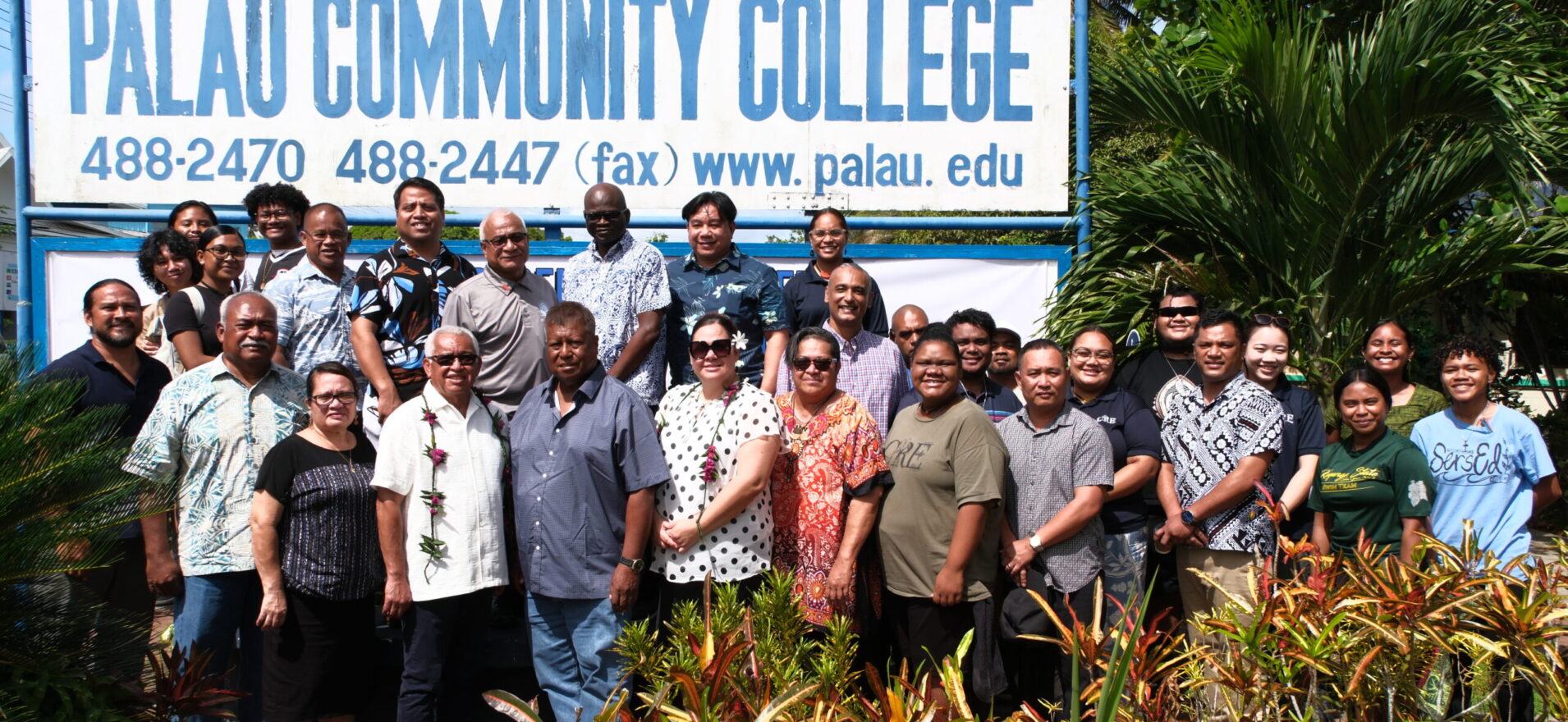
(PCC staff pictured from left to right: Director Lyndon Masami, Field Assistant McKnight McArthur, Senior Extension Agent Elchung Hideyos, and Vice President Dr. Christopher Kitalong)

(Field Assistant McKnight McArthur (center), demonstrating how to set up the soil probe to Senior Extension Agent Lajkit Rufus (middle) and CMI Food Technology Researcher Tebio Tamton )

(Field Assistant McKnight McArthur (left), demonstrating how to set up the probe to COM -FSM Pohnpei CRE Coordinator Trisden Elias (right))

(Installed Soil probe in a Taro patch in Yap)

Filed Under: COM Central Office, News from land grants, Palau Research, Uncategorized, Yap Extension, Yap Research

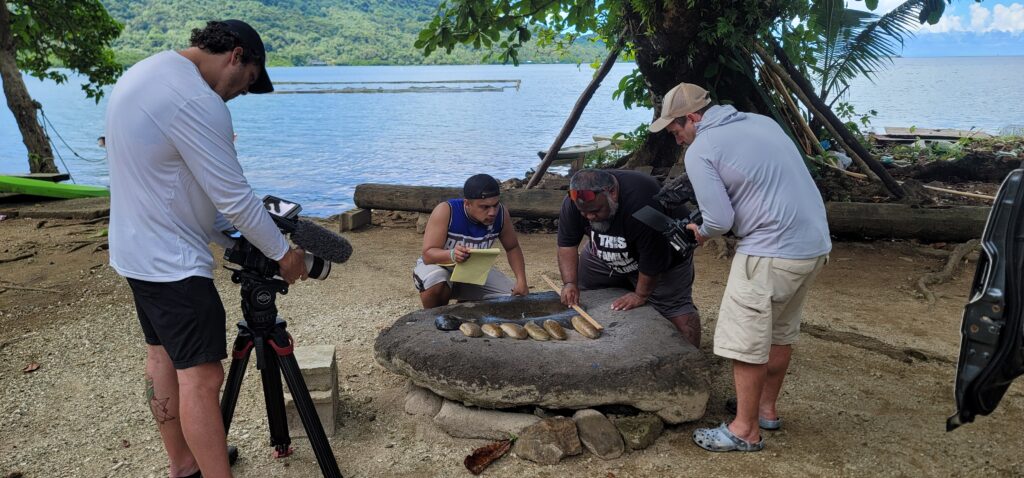
Blue Prosperity Micronesia and National Geographic Pristine Seas visit COM Nett Point Aquaculture Hatchery to interview and film a feature on how COM Land Grant Aquaculture’s Sea cucumber farming program.

October 26, 2023

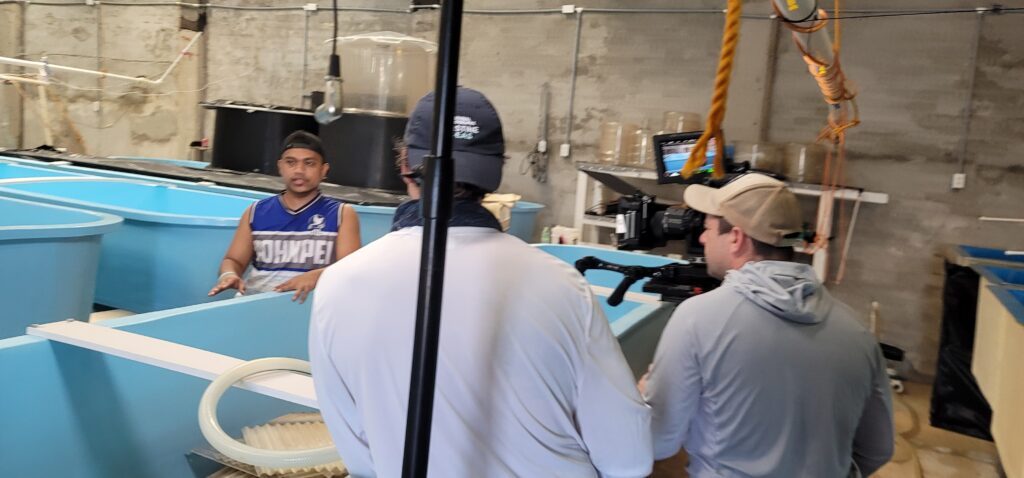
 Blue Prosperity Micronesia and National Geographic Pristine Seas conducted a  Nationwide Marine Science Expedition in the Federated States of Micronesia. As part of this exercise, A filing crew from the expedition visited the COM Land Grant Nett Point Aquaculture Hatchery and the Awak Community sea cucumber farm in Awak, U Municipality in Pohnpei on October 26, 2023. 

The team interviewed the Micronesian staff under Dr. Manoj R Nair, Director and Chief Scientist of Aquaculture technology development. Rex Edmund, Belenko Halverson, and Clayton Maluwelgiye on their personal and professional experiences as project staff and how they work towards improving ordinary Micronesians’ livelihoods.

Later, the team visited the Awak community farm in Awak, U Municipality, Pohnpei, interviewed community members, and observed first-hand farmed sea cucumber samples and how the project staff collected project data.


This image has an empty alt attribute

Blue Prosperity & National Geographic Pristine Seas team interviewing Rex Edmund at Nett Point Hatchery. 

Blue Prosperity & National Geographic Pristine Seas team filming data collection at the Awak sea cucumber farm site. Project staff Belenko Halverson and Rex Edmund are collecting data on farmed sea cucumbers. The Awak Sea cucumber farm can be seen in the background.

Filed Under: COM Central Office, News from land grants, Pohnpei Extension, Pohnpei Research, Uncategorized

Integrated research and outreach on in vitro multiplication, sustainable, organic and climate-smart commercial cultivation of black pepper

January 21, 2018

KOSRAE, FSM. Dr. Virendra M. Verma, Researcher and Extension Specialist, Kosrae Agricultural Experiment Station.

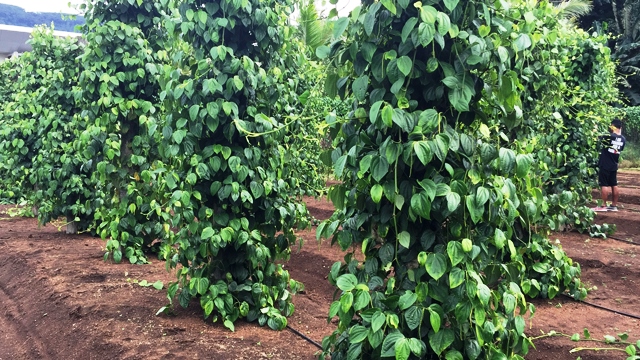
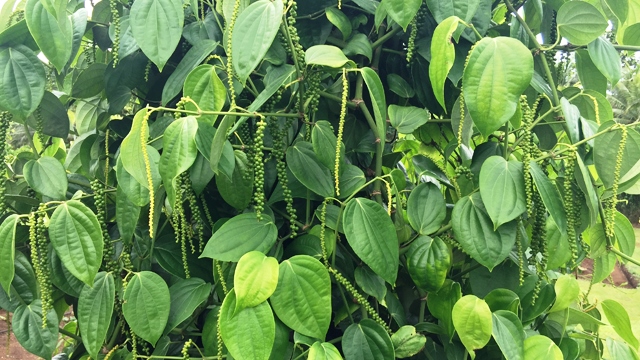
Black pepper (Piper nigrum L.) a flowering vine of Piperaceae family, is valued for its dried berries called peppercorns, which are used as a spice and for medicinal purposes. Native to the humid jungles of the Malabar Coast of Southwestern India, the plant is cultivated in the tropics worldwide. In Micronesia, it is gaining commercial importance as an important cash crop because of premium price. Traditionally, the trunks of two cultivars of large native tree fern (Cyathea nigricans) are used as supports for black pepper cultivation. However, short life-span of these tree ferns along with the rapid decline in their population due to increasing use of tree trunks for construction, is becoming a limitation for commercial black pepper cultivation in the region.

Therefore, to promote sustainable black pepper cultivation in the region, an integrated research, outreach and education project entitled, ‘Black pepper micropropagation for elite seedling production: Comparison of local practices and commercial cultivation methods’ was initiated by the Project Director Dr. Virendra M. Verma. This project is approved and funded by the United States Department of Agriculture, National Institute of Food and Agriculture (USDA-NIFA) for Micronesia. This project is of great significance as it is specifically designed to develop black pepper micropropagation and nursery management systems to produce and ensure the year-round availability of identical, disease-free and high-quality planting material. The objectives of the project include: finding alternative supports to overcome the limitations caused due to shortage of tree ferns, determining appropriate fertilizer type and doses, along with the development and publication of a commercial black pepper cultivation guide appropriate for Micronesia.

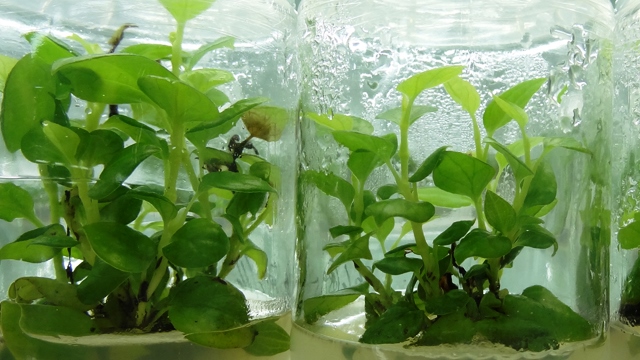
This project is first of its kind not only in the Micronesian region but also in the Pacific region because it is integrating and employing multiple latest tools and technologies such as plant biotechnology, horticulture, microbiology, plant physiology and plant pathology for sustainable, climate-smart and organic commercial cultivation of black pepper. The project is utilizing plant biotechnological techniques such as in vitro cloning for uniform black pepper plantlet production, greenhouse acclimatization of cloned black pepper plantlets for elite, disease-free seedling production, automatic fertilizer injectors for uniform fertilizer application, and organic fertilizers to provide essential nutrients and maintain beneficial soil microorganisms along with appropriate site-specific and climate-smart horticultural, plant physiological and integrated pest management practices. The project activities also include educating local farmers in site-specific sustainable agricultural practices, and providing appropriate recommendations and training for sustainable, climate-smart and organic commercial black pepper production in the region.

Successful execution of project objectives has resulted in the development of a highly efficient and reliable in vitro cloning method for multiplication and production of elite, uniform and diseases-free black pepper plantlets, and acclimatization of hundreds of cloned plantlets into uniform and diseases-free seedlings of a locally preferred and commercially important black pepper cultivar Piper nigrum cv. Srilanka through appropriate nursery management systems.

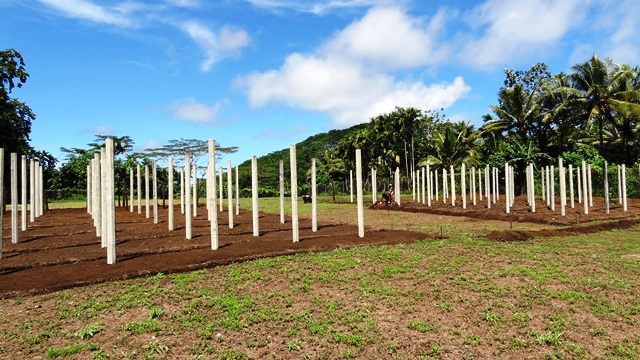
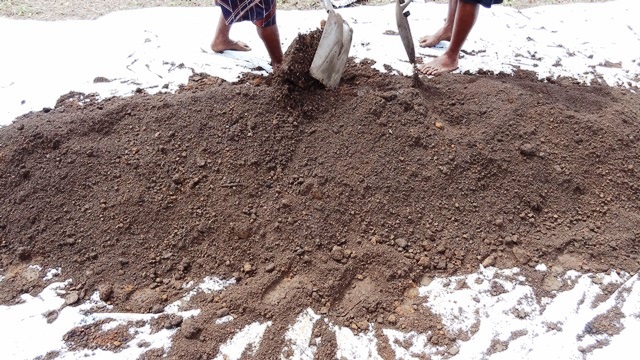
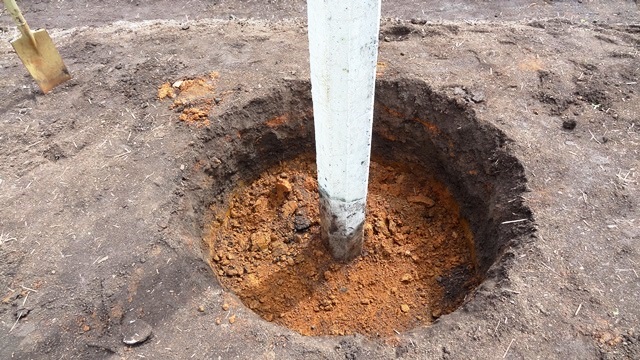
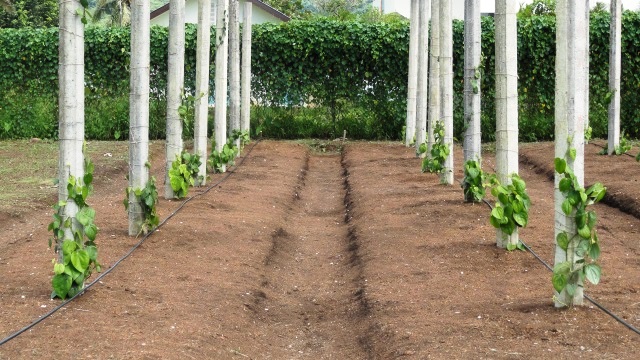
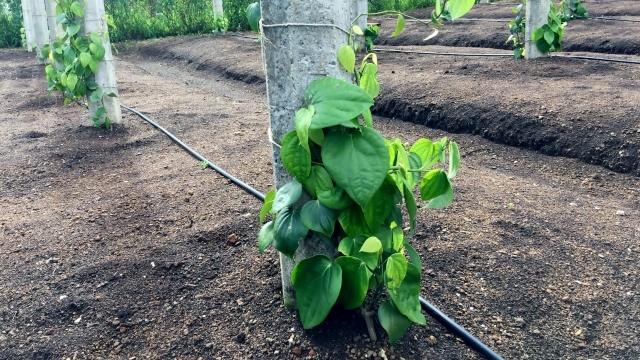
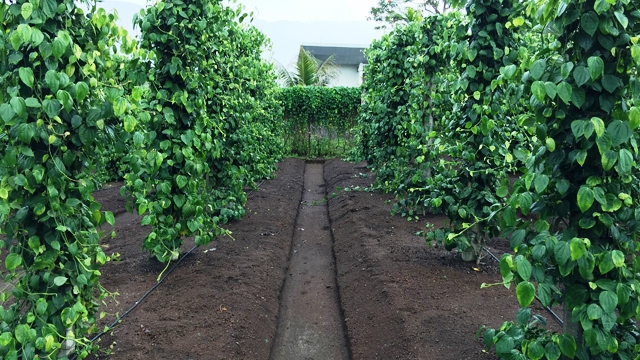
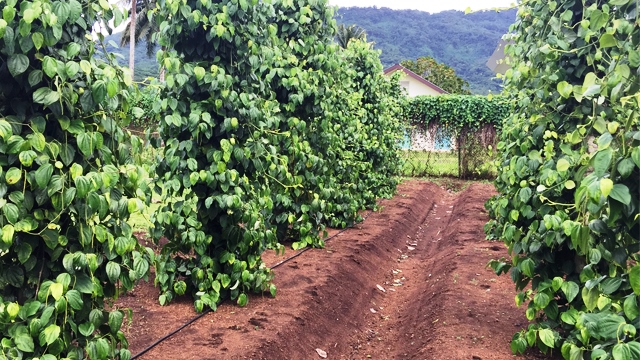
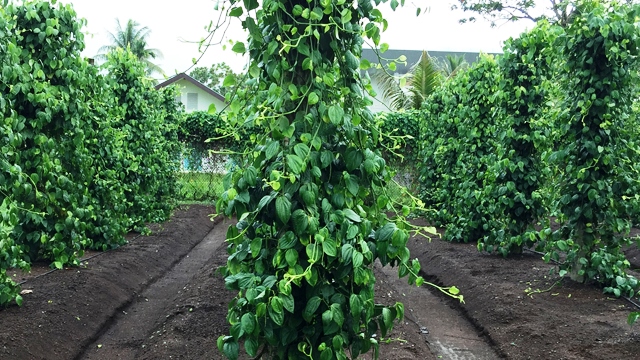
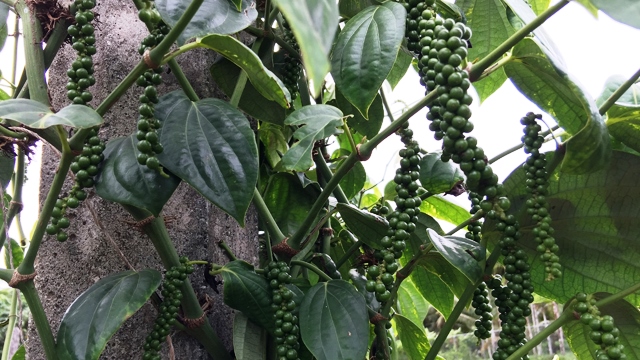
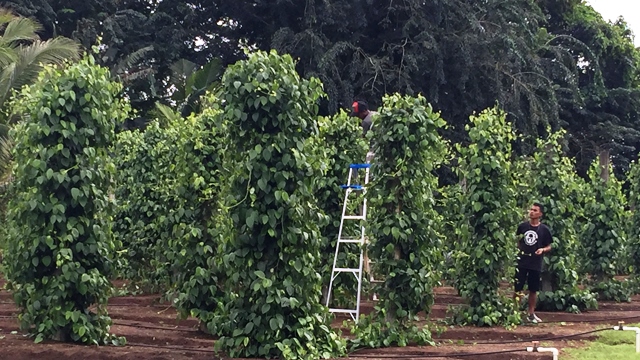
Considering the extremely limited availability of traditional tree fern supports and their very short lifespan, non-living supports such as reinforced cement-concrete standards have been specifically designed and constructed at pilot site to support the vines of fully acclimatized black pepper plants in the field. In addition, raised beds, which ensure perfect water drainage, organic fertilizers for soil amendment along with organic mulching, and automatic fertilizer injectors which provide perfect nutrition, were used for the establishment and maintenance of black pepper plantations.

Research trials for commercial black pepper cultivation have been designed, and implemented at pilot site, and data collection is in progress for analysis. The outcomes of this analysis would be ultimately used for the development and publication of a commercial cultivation guide to specifically suit the needs of local farmers. The project is also conducting comparative research study of local black pepper cultivation practices and sustainable commercial cultivation methods. Pilot site is being developed and would be used as demonstration site to carry out research, outreach and education activities of the project to encourage and promote sustainable commercial black pepper production among local farmers in the region. Recommendations for sustainable black pepper production would be provided through training workshops, hands-on trainings, farm visits, and field days.

The overall aim of the project is to develop sustainable black pepper production systems in Micronesia by providing elite and disease-free seedlings, appropriate recommendations for commercial black pepper production such as sustainable, organic and climate-smart technology and developing skills and improving the agricultural knowledge of local farmers. Adoption of new practices such as micropropagation of black pepper for improved and enhanced productivity will ultimately help in reviving local black pepper industry. Furthermore, this project would provide opportunities for income generation and profitable self-employment to the participating farmers. In addition, the pilot site is serving as an excellent cultivation model to encourage other farmers and rural communities in successfully adopting the sustainable, climate-smart and organic commercial black pepper production practices. Enjoy these photos of this project!

In vitro multiplication of black pepper seedling.

Reinforced cement concrete standards or supports.

Soil amendments with organic fertilizers.

Amended soil filled around standards.

Raised beds for crop management and disease-free seedlings.

Establishment of black pepper plants in field.

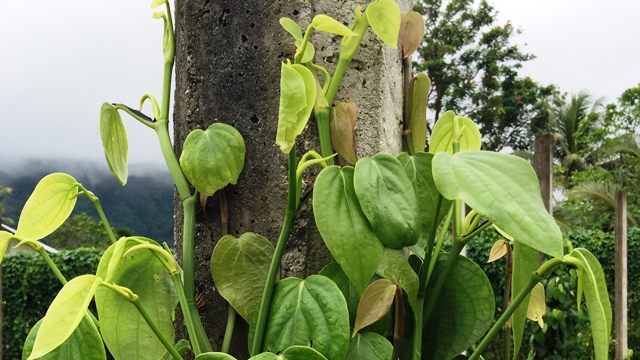
Black pepper vine training.

Black pepper cultivation and best disease management practices.

Elevated beds for perfect water drainage.

Liquid fertilizer application through fertilizer injector.

Healthy and vigorous black pepper vines – One year old after planting.

Black pepper flowering.

Black pepper fruit setting.

Black pepper vine pruning.

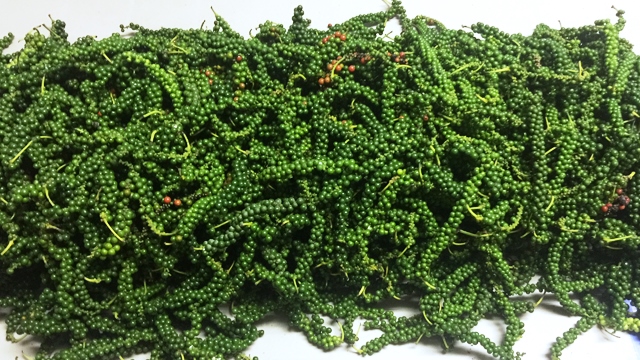
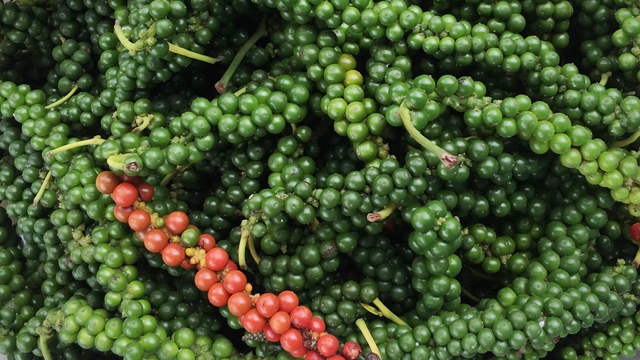
Ready to harvest drupes of black pepper.

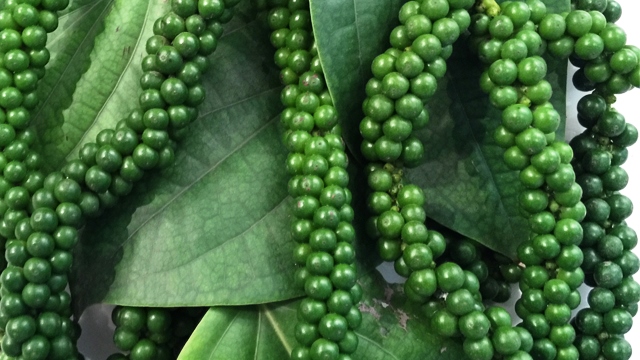
Harvested drupes of black pepper.

Close-up of harvested drupes of black pepper.

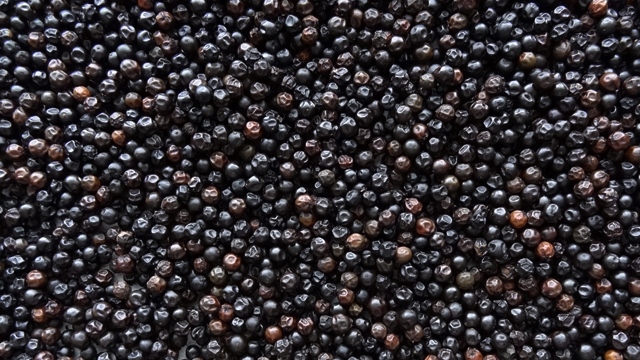
Processing of black peppercorns.

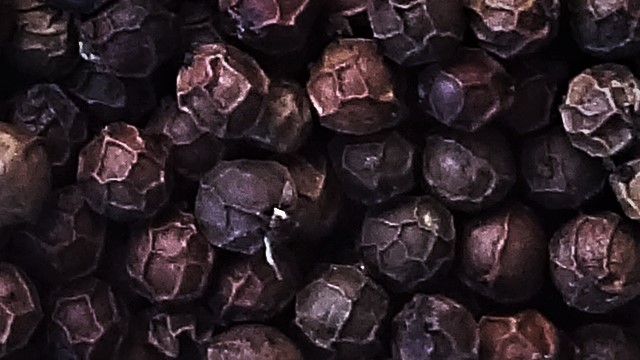
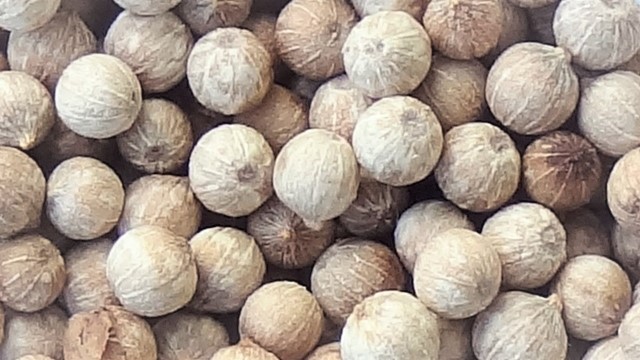
Close-up of processed black peppercorns.

Close-up of processed white peppercorns.

Filed Under: Kosrae Extension, Kosrae Research, News from land grants

  • Page 1
  • Page 2
  • Page 3
  • Interim pages omitted …
  • Page 10
  • Go to Next Page »

Copyright © 2025 College of Micronesia - Land Grant Program | P.O BOX 1179 Kolonia, Pohnpei FM 96941 | (691) 320-2462/2728