• Skip to secondary menu
  • Skip to main content
logo-removebg-preview.png

COLLEGE OF MICRONESIA

LAND GRANT PROGRAM
Contact us: (691) 3202462/2728
P.O Box 1179 Kolonia,Pohnpei FM 96941
  • COLLEGE OF MICRONESIA LAND GRANT PROGRAM
  • COLLEGE OF MICRONESIA LAND GRANT PROGRAM
  • COLLEGE OF MICRONESIA LAND GRANT PROGRAM
  • COLLEGE OF MICRONESIA LAND GRANT PROGRAM
  • COLLEGE OF MICRONESIA LAND GRANT PROGRAM
  • Home
  • About Us
    • Org. Chart
      • COMLG CENTRAL – ORG. CHART
    • Who is NIFA, COM Land Grant, and what do we do
    • COM Land Grant Administration
    • COM Land Grant Board of Regents
    • College of the Marshall Islands Cooperative Research and Extension Program
    • College of the Micronesia – FSM & Land Grant Program
    • Palau Community College Land Grant Program
    • College of Micronesia Land Grant locations map
    • Frequently asked questions
    • Contact Us
  • Land Grant people
    • All College of Micronesia Land Grant People
    • College of Micronesia Land Grant Program Administration
    • College of Micronesia-FSM Land Grant Administration
    • COM-FSM Chuuk Campus People
    • COM-FSM Kosrae Campus People
    • COM-FSM Pohnpei Campus People
    • COM-FSM Yap Campus People
    • College of Marshall Islands People
    • Palau Community College people
  • Research
    • Marshall Islands Agricultural Research Station
    • College of Micronesia – FSM – Research
      • Chuuk Agricultural Experiment Station
      • Kosrae Agricultural Experiment Station
      • Pohnpei Agricultural Experiment Station
      • Yap Agricultural Experiment Station
    • Palau Agricultural Experiment Station
    • Special Research Projects
  • Extension
    • College of the Marshall Islands – Extension
    • College of Micronesia – FSM – Extension
      • Chuuk Cooperative Extension Service
      • Kosrae Cooperative Extension Service
      • Pohnpei Cooperative Extension Service
      • Yap Cooperative Extension Service
    • Palau Community College – Extension
  • Instruction
    • College of the Marshall Islands – Resident Instruction
    • College of Micronesia – FSM – Resident Instruction
    • Palau Community College – Resident Instruction
  • Publications
  • Links
    • College of the Marshall Islands
    • College of Micronesia – FSM
    • Palau Community College
    • Agriculture Development in the American Pacific (ADAP)
    • Center for Tropical and Subtropical Aquaculture (CTSA)
    • USDA NIFA
    • USDA NIFA Reporting Portal
    • Association of Public Land-Grant Universities – APLU
    • Western Sustainable Agriculture Research and Education
  • Jobs
  • Program Impacts & Success Stories
  • Calendar
  • RFP
  • Policies
  • Information & updates

News from land grants

Training on Climate-smart agriculture methods: Chuuk, RMI, Palau

October 25, 2015

YAP, FSM. Dr. Murukesan Krishnapillai, Researcher/Extension Specialist, Yap Agricultural Experiment Station

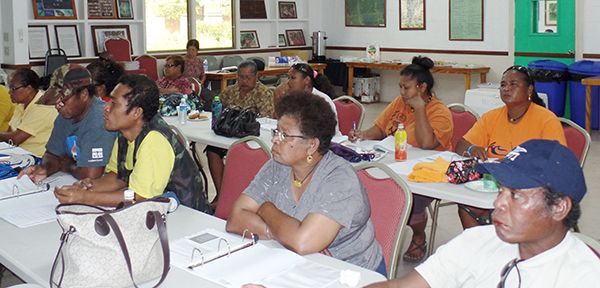
Two Researchers from the College of Micronesia-FSM Cooperative Research and Extension conducted a series of training workshops on ‘Climate-Smart Agriculture’ between May 3 and May 13 under the Professional Development Program of the Western Sustainable Agriculture Research and Education. Workshops were conducted at the College of Marshall Islands, Majuro, College of Micronesia-FSM at Chuuk Campus and at the Palau Community College. Purpose of these workshops was to educate and train extension agents, agriculture professionals and farmers in climate-smart agricultural practices. Altogether 51 participants (10 in Majuro, 14 in Chuuk and 25 in Palau) participants including extension agents, agriculture professionals, farmers and staff of various government agencies attended this workshop. The workshops were facilitated by Dr. Murukesan Krishnapillai (Researcher/Extension Specialist, Yap Campus) and Dr. Virendra Verma (Researcher/Extension Specialist, Kosrae Campus). The training workshops covered the following six topics: i) What is smallholder farming, ii) Climate change impacts that you can expect, iii) Climate change impacts on smallholder farming, iv) Improving soil fertility and farm productivity, v) Climate-smart adaptation strategies and, vi) Climate-smart agricultural adaptation strategies. Training sessions were supported by a training manual and several online brochures/training guides. Pre-and post-evaluation results show that participants gained knowledge and awareness on the topics discussed to serve the communities in a better way.
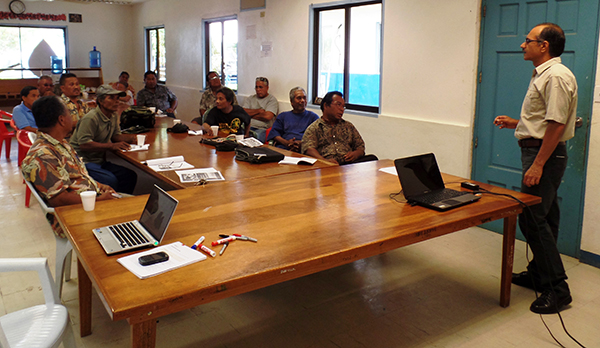
Dr Verma presents information for the Chuuk farmers and Land Grant staff.
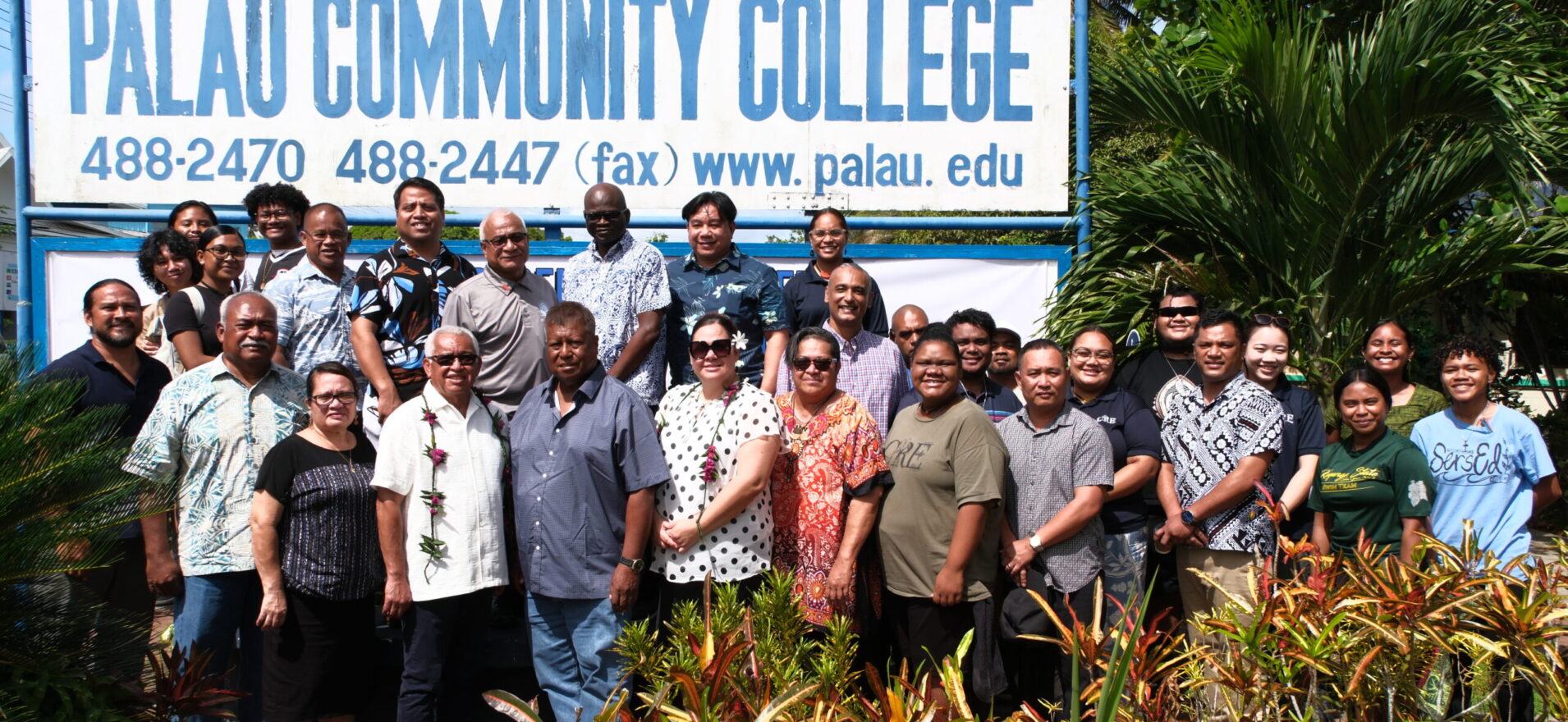
Palau participants get updated on what might be necessary as the climate changes.

Filed Under: News from land grants, Yap Research Tagged With: Chuuk, climate change, Marshall Islands, Palau, training, vegetables, Yap

Yap CRE participates in the World Food Day Celebrations

October 30, 2014

YAP, FSM. Dr. Murukesan Krishnapillai, Researcher/Extension Specialist, Yap Agricultural Experiment Station

Yap Cooperative Research and Extension (CRE) and College of Micronesia-FSM Yap Campus Agriculture students participated in the 2014 World Food Day celebrations in Yap.

World Food Day is celebrated every year around the world on 16 October in honor of the date of the founding of the Food and Agriculture Organization of the United Nations in 1945. The 2014 World Food Day theme – Family Farming: “Feeding the world, caring for the earth” – has been chosen to raise the profile of family farming and smallholder farmers. It focuses world attention on the significant role of family farming in eradicating hunger and poverty, providing food security and nutrition, improving livelihoods, managing natural resources, protecting the environment, and achieving sustainable development, in particular in rural areas. The UN General Assembly has designated 2014 “International Year of Family Farming.” This is a strong signal that the international community recognizes the important contribution of family farmers to world food security.

This year, Yap State observed the World Food Day along with 2014 International Day for Disaster Reduction on October 17, at Colonia Community Center. The event was organized by the International Organization for Migration, Yap Office in association with Yap Interagency Nutrition Education Council.

Yap CRE is an active promoter of integrated family farming for food and nutrition security. Family farming is a way of life with a future and is the best way to ensure islands’ food security. It guarantees food in a sustainable manner while taking care of islands’ environment and respecting traditions and cultures.

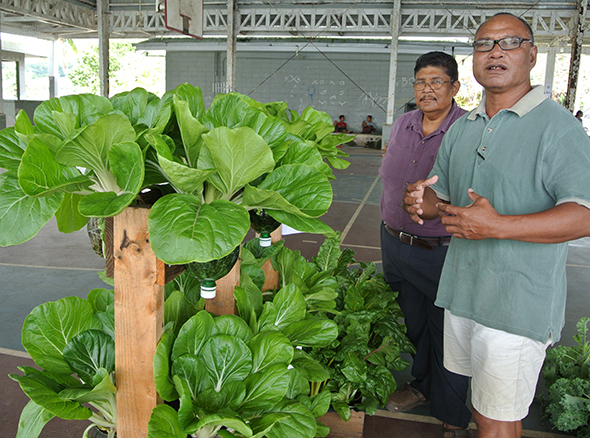
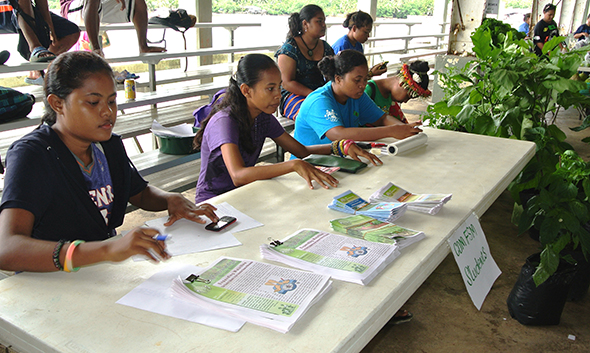
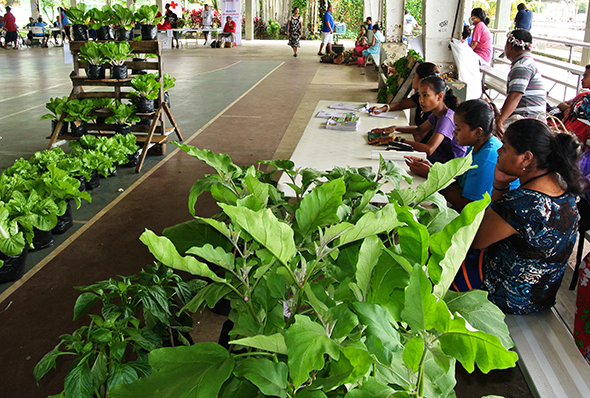
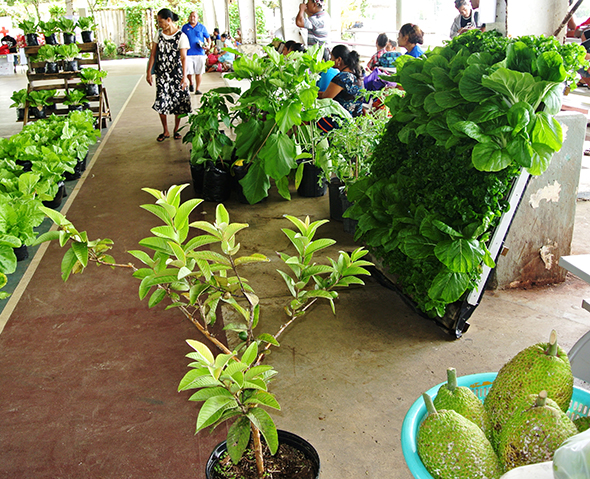
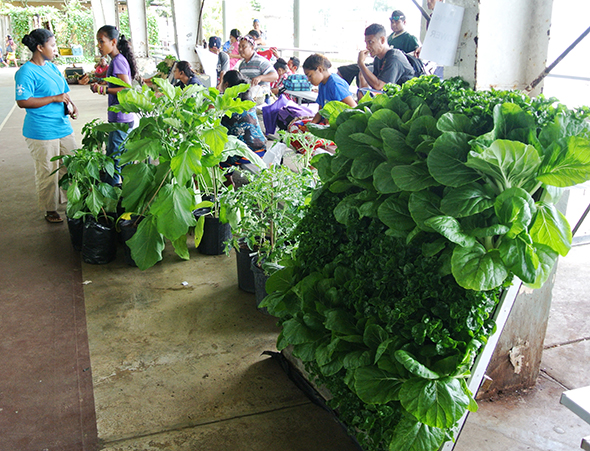
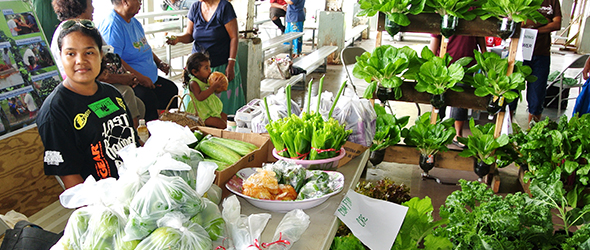
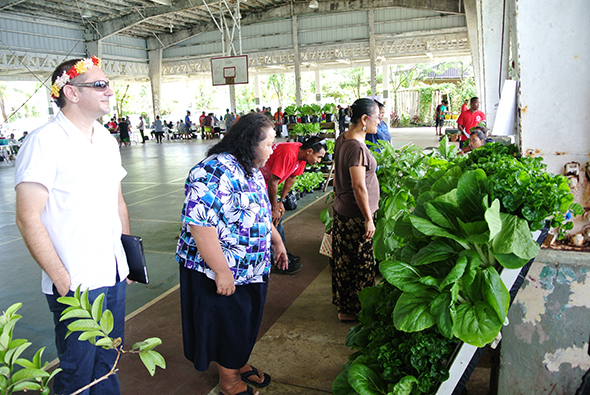
As part of the celebrations, Yap CRE participated in the event and exhibited various urban farm models and low-cost food production systems, displayed posters on chicken farming and distributed brochures and pamphlets on family farming and safe food handling procedures, raising awareness of the issues behind successful family farming and their role in ensuring food security. Some of our vertical urban garden models attracted special attention of the public. Ag students exhibited and sold a range of fresh garden produce and plants grown as part of their course work.

Mr. Santiago, ECE Program Coordinator (front) with Dr. Martin Bell, Yap Memorial Hospital (back) discusses the importance of urban garden systems.
Ag Students, as volunteers in the CRE booth.
A view of the CRE booth.
Another view of the CRE booth.
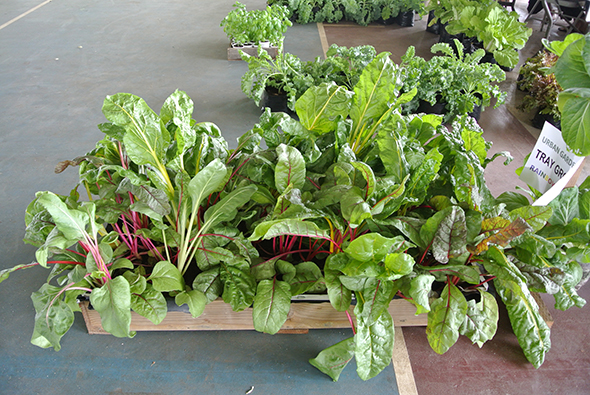
Rainbow Chard in wooden grower.
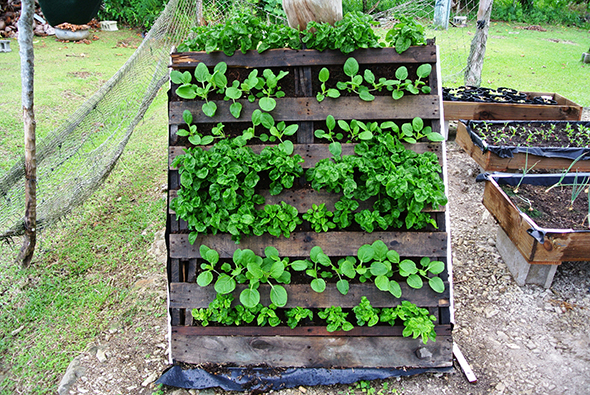
A third view of CRE booth – Vertical pallet grower at the foreground.
Ms. Stacey Gurlee, Ag student/Works study intern and a successful beginning farmer, displaying some of her farm produce.
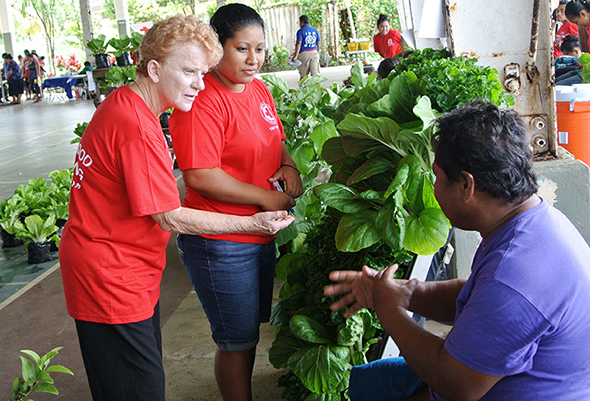
Micronesia Red Cross Yap Chapter Volunteers (in red tees) asking the specifics of vertical pallet grower from George Chuwmai.
Dr. David Mustra (left) and Ms. Denitha Palemar (center), Yap Memorial Hospital and Ms. Lourdes Roboman, COM-FSM Yap Campus Dean (right), visiting the CRE booth.

Filed Under: News from land grants, Yap Research Tagged With: vegetables, World food day, Yap

Training on urban vegetable gardening methods

September 23, 2014

YAP, FSM. Dr. Murukesan Krishnapillai, Researcher/Extension Specialist, Yap Agricultural Experiment Station

Densely populated urban settlements in places like Pohnpei, Majuro and Kwajalein resulting from constant flow of people from rural outer islands result in extensive youth unemployment and associated social problems. Population density of this magnitude, when associated with overcrowding, lack of enough space or quality soil for field-based cultivation often entails health and social challenges of varying severity. The influx and consumption of less nutritious imported food have induced prevalent health problems such as diabetes, hypertension, obesity, gout and a high incidence of malnutrition among children.

Urban agriculture is a method of transforming underutilized or neglected space into a resource providing opportunities for social interaction, greater community cohesion and self-sufficiency, and engagement of people in underserved neighborhoods. It connects people to opportunity so that they move from stagnant, difficult conditions to vibrant and productive lifestyles. It offers a pathway out of poverty. It has low start-up costs, short production cycles, and high yields per unit of time and unit of area and water. Value of leafy green vegetables to combat nutrient deficiency is irreplaceable and irrefutable. The urban agriculture has also potential for primary or supplemental income.

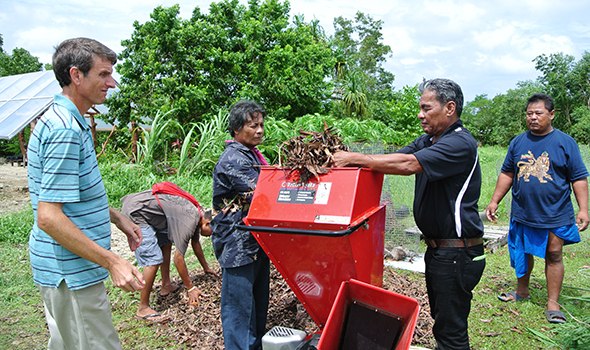
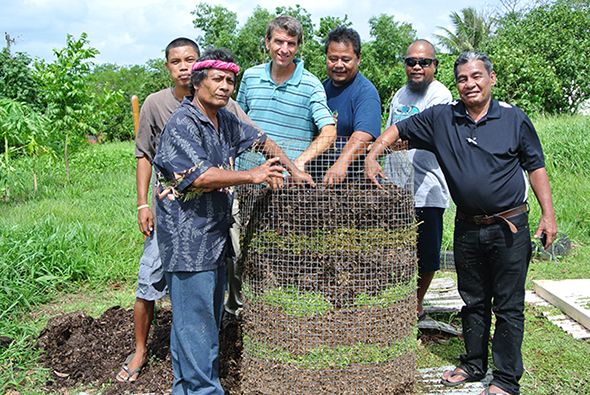
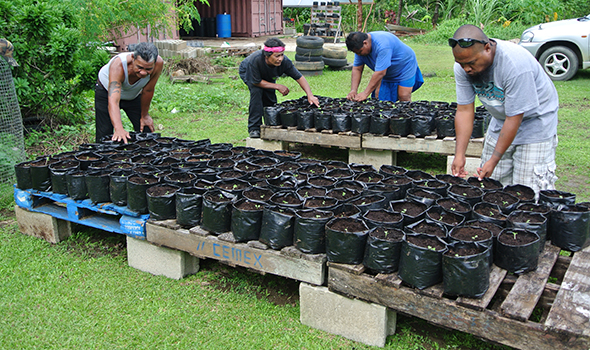
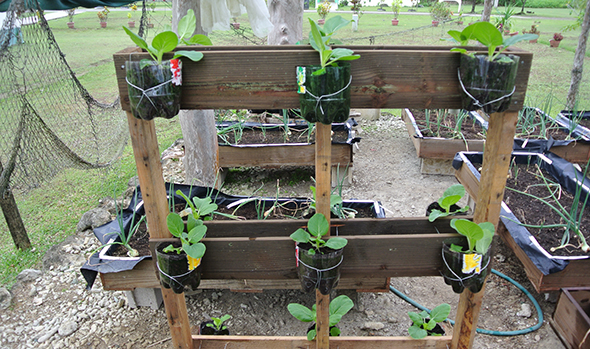
With this in mind, a multi-site extension program has begun to establish urban vegetable demonstration gardens in Pohnpei and Majuro for education and training. As part of this, a three-day training workshop on urban vegetable gardening was recently completed at Yap CRE. Extension staff from the College of Marshall Islands Land Grant Program, Pohnpei CES, Yap CRE and Yap SDA School attended this training workshop. The objectives of this training program were to:  i) illustrate soil profile and their significance in urban gardening, ii) describe the important steps in urban vegetable gardening, and iii) provide hands-on training on urban garden designs and construction of various growers suitable for urban gardening. Following a specially designed extension program based on lecture cum hands-on activities and supported by various extension publications, participants were engaged in topics such as soil characteristics, quick composting methods, growing media preparation, urban garden designs, construction of various types of plant growers, nutrient management, etc. As part of the training, participants built some unique vertical growers and filled with locally prepared media and transplanted some seedlings. Observations, discussions and pre- and post-tests were conducted to evaluate this training activity.

Compost preparation.
Participants displaying the ‘green and brown alternative’ compost pile.
Seedlings in polybags.
Vertical planter from repurposed pallets.
Pots made out of reused plastic bottles.

Filed Under: News from land grants, Yap Research Tagged With: container gardening, urban gardening, Yap

USDA-NIFA approved second multi-state/site research project on pineapple for Micronesia

September 11, 2014

KOSRAE, FSM. Dr. Virendra M. Verma, Researcher and Extension Specialist, Kosrae Agricultural Experiment Station.

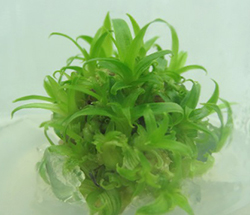
Tissue cultured pineapple plants.

The United States Department of Agriculture, National Institute of Food and Agriculture (USDA-NIFA) has approved another multi-state/site research project for Micronesian region. The project entitled: Pineapple Micropropagation and Commercial Cultivation to Enhance Productivity in Micronesia, is the second multi-state/site research project initiated after recent recommendations from the College of Micronesia’s Board of Regents. The project director of this project Dr. Virendra M. Verma shared that this project aims to enhance pineapple production in the Federated States of Micronesia (FSM) and the Republic of the Marshall Islands (RMI) through micropropagation and commercial cultivation. Non-availability of disease-free and elite seedlings, shortage of trained agricultural professionals, and limited acquaintance of farmers with commercial cultivation techniques have significantly restricted pineapple production in Micronesia. This project aims to enhance pineapple production to improve food self-sufficiency, nutritional security, and provide means of income generation in Micronesia.

This project is of great significance as it is specifically designed to optimize micropropagation and nursery management systems to produce elite and disease-free pineapple seedlings in bulk quantities, provide appropriate recommendations and adequate opportunities to educate and train local farmers in sustainable and commercial pineapple production. Pineapple (Ananas comosus L. Merrill), the most economically significant plant in the Bromeliaceae family, is one of the most important horticultural crop in the tropical and sub-tropical regions of the world. In Micronesia, pineapple is a desirable fruit in traditional feasts. The crop also has great potential for export. Mainly grown for fresh and canned fruit and juice, pineapple is the only source of bromelain enzyme that is used in pharmaceuticals and as a meat-tenderizing agent. The fresh fruit is very low in saturated fat, cholesterol and sodium. It is also a good source of dietary fiber, thiamin, vitamin B6 and copper, and a very good source of vitamin C and manganese.

To overcome the limitations affecting pineapple production in Micronesia, the project activities include: Collection of pineapple germplasm of local cultivars and establish in vitro cultures of collected germplasm; refinement of micropropagation protocol for multiplication of collected pineapple germplasm; optimization of acclimatization and nursery management systems to produce elite seedlings for commercial pineapple cultivation; designing, implementing and conducting research trials for commercial pineapple cultivation at multiple sites and collection of data for analysis; and development and publication of commercial pineapple cultivation guide to specifically suit the needs of local farmers. Recommendations will be provided for sustainable pineapple production through training workshops, hands-on trainings, farm visits, and field days. Two pilot sites in Micronesia i.e., one each at the Federated States of Micronesia (FSM) and Republic of Marshall Islands (RMI) will be developed as demonstration sites for research, extension, and education activities of the project aiming to promote commercial pineapple production.

The extension and outreach activities will develop positive attitudes, zeal for learning sustainable cultivation techniques and farming aspects of pineapple, and will change the behavior of the participating farmers. Participants of extension and outreach activities will be guided to adopt recommended techniques and start commercial pineapple production farms. The ultimate goal of the project is to develop sustainable commercial pineapple production systems in Micronesia through providing elite, disease-free pineapple seedlings and by providing training to local farmers to improve their knowledge and skills for sustainable, commercial pineapple production.

Filed Under: Kosrae Research, News from land grants Tagged With: Kosrae, Pineapple, tissue culture

USDA-NIFA Approved First Multi-State/Site Research Project on Black Pepper for Micronesia

July 9, 2014

KOSRAE, FSM. Dr. Virendra M. Verma, Researcher and Extension Specialist, Kosrae Agricultural Experiment Station.

Tissue-cultured black pepper plants in the lab.

The United States Department of Agriculture, National Institute of Food and Agriculture (USDA-NIFA) approved multi-state/site research project on black pepper for Micronesia entitled Micropropagation for elite seedling production: Comparison of local practices and commercial cultivation methods. This is the first multi-state/site research project initiated after recent recommendation from the College of Micronesia’s Board of Regents. The project director of this project Dr. Virendra M. Verma shared that this project aims towards developing sustainable black pepper production in Micronesia by providing elite and disease-free seedlings, appropriate recommendations for commercial production, and developing skills and improving knowledge of local farmers about black pepper cultivation.

The project is of great significance as non-availability of disease-free and elite seedlings, shortage of trained agricultural professionals, and limited skills of farmers for commercial production have caused serious decline in black pepper production in Micronesia. Black pepper (Piper nigrum L.) belongs to the family Piperaceae. It is a universal table condiment used to flavor all types of cuisines worldwide and is known to stimulate metabolism, aid absorption of nutrients, and boost the efficacy of drugs. This project is specifically designed to develop micropropagation and nursery management systems to produce elite, disease-free seedlings in bulk quantities, and provide appropriate recommendations and adequate opportunities to educate and train local farmers in sustainable commercial black pepper production.

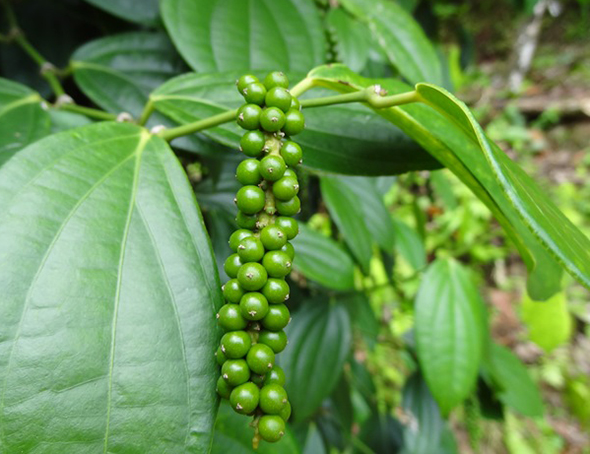
Raw pepper corns on the plant.

The project activities include: Collection of black pepper germplasm and establishment of in vitro cultures of collected germplasm; development of efficient micropropagation protocols for the multiplication of collected germplasm, development of acclimatization and nursery management systems to produce elite seedlings for commercial cultivation; designing comparative study of local practices and commercial cultivation methods; implement and conduct research trials at multiple sites and collect data for analysis; development and publication of commercial black pepper cultivation guide; and providing recommendations for sustainable black pepper production.

The extension and outreach activities will develop positive attitudes, zeal for learning sustainable cultivation techniques and farming aspects of black pepper, and will change the behavior of the participating farmers. Production of elite and disease-free black pepper seedlings will increase. Participants of extension and outreach activities will be guided to adopt recommended techniques and start commercial black pepper production farms. The ultimate goal of the project is to develop sustainable commercial black pepper production systems in Micronesia through providing elite, disease-free black pepper seedlings in bulk quantities and by improving knowledge and developing skills of local farmers about black pepper micropropagation, acclimatization and nursery management systems.

Filed Under: Home left 1, Kosrae Research, News from land grants Tagged With: Black pepper, Kosrae, tissue culture

  • « Go to Previous Page
  • Page 1
  • Interim pages omitted …
  • Page 3
  • Page 4
  • Page 5
  • Page 6
  • Page 7
  • Interim pages omitted …
  • Page 10
  • Go to Next Page »

Copyright © 2025 College of Micronesia - Land Grant Program | P.O BOX 1179 Kolonia, Pohnpei FM 96941 | (691) 320-2462/2728